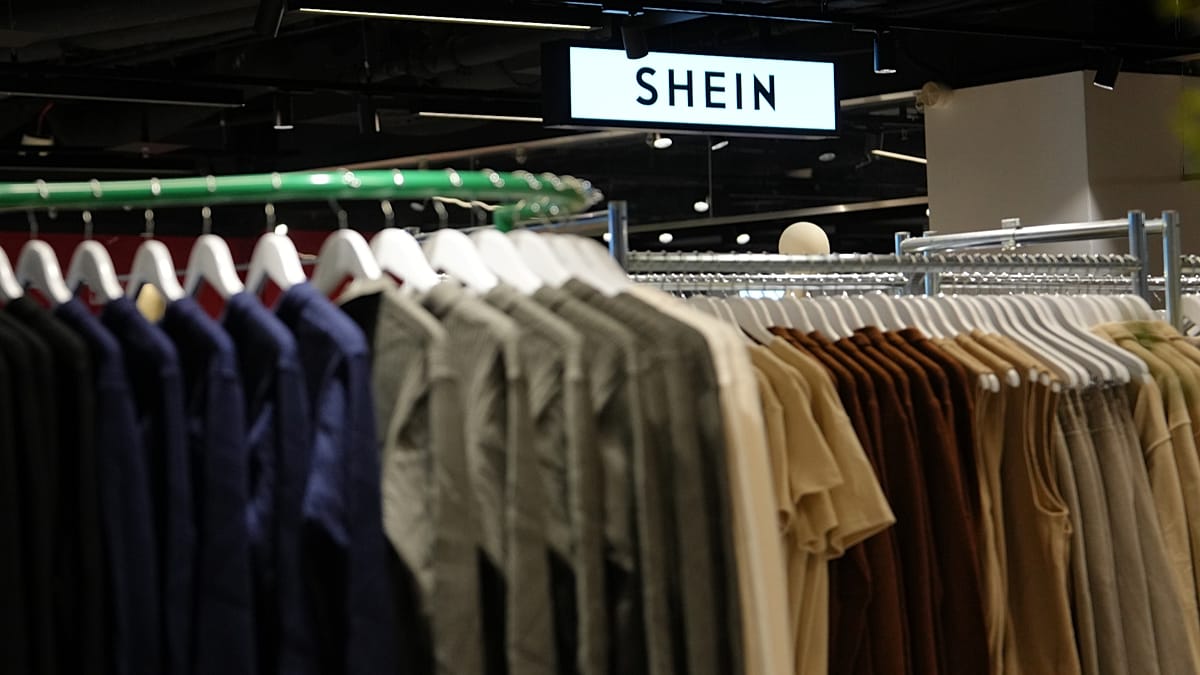
When Shein finally made its public market debut on the Hong Kong Stock Exchange on 1 September, the numbers were not what the company had once hoped for. The Singapore-headquartered e-commerce giant, which relies heavily on Chinese manufacturing, was valued at around $27 billion (€23.24 billion). That is a staggering 70 per cent below its private market peak of nearly $100 billion (€86 billion) in 2022.
The failed attempts to list in London and New York, amid mounting scrutiny over its supply chain and environmental record, forced Shein to pivot to Hong Kong. But the discounted valuation has raised a broader question: is the era of ultra-fast fashion coming to an end?
Investors wake up to ESG risks
According to Ildiko Almasi Simsic, a sustainability expert and founder of tech company E&S Solutions, the market's reaction is not about altruism but about financial reality. "Capital markets aren't acting out of pure altruism: they're reacting to material financial risk," she told European Pulse. "Shein's delayed public listings and severely discounted valuation prove that investors now recognise ESG issues as direct threats to terminal value."
Simsic argues that a business model repeatedly exposed to controversies—such as forced labour allegations and hazardous chemicals in clothing—carries an "enormous risk profile." Environmental and human rights concerns, she says, have now crossed over from "ethics to equity," marking a watershed moment for the industry.
Supply chain under the microscope
Shein's supply chain has been a source of contention since its inception. In 2022, Greenpeace Germany found hazardous chemicals above EU regulatory limits in seven of 47 Shein products tested. The company acknowledged the issue and pledged improvements. Yet a 2025 investigation by Greenpeace, which tested 56 garments purchased across eight countries, found that 18 of them (32 per cent) still exceeded EU limits—including children's clothing. Among the substances detected were phthalates and PFAS, so-called "forever chemicals," linked to cancer, reproductive disorders, and developmental issues in children.
Labour practices have also drawn criticism. In 2023, Shein admitted to two cases of child labour in its supply chain. The company said it terminated contracts with the factories involved and implemented remediation steps, including paying outstanding wages and arranging medical checkups. However, a 2025 BBC investigation revealed workers at some supplier factories were sewing for around 75 hours a week, with only one day off per month and 12-hour shifts without meal breaks. A 2024 report by Swiss advocacy group Public Eye similarly found excessive overtime remained common.
Can ultra-fast fashion ever be sustainable?
Shein's business model relies on producing small batches of thousands of new styles daily, often at single-digit price points. Between July and December 2021 alone, the company added between 2,000 and 10,000 new stock-keeping units (SKUs) to its app each day, according to an investigation by Rest of World. This approach allows Shein to test consumer demand with minimal inventory risk, but it also encourages overproduction and waste.
"A model that floods the market with thousands of new daily styles at single-digit price points can only exist by passing its true costs onto labour and the environment," Simsic said. "Cheap prices are an illusion created by systemic outsourcing. When garments are produced at a fraction of a cent per stitch, it almost guarantees non-compliance with fair wages, excessive overtime, and cheap, fossil-fuel-derived synthetic fabrics."
Shein insists that "commitment to sustainable and responsible growth is woven into the fabric" of its business. Yet its draft prospectus initially included the slogan "We believe in doing well by doing good," which was later removed, according to Public Eye. Moreover, only 10 per cent of the expected IPO proceeds are earmarked for sustainability and corporate responsibility.
The company has made some efforts to address concerns, such as introducing rules that make child or forced labour grounds for immediate contract termination. But critics argue that the fundamental structure of ultra-fast fashion—with its relentless pace and razor-thin margins—makes meaningful change difficult, if not impossible.
As investors increasingly factor in environmental and social risks, the Shein IPO may be a bellwether. The question now is whether other players in the fast-fashion sector will heed the warning, or continue to chase growth at any cost. For European consumers and regulators, the stakes are high, as the EU pushes for greater supply chain transparency and stricter chemical regulations. The era of ultra-fast fashion may not be over, but its unchecked expansion is clearly facing new headwinds.