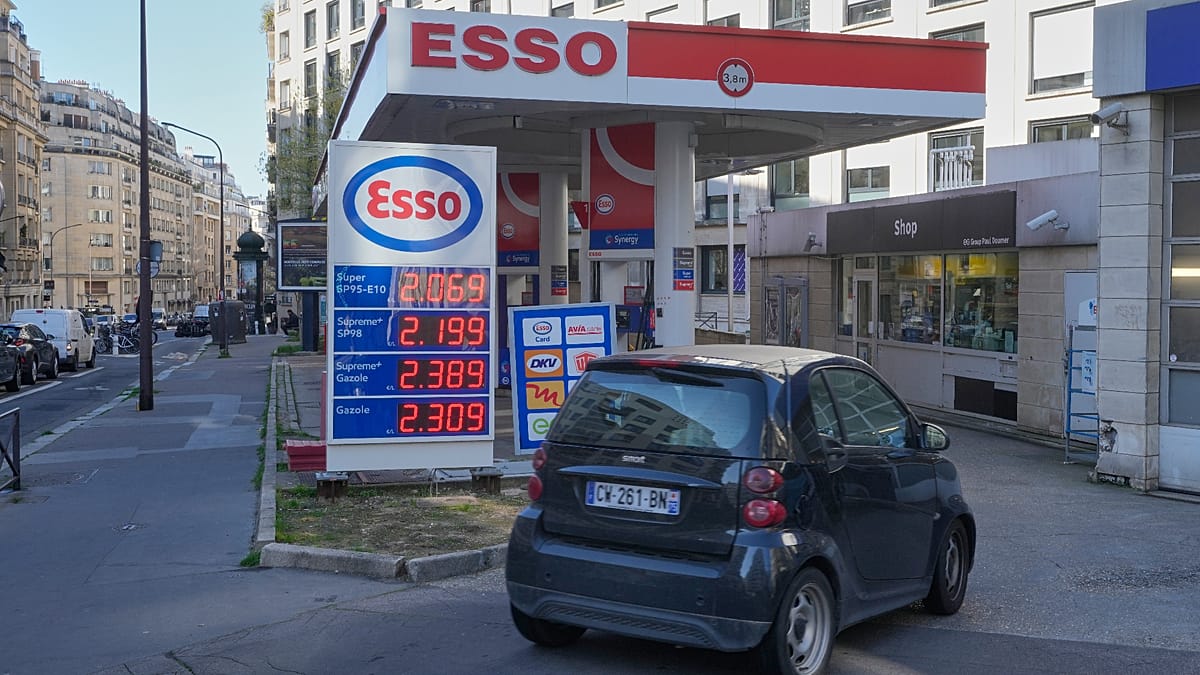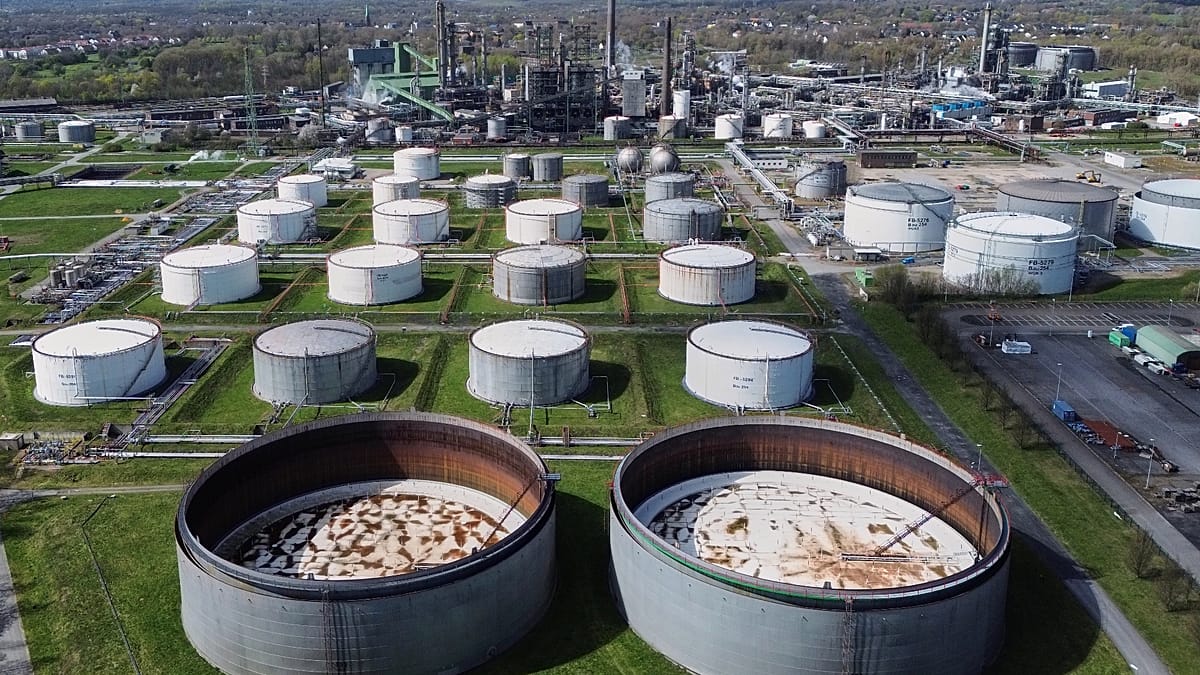
European motorists continue to face near-record fuel prices, even though crude oil has not returned to its earlier highs. The gap between what drivers pay and what oil costs on global markets has widened, and analysts say the problem now lies less with crude supply and more with the region's ability to turn that crude into usable fuel.
Brent crude, the international benchmark, has swung between roughly $73 and $126 a barrel since late February, settling around $95 on Friday. European pump prices have followed these swings, but they have remained stubbornly high because they also reflect the cost and availability of refining capacity, not just the price of the raw material.
Despite the steady growth of electric vehicles, petrol and diesel still power nearly nine in ten passenger cars on EU roads. According to the latest fleet data from ACEA, 49.2% of cars run on petrol and 38.4% on diesel, a combined share of 87.6%. That means fuel prices remain a sensitive issue for households and businesses across the continent.
Some governments have trimmed fuel taxes or introduced other support measures since the energy shock began, but the response has been uneven. Even so, prices are close to their historical peaks. In the week starting 31 August, petrol averaged €1.95 a litre across the EU, about 4% below its June 2022 high of €2.03. Diesel averaged €2.04, roughly 3% below its record of €2.11 set in April 2026. These figures come from the European Commission's Weekly Oil Bulletin and include duties and taxes.
Refining and product supply are the new bottlenecks
“The key reason for the widening gap between crude and European fuel prices is that this is increasingly a refining and product-supply problem rather than simply a crude-supply problem,” said Sumit Ritolia, lead analyst for refining supply and modelling at Kpler. “Crude may be available, but the capacity to convert it into the right products—particularly diesel—has become much tighter.”
Diesel is especially important because it powers much of Europe's road freight, agriculture and construction. Even households without a diesel car feel the knock-on effects when diesel prices rise, as the cost of transporting food and other goods eventually increases. The latest eurozone inflation data showed inflation climbing to 3.3%, driven mainly by higher energy prices.
European fuel inventories are low, while conflicts in the Middle East and attacks on Russian refineries have disrupted global supplies of refined products. After Russia's full-scale invasion of Ukraine, Europe shifted much of its diesel and jet-fuel sourcing towards the US, India and the Middle East.
“For diesel and jet, Europe is the big importer, so it sets global prices,” said Alan Gelder, senior vice-president for refining, chemicals and oil markets at Wood Mackenzie. “Prices are elevated here, but they're elevated everywhere. It's just more exacerbated in Europe because we're the key import location.”
With Middle Eastern and Russian product exports constrained, traditional buyers of Russian diesel—including Turkey and Brazil—are increasingly competing with European buyers for supplies from the US, India and elsewhere. A disruption in one region can therefore tighten supplies globally as trade flows adjust.
Refining margins, which influence pump prices, are at high levels. According to Reuters, Eurobob E5 petrol barges traded at a premium of $62.07 a barrel over Brent futures, just below the June 2022 record of $62.10. European diesel futures reached a record premium of $78.91 a barrel over Brent on Tuesday, before easing to about $77 on Wednesday. A refining margin measures how much more petrol or diesel is worth than the crude oil used to make it.
In Europe, refineries are running at high capacity, but inventories remain low. Data from Dutch consultancy Insights Global showed that independently held petrol stocks in the Amsterdam-Rotterdam-Antwerp hub fell to 752,000 tonnes in late August, their lowest level since September 2021, before bouncing back the following week. European refinery runs are around their highest levels in three to four years, while US refinery utilisation reached about 98% in the final week of August. That leaves little spare capacity to respond to a potential supply disruption.
Gelder also pointed to the approaching autumn maintenance season and the risk of hurricanes disrupting US Gulf Coast refineries. He said strong margins could encourage operators to postpone maintenance, but warned that doing so for too long could create reliability problems and increase the risk of unplanned shutdowns.
How long could fuel prices remain high?
Petrol prices could see some seasonal relief as summer driving demand fades and the market moves away from more expensive summer-grade fuel, according to Ritolia. “Diesel does not have the same seasonal release valve, particularly as winter demand and tighter specifications approach, so diesel margins could remain elevated through autumn and into winter,” he said.
Diesel supplies are particularly vulnerable because autumn refinery maintenance can reduce production just as the market switches to winter-grade fuel and heating demand begins to rise. Higher Chinese diesel exports could provide some relief, although the key question is whether they can be sustained, given China's tendency to prioritise domestic needs.
For now, European drivers and businesses should brace for continued pressure at the pump, with diesel likely to remain the more expensive fuel for the foreseeable future. The broader economic impact is already visible in inflation figures, and any further supply shocks could push prices even higher.