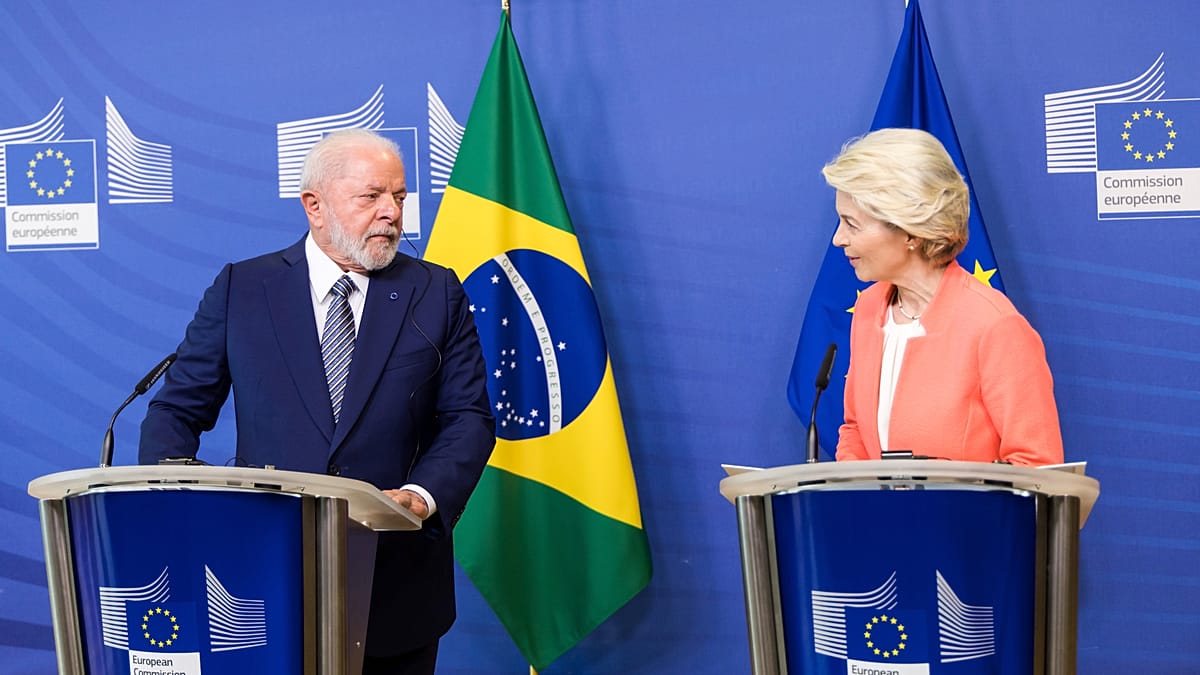
Brazil's ambassador to the European Union, Pedro Miguel da Costa e Silva, has dismissed the need for audits of Brazilian meat exports, as a trade dispute over food safety standards escalates. In an interview with Euronews, he said that "all options are on the table" if Brussels does not lift its recent import ban.
The European Commission's decision, which took effect this week, removed Brazil from the list of countries deemed compliant with EU food safety rules. The move follows concerns over Brazil's use of antibiotics to promote growth in livestock. While an EU audit of Brazilian poultry and honey is already underway, the Commission stated that Brasília had not offered sufficient guarantees to allow a similar audit of its beef sector.
Brazil's response
Speaking on Friday, Ambassador da Costa e Silva argued that the audits were unnecessary. "There wasn't a need for an audit, not for poultry, not for honey, not bovine meat, because no audits were conducted for the other countries," he said. "We have provided sufficient guarantees."
The ambassador indicated that Brazil would continue discussions with the Commission but warned that if imports do not resume, Brazil could be "creative" in its countermeasures. His remarks follow a formal protest from the Brazilian government on Thursday, which threatened retaliation over the ban.
Commission defends its stance
The European Commission pushed back on Friday against accusations of unfair treatment. Deputy Chief Spokesperson Olof Gill said: "Our approach is non-discriminatory, and we've given our partners sufficient time and all the information they need to adjust."
Gill stressed that food safety is a top priority for EU citizens. "These rules have been well known for a long time, with third countries having been informed going back many years," he added.
The dispute comes at a sensitive time for EU-Mercosur relations. The free trade agreement between the EU and the South American bloc—comprising Brazil, Argentina, Uruguay, and Paraguay—provisionally entered into force in May, despite strong opposition from European farmers. They fear that Latin American products failing to meet the bloc's phytosanitary and food safety standards could flood European markets.
This latest row echoes broader tensions over agricultural trade. Earlier this year, the EU suspended Brazilian meat imports over similar antibiotic concerns, a move that had already strained relations. The current ban extends that action, and Brazil's threat of retaliation adds a new layer of complexity.
The outcome of this dispute could have wider implications for the EU's trade agenda. The bloc is simultaneously navigating other contentious trade relationships, including with China and the United States. As the EU trade chief has recently accused China of unfair trade practices, the handling of the Brazilian case will be closely watched by other trading partners.
For now, both sides appear entrenched. Brazil insists its meat is safe and that the EU's demands are disproportionate. The Commission maintains that its rules are clear and apply equally to all third countries. With the Mercosur agreement still in its early stages, the resolution of this dispute will be a test of whether the two sides can manage their differences without derailing a landmark trade deal.