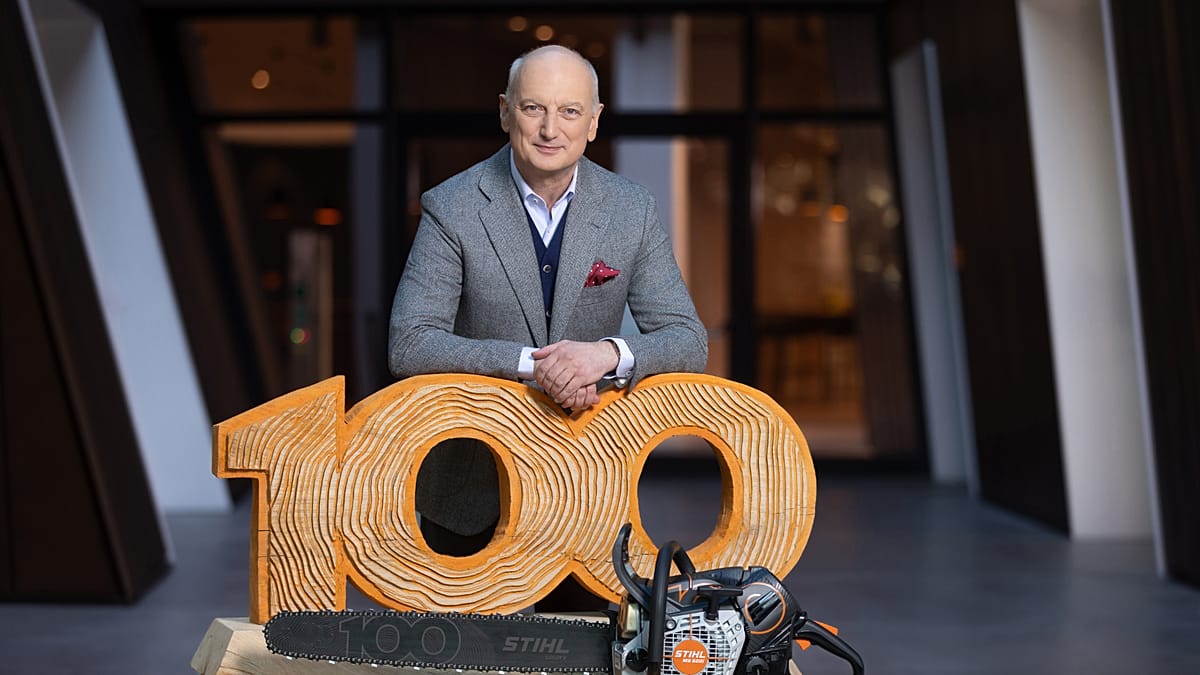
Nikolas Stihl, the chairman of the world's leading chainsaw manufacturer, has issued a blunt warning: Germany's economy is in deep trouble, and the country must embrace unpopular reforms – including longer working hours without additional pay – to protect its prosperity and social model.
In an opinion piece for Euronews, Stihl, whose family company is based in Waiblingen in Baden-Württemberg, argued that the German economy has been stuck in crisis mode for years. “The prerequisite for overcoming the persistent weakness in growth is better framework conditions,” he said.
STIHL, founded by his grandfather Andreas Stihl in 1926 and now celebrating its centenary, generated €5.48 billion in revenue in 2025 and employs 20,246 people worldwide. Stihl, who represents the third generation of the family, takes a long-term view, and what he sees is worrying: “In the past eight years we have lost around 15 percent of our industrial output. Month after month Germany is losing around 15,000 industrial jobs.”
He warns that the erosion of the industrial base threatens not only the economy but also the welfare state that Germans take for granted. While acknowledging external pressures – US tariffs, China's aggressive industrial policy, and geopolitical tensions – Stihl insists the main obstacles are home-grown: “an overregulated economy, high energy costs, high labour costs, high taxes and a declining level of education and qualifications.”
Government reforms fall short
The federal government's planned reforms – covering statutory health insurance, pensions, taxes and the labour market – are, in Stihl's view, reasonable compromises but insufficient to pull Germany out of its structural crisis. He warns that if these compromises are now “unpicked,” it would have devastating consequences for business confidence in politics.
“Now we need to muster all our strength for further reforms that will then generate tangible investment and growth impulses,” Stihl said. “For that, the governing coalition and the social partners must overcome their own reservations in order to live up to their responsibility towards Germany.”
His prescription includes cutting red tape, increasing the overall volume of work in the economy, reducing labour costs, and creating additional incentives for research and development. He also calls for a “high-quality public administration” with clear rules, streamlined procedures, and digital, AI-supported processes. “Statutory reporting requirements should generally be abolished and retained only where their necessity is explicitly justified,” he argues.
More work to preserve prosperity
The core of Stihl's message is that Germans need to work more. “If we want to maintain our prosperity and keep social benefits at a high level, the total volume of work in the economy has to increase,” he said. “A higher volume of work boosts economic output. In that sense, the debate about more work is a debate about preserving our prosperity, and by no means a debate about employees being lazy.”
He proposes a range of measures: incentivising overtime, extending working lives with fair exceptions for physically demanding jobs, making better use of the existing labour pool – including unemployed and part-time workers – and attracting skilled workers from abroad. He also suggests that sick pay should only be paid from the second day of illness and that phone-in sick notes should be abolished.
Stihl acknowledges that productivity gains from digitalisation and AI will not offset the effects of demographic change. With collective bargaining talks in the metalworking and electrical industries due to begin in October 2026, he is explicit about what he wants: “We no longer have the productivity advantage over key competitors that used to justify our high labour costs. That is why I advocate increasing weekly working hours to 40, without any pay compensation.”
He admits he is asking a great deal of employees, but insists the goal is to remain competitive, keep production in Germany, and safeguard jobs. STIHL operates production sites in eight countries, 40 sales and marketing subsidiaries, and more than 50,000 specialist dealers worldwide.
On non-wage labour costs – contributions to pension, health, long-term care and unemployment insurance – Stihl says a ceiling of 40% of gross wages is the maximum acceptable. He also calls for more attractive conditions for innovative companies, including regulatory breathing space, greater tax incentives, and wider access to venture capital. “Overall, innovation and the granting of approvals must be given an even higher priority,” he said.
Stihl's intervention comes at a time when Germany's economic model is under intense scrutiny. His call for longer hours without pay is likely to spark debate, but he frames it as a matter of survival. As he puts it, the debate about more work is not about blaming workers – it is about preserving what Germany has built.