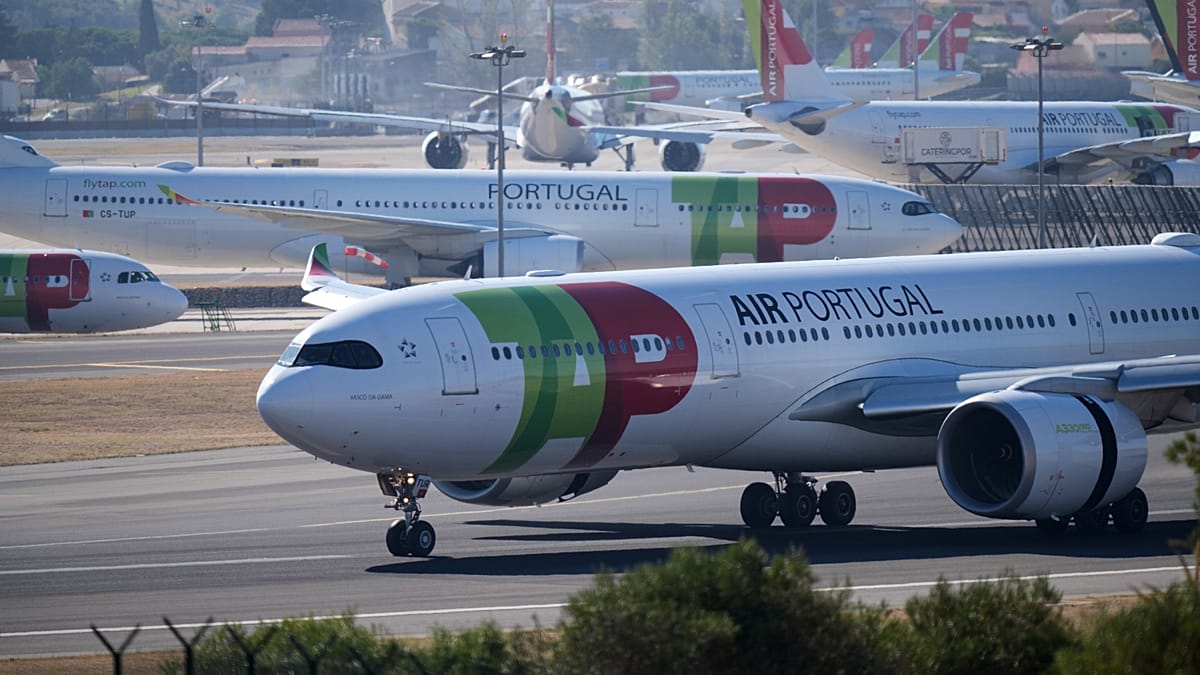
Lufthansa's winning bid for a minority stake in TAP Air Portugal is a strategic bet on the South Atlantic, but the financial rewards may take years to materialise. The German group agreed to pay up to €1.2 billion for 49.9% of the Portuguese carrier, expecting around €450 million a year in synergies from network integration, joint purchasing, and cargo operations. However, a report from independent credit research firm Gimme Credit, published on Tuesday, warns that Portugal's continued control, drawn-out competition reviews, and the slow progress of Lufthansa's ITA Airways integration could delay the benefits well into the next decade.
The Portuguese government selected Lufthansa's offer last week, beating a rival bid from Air France-KLM. The deal still requires final negotiations, approval from Portugal's cabinet, and clearance from the European Commission, with completion pencilled in for 2028. Lufthansa will pay €1.025 billion for 44.9%, rising to up to €1.2 billion if it also acquires shares offered to TAP's employees (up to 5%) and pays a ticking fee that accrues until closing. The Portuguese state will retain 50.1%, but Lufthansa will name TAP's CEO, while the government holds a majority on the board.
A strategic gateway to Latin America
The core prize is TAP's extensive network to Brazil and the rest of Latin America, along with traffic between Europe and Portugal, and between southern Europe and North America. Lufthansa CEO Carsten Spohr said the deal would "sustainably strengthen our position in the South Atlantic market." Management expects traffic on those routes to grow by 2-3% annually for Latin America and 6-7% for the other corridors between 2025 and 2030, according to Cedric Rimaud, director of European research at Gimme Credit.
TAP currently holds 24% of seat capacity between Europe and Brazil, second only to LATAM, according to aviation data firm OAG. With TAP, Lufthansa's airlines would control 36% of that market. TAP also operates an all-Airbus fleet, which aligns with most of Lufthansa's aircraft, "bringing some natural economies of scale between the two airlines," Rimaud noted, as engineering, training, and maintenance costs can be pooled.
Lufthansa has promised to grow TAP's fleet to 117 aircraft by 2035 and invest €500 million in Portugal. It also pledged to keep TAP as a standalone airline, which, along with the state's control, "will limit the ability to rationalise operations across the whole group," Rimaud explained. That constraint could reduce the potential for cost savings that typically come from full integration.
Regulatory and operational hurdles
The timeline for realising synergies is uncertain. Lufthansa expects TAP to join its transatlantic joint venture with United Airlines and Air Canada, where partners coordinate schedules and share revenue. A similar promise was made when Lufthansa bought into ITA Airways in January 2025, but that venture is still awaiting approval from the US Department of Transportation, with the first jointly coordinated flight across the Atlantic not expected until summer 2027. EU competition officials will also scrutinise the TAP joint venture, and Rimaud sees "revenues from this integration unlikely before 2030."
Growth at TAP's Lisbon hub is also capped, as the airport is operating at full capacity and a replacement will not open before 2034, according to OAG. That physical constraint limits TAP's ability to expand its network in the near term, even if demand grows.
Financially, Lufthansa can fund the acquisition from its own cash, and Gimme Credit does not expect "a significant uptick in Lufthansa's leverage." TAP's own debt is manageable, with no major repayments due until its bonds mature in 2029. Gimme Credit kept its "sell" recommendation on Lufthansa's bonds, noting a yield of 5.52%, compared with 6.9% on Air France debt.
The deal also comes amid broader European aviation consolidation, as carriers seek to strengthen their positions in high-growth markets. For Lufthansa, the TAP acquisition is a long-term play that could reshape its presence in Latin America, but the path to full benefits is likely to be slow. As Lufthansa wins TAP privatisation bid, the group must navigate regulatory and operational challenges before the promised synergies materialise.
For Portugal, the sale is part of a wider privatisation push, with the government planning to sell the remaining stake by 2028. The deal also has implications for Portugal's 2027 budget, which includes tax cuts and housing measures, as the proceeds from TAP's sale could help fund these initiatives. Meanwhile, Portugal's housing protests highlight the broader economic pressures that the government must balance.
In the meantime, Lufthansa's management remains optimistic. Spohr called TAP "a strong and profitable airline," and the carrier posted a fourth consecutive year of profit in 2025, though net income shrank to €4.1 million due to a one-off tax adjustment. In the first half of 2026, TAP lost €99.2 million as fuel costs surged. The road to 2030 may be long, but for Lufthansa, the South Atlantic gateway is worth the wait.