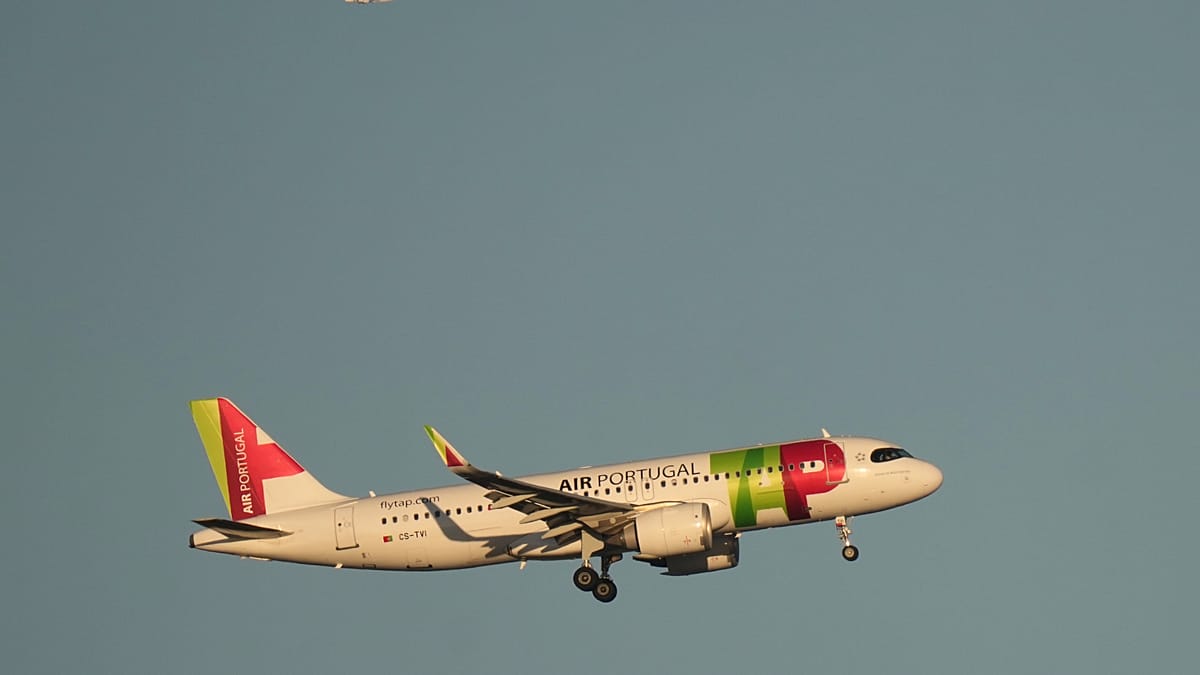
The Portuguese government has selected Lufthansa as the new private shareholder in TAP, marking a decisive step in the long-awaited privatisation of the national carrier. Prime Minister Luís Montenegro announced the decision after Wednesday's Council of Ministers meeting, confirming that the German group's bid had prevailed over a rival offer from Air France-KLM.
Montenegro described the process as one conducted with “competitive rigour, firm negotiating discipline and complete transparency before the Portuguese public.” He stressed that Lufthansa's financial offer was 16% higher than the competing proposal and carried a lower degree of uncertainty.
The deal will inject €1.201 billion into the state coffers in this first phase. The Portuguese state will retain a majority stake of 50.1%, while Lufthansa will take on responsibility for executive and operational management. The government values the airline as a whole at €2.552 billion, a figure Montenegro said was “far above the independent valuations that were being projected a few years ago, or even a few months ago.”
Strategic investments beyond the airline
Beyond the immediate cash injection, the Lufthansa proposal includes a broader investment package aimed at strengthening Portugal's aviation sector. This includes €500 million for a new pilots' school in Tancos, an innovation centre in Aveiro, and a corporate services centre. Lufthansa Technik has also committed to expanding its operations in Santa Maria da Feira.
Montenegro highlighted the expected employment impact: “We are anticipating 3,000 associated jobs from TAP's projected growth and a total of 5,500 direct and indirect jobs across all these investment initiatives in our country.” The plan also includes upgrades to Francisco Sá Carneiro airport in Porto, which will serve as the strategic base for the operation, as well as improvements at Faro airport and the airports of the Azores and Madeira.
The privatisation process, which began in earnest last autumn, saw final bids from Air France-KLM and Lufthansa submitted at the end of September. Under the terms of the decree-law published in August, 5% of TAP's share capital is reserved for purchase by employees. Should staff not take up all those shares, Lufthansa will have the option to acquire them, with the state retaining the remainder.
The choice of Lufthansa comes at a challenging time for TAP. According to the Portuguese business press, the airline recorded a loss of €99.2 million in the first half of 2026, a deterioration of 40% compared with the same period the previous year. The government has argued that the privatisation will provide the financial and strategic stability needed to reverse that trend.
Finance Minister Joaquim Miranda Sarmento indicated last week that the full completion of the privatisation would take 18 to 24 months, meaning the deal is unlikely to be finalised before 2028. The process still requires approval from the European Commission's Directorate-General for Competition (DGComp), which will scrutinise the transaction for potential antitrust concerns.
The decision marks a significant shift for TAP, which has been under state control since its near-collapse during the pandemic. Lufthansa's involvement is expected to bring TAP into a larger European airline network, potentially offering more connections and better fleet utilisation. The German group has been expanding its footprint across Europe, including recent moves to expand its Asian route network, though the TAP acquisition is its most significant step into Southern Europe in years.
For Portugal, the deal is seen as a vote of confidence in its aviation sector and its broader economic trajectory. The government has emphasised that the privatisation is not just about selling a stake but about securing long-term growth for TAP and the country's aeronautical industry. With Lufthansa at the helm, TAP is expected to pursue an ambitious strategy, including fleet expansion, new destinations, and higher passenger numbers.
The announcement has been met with cautious optimism in Lisbon, though some unions have expressed concerns about potential job losses and changes to working conditions. The government has sought to reassure workers that the deal includes commitments on employment and investment, but the final details will be negotiated in the coming months.
As the process moves forward, all eyes will be on Brussels. The European Commission's competition review will be a key hurdle, and any delays could push the final handover into 2028. For now, the Portuguese government is celebrating what it calls a successful first phase, while Lufthansa prepares to take on the challenge of turning TAP into a stronger competitor in the European aviation market.