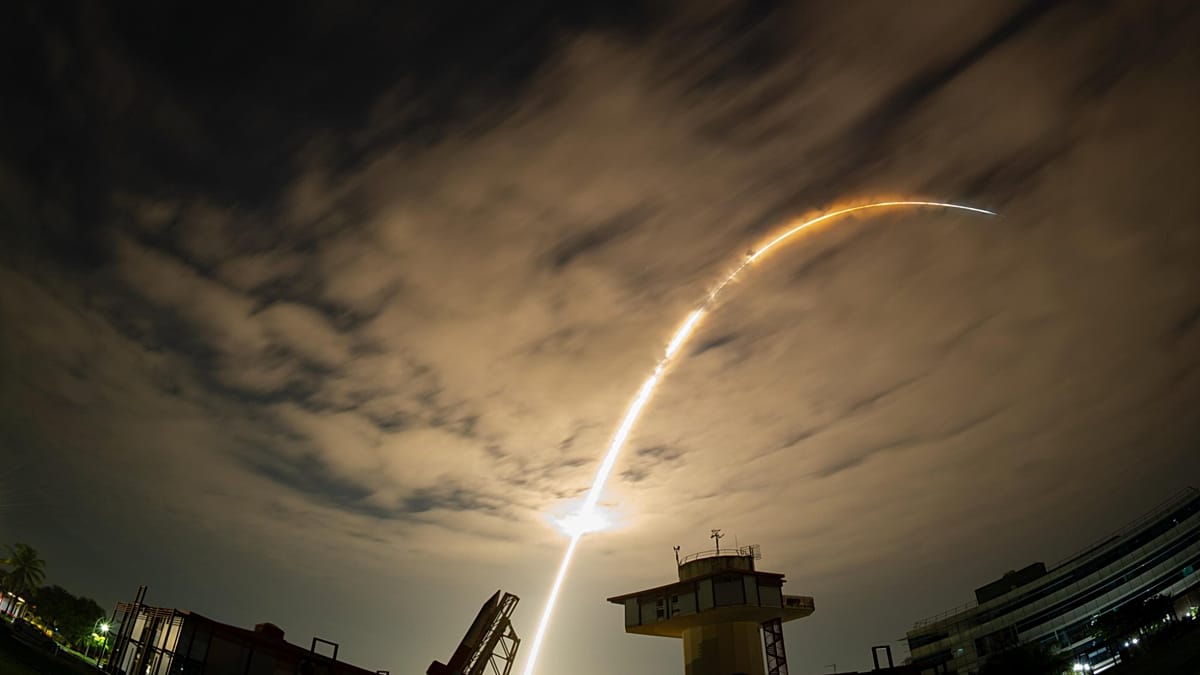
Europe has expanded its Earth observation fleet with the successful launch of two new satellites aboard a Vega-C rocket from the European spaceport in Kourou, French Guiana. The mission, designated VV30, lifted off at 22:21 local time on Monday, carrying the FLEX and Sentinel-3C satellites into orbit.
The launch marks a significant step in Europe's efforts to monitor the planet's health and understand the impacts of climate change. FLEX, short for Fluorescence Explorer, is a mission of the European Space Agency (ESA) designed to study vegetation from space. Its primary goal is to better understand how plants function and respond to environmental stressors such as extreme heat and water scarcity.
FLEX is equipped with a novel instrument that can detect a faint fluorescent glow emitted by plants during photosynthesis. This signal, invisible to the naked eye, carries crucial information about the physiological state of vegetation. By measuring this fluorescence, scientists can identify when plants are under stress due to adverse conditions, long before visible signs of damage appear.
The satellite will produce maps of vegetation activity with a resolution of approximately 300 by 300 meters, offering a detailed view of plant health across the continent and beyond. The mission is expected to operate for at least three and a half years, providing a continuous stream of data for climate research.
Spain has played a prominent role in the FLEX mission. José Moreno, a professor at the University of Valencia, serves as the mission's principal investigator, leading the scientific team. Spain's Ministry of Science has highlighted the country's contribution to this ESA project, underscoring the collaborative nature of European space endeavors.
Sentinel-3C: A new eye on the oceans and atmosphere
Riding alongside FLEX, Sentinel-3C is the third satellite in the Sentinel-3 series under the European Union's Copernicus programme. Its role is to provide continuous monitoring of the oceans, land surface, ice, and atmosphere. The data it collects will be used to improve weather forecasts, track environmental changes, and support climate research.
Sentinel-3C will join its predecessors, Sentinel-3A and Sentinel-3B, which have been in orbit since 2016 and 2018, respectively. The new satellite will eventually replace Sentinel-3A, ensuring the continuity of critical Earth observation data.
Although FLEX and Sentinel-3C were launched together, they will not remain in the same orbit. This separation allows scientists to combine data from both missions to gain a more comprehensive understanding of how vegetation responds to environmental conditions. For instance, while FLEX focuses on plant fluorescence, Sentinel-3C's broader observations of sea surface temperature and atmospheric composition can provide context for interpreting vegetation stress.
The launch comes at a time when European space capabilities are under scrutiny, with growing concerns about orbital security and the deployment of weapons in space. The successful deployment of these satellites underscores Europe's commitment to peaceful uses of space and its role in global climate monitoring.
As the continent grapples with the effects of climate change, from heatwaves to wildfires, the data from FLEX and Sentinel-3C will be invaluable for policymakers, scientists, and farmers alike. The missions represent a tangible investment in understanding and mitigating the impacts of a warming world.