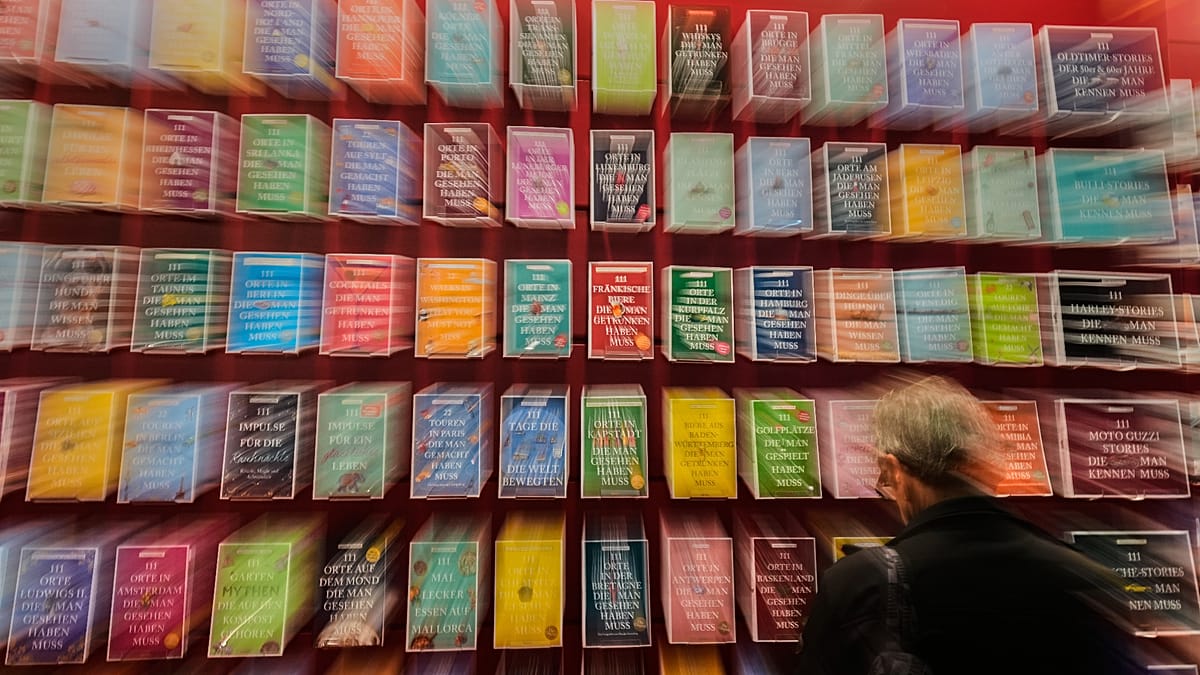
For weeks, German teenagers have been casting their votes in the annual search for the Youth Word of the Year. The three finalists – Crashout, Ragebait, and Peak – together attracted votes in the mid six-figure range, according to Langenscheidt, the publishing house that has organised the poll since 2008. The winner will be announced on Saturday at the Frankfurt Book Fair.
Crashout: losing it, literally or ironically
To crashout means to completely lose your composure – freaking out, emotionally exploding, or simply going off the rails. The Langenscheidt jury notes that the term is often used ironically, especially when the trigger is something trivial. A person might say they 'crashed out' over a minor inconvenience, signalling both genuine frustration and a knowing nod to internet culture.
Ragebait: engineered outrage
Ragebait describes content deliberately designed to provoke anger. On platforms like Instagram and TikTok, outrage is currency: provocative takes, blatant false claims, or wildly controversial opinions generate comments, shares, and reach. The more fury a post sparks, the more the algorithm boosts it. The jury explains that ragebait exploits this dynamic to maximise engagement, often at the expense of truth or civility.
Peak: the absolute high point
The third finalist, Peak, is a straightforward import from English. In German, it can be translated literally as Spitze or Höhepunkt. The jury defines it as 'the best of the best – the absolute high point, maximum quality, or simply 10/10'. It is used to praise anything from a meal to a football match to a meme.
According to Langenscheidt's analysis, the top three terms accounted for 43 percent of all votes cast. The publisher said participation was higher than ever, though it did not disclose the exact number of voters.
Surprises and viral trends
One notable surprise was the performance of 67 (pronounced 'six seven'), a term that comes with a hand gesture and is more about belonging than a fixed meaning. It went viral thanks to TikTok, basketball memes, and the song 'Doot Doot (6 7)' by US rapper Skirlla. Despite expectations, it only made the top ten, not the top three. 'We were actually sure that 67 would end up in the top three,' a Langenscheidt spokesperson said. 'Once again, it shows how unpredictable and fast youth language evolves.'
Other top-ten entries include Digga, a long-standing favourite that has never won; Gute Käse, which roughly means 'really good' or 'solid'; Macker, which can mean boyfriend, crush, mate, or simply a guy; and Schere, borrowed from gaming to mean 'sorry, my bad'. The Turkish word Süper also made the list, popularised by a viral video of an ultramarathon runner who replied 'Süper' when asked how he felt after his race.
The line Du bist gut genug ('You are good enough') from a song by KitschKrieg, Shirin David, and Blumengarten also entered the top ten. The phrase became a viral sensation on TikTok and beyond, spawning countless memes, remixes, and parodies.
Controversy: Mehrzweckeier excluded
The jury also made headlines by excluding a term that had been submitted many times: Mehrzweckeier. The expression originated at a protest against the possible reintroduction of conscription in Germany. A placard reading 'Merz leck Eier' – a crude insult aimed at CDU leader Friedrich Merz – was confiscated by police, and the protester faced an investigation for slander. A Reddit campaign then urged people to submit the altered term 'Mehrzweckeier' as a candidate. The jury vetoed it, stating that it 'stems from a campaign and at the same time is based on a personal insult', meeting two key exclusion criteria.
The first ever Youth Word of the Year, chosen in 2008, was Gammelfleischparty, a cynical term for a party for people over 30. Since then, winners have included hartzen, swag, and Yolo ('you only live once').
The dominance of Anglicisms in this year's shortlist is no surprise to Langenscheidt – the trend was already evident in 2023. As the publisher notes, the Youth Word of the Year clearly shows how much language use is shaped by social media. For a deeper look at how digital trends affect European youth, see our piece on phishing risks for EU workers.
The announcement at the Frankfurt Book Fair will cap a year in which German youth language has once again proven its dynamism and its close ties to global internet culture. Whether the winner is Crashout, Ragebait, or Peak, one thing is certain: the word will be a testament to the creativity and digital fluency of Germany's younger generation.