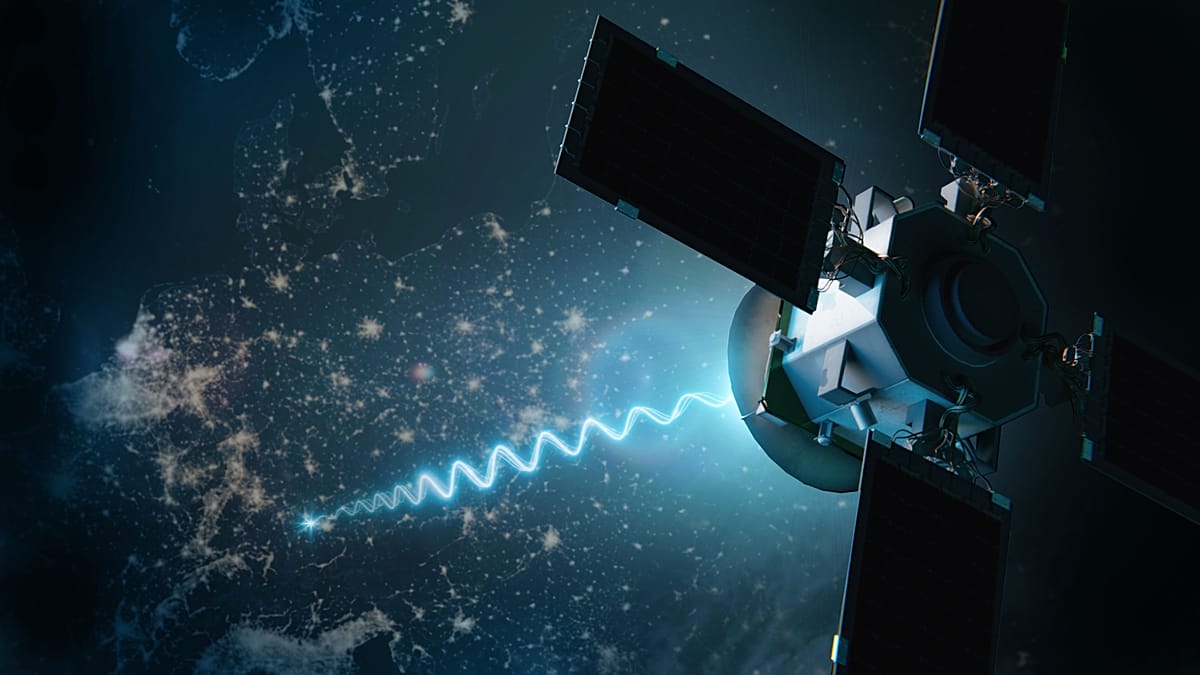
Google has taken a significant step towards a futuristic vision of computing by launching a prototype satellite equipped with its custom AI chips. The mission, which lifted off on Thursday aboard SpaceX's Transporter-18 rideshare, is the first phase of an ambitious project to determine whether space-based data centres could one day power the world's most energy-hungry artificial intelligence workloads.
The satellite, built by Planet Labs, carries Google's Tensor Processing Units (TPUs) into low Earth orbit. The primary goal is to assess how these chips withstand the harsh conditions of space, including radiation, extreme temperature swings, and the physical stresses of launch. The initiative, aptly named 'Project Suncatcher', is based on a simple but powerful premise: satellites in low Earth orbit can bask in near-constant sunlight, capturing up to eight times more solar energy than is possible on Earth's surface.
The energy demands of data centres are soaring, driven largely by the explosive growth of AI. According to the European Commission, data centres consumed an estimated 415 to 485 terawatt-hours (TWh) last year, accounting for 1.5% to 2.5% of global electricity generation. That figure is projected to double by 2030. This surge has sparked public opposition to new data centre projects across Europe and beyond, as communities worry about rising energy bills and environmental impacts. Building data centres in orbit, far from populated areas, could sidestep many of these concerns.
Google is not alone in exploring the final frontier for AI. Nvidia-backed startup Starcloud trained an AI model from space for the first time last December. In June, Elon Musk unveiled SpaceX's AI1 satellite, also known as Starmind, designed as a flying GPU cluster rather than a communications relay. And in September, French AI firm Mistral announced a partnership with Marlan Space and Loft Orbital to develop AI satellite infrastructure, with the first launch planned for this October.
Testing the limits of space computing
The launch marked the beginning of Google's experiment. The satellite endured a 10-minute climb into orbit, experiencing intense vibrations and sustained acceleration of up to 10 times the force of gravity. The TPU chips on board were subjected to brief shocks of between 50 and 100g. To prepare, the Suncatcher team conducted vibration tests on the ground to mimic the rigours of a rocket launch, and both the satellite and its chips passed with flying colours.
Now that the hardware is in orbit, the next phase begins: monitoring how the TPUs cope with the higher radiation levels outside Earth's atmosphere, as well as solar events and cosmic rays that can disrupt electrical systems. Data centres on Earth notoriously require vast amounts of energy and water for cooling, but in the vacuum of space, the challenges are entirely different. The mission will test innovative cooling solutions, including a combination of heat pipes and radiators to dissipate heat from the chips.
Future Suncatcher missions will carry satellites with dozens of TPU chips, aiming to shift from the current low-bandwidth, long-distance communication to high-bandwidth, short-distance links. The technology for space-based computing already exists, but Google will test ways to maintain high-bandwidth connectivity over shorter distances with greater precision when it launches additional satellites next year.
This project comes at a time when Europe is grappling with the implications of AI and data centre expansion. In Austria, a town has fought Google over a data centre's water use and transparency, highlighting the local tensions that space-based computing could potentially alleviate. Meanwhile, the European Commission has been scrutinising Google's data practices, with the company challenging an EU data-sharing order on privacy grounds.
The prospect of space-based data centres raises profound questions about the future of computing, energy, and even geopolitics. As the UK creates new RAF squadrons to counter space threats, the militarisation of orbit is already underway. But for now, Google's experiment is a purely commercial and scientific endeavour, one that could redefine where and how we compute.
If successful, Project Suncatcher could pave the way for a new era of sustainable AI, powered by the sun itself. But significant hurdles remain, from the cost of launching and maintaining orbital infrastructure to the technical challenges of operating delicate electronics in the harsh space environment. Nevertheless, the first step has been taken, and the data from this mission will be crucial in determining whether the future of AI data centres lies among the stars.