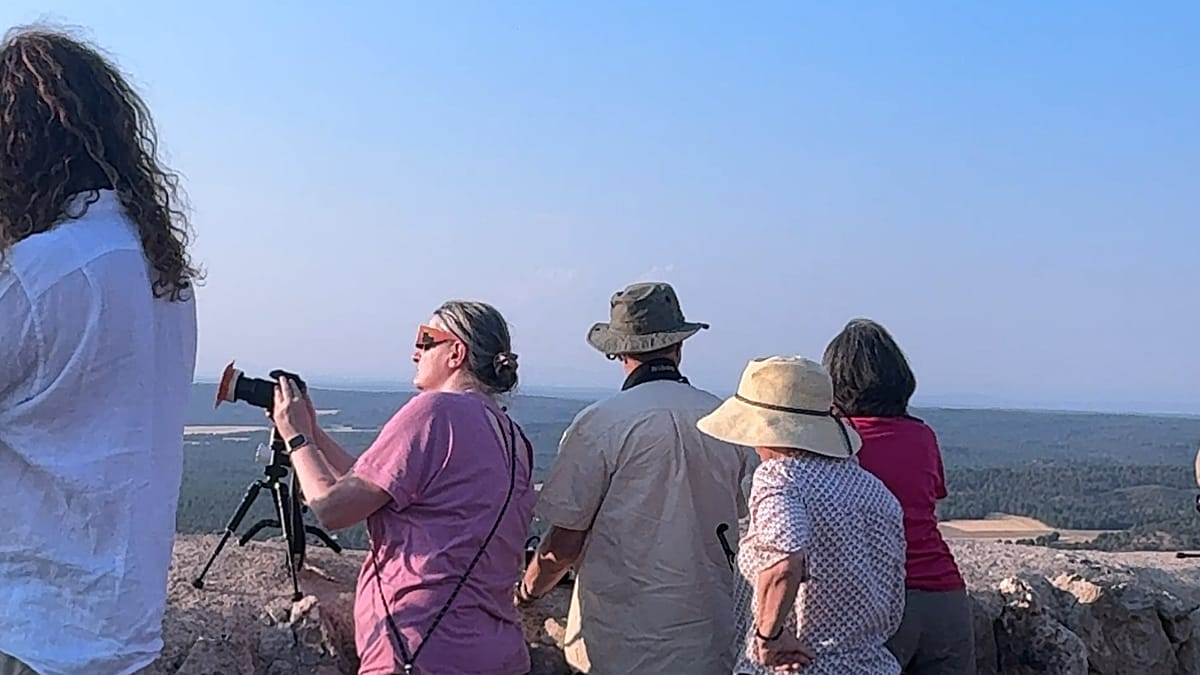
Perched on a rocky promontory above the Castilian plateau, the caliphal fortress of Gormaz has stood for over a millennium. Its 28 towers and 1,200 metres of walls have silently observed six total solar eclipses since their construction in the 10th century. On 12 August 2026, the seventh will pass almost directly overhead, and for the first time, the ancient monument is becoming a magnet for tourists.
The eclipse, the first total solar eclipse visible from the Iberian Peninsula since 1912, has drawn thousands of domestic and international visitors to this small town in the province of Soria, in Spain's sparsely populated interior. Unlike the coastal sun-and-beach destinations that typically attract foreign tourists, Gormaz offers a unique blend of history and celestial spectacle.
A rare alignment of history and astronomy
The path of totality runs remarkably close to the fortress, making it one of the most atmospheric vantage points in Europe. Local authorities estimate that the event could generate between 400,000 and 1.5 million additional car journeys across the regions in the eclipse's path, with up to 164,000 visitors arriving from abroad and 282,700 from within Spain.
For Gormaz, a village of barely a few dozen permanent residents, the influx is transformative. Hotels and rural guesthouses in Soria have been booked for months, and local businesses are preparing for a surge in demand. The eclipse offers a rare opportunity to showcase the region's cultural heritage, which includes not only the fortress but also the surrounding vineyards and medieval villages.
While the eclipse is a boon for tourism, it also poses challenges. Many in Spain may miss the event due to cloudy skies or logistical difficulties, and authorities have warned of potential traffic congestion. Nevertheless, the enthusiasm is palpable.
Astronomers and casual observers alike are making their way to the best viewing spots. Europe is turning skyward for this rare phenomenon, with eclipse chasers from across the continent converging on Spain. The fortress, with its panoramic views, is expected to be one of the most photographed locations.
For those unable to travel, exact times for the eclipse in Spanish cities have been published, allowing millions to plan their viewing. The event also has implications for Europe's power grid, as eclipse glasses have sold out and solar operators brace for a dip in generation.
Beyond the immediate spectacle, the eclipse is a reminder of the enduring appeal of Europe's historical sites. Gormaz, once a frontier fortress of Al-Andalus, now serves as a bridge between past and present, drawing visitors who might otherwise never have discovered this corner of Castile.
As the moon's shadow sweeps across the peninsula, the fortress will once again bear witness to a cosmic event, but this time with a global audience. For the people of Soria, it is a moment of pride and an opportunity to share their heritage with the world.