Gran Canaria has long been known as a winter sun escape for northern Europeans, but the island is now positioning itself as a destination for every season. With 236 kilometres of coastline, volcanic highlands, and a capital that blends history with modern urban life, it offers a density of experiences that few European islands can match.
Tourism officials are keen to move beyond the traditional summer peak. The island's airport operates around the clock, and in 2025 it handled 15.82 million passengers and 142,884 flight operations, according to Turismo de Gran Canaria. Direct connections link the island to more than 160 airports across 30 countries, served by over 60 airlines. That connectivity, combined with a mild climate, makes Gran Canaria a viable option in every month of the year.
A compact island with an unusually broad reach
Often described as a “continent in miniature”, Gran Canaria packs pine forests, deep ravines, and whitewashed mountain villages within a short drive of the coast. A morning on the beach can give way to an afternoon hike and dinner in Las Palmas de Gran Canaria, all without changing hotels. The island's geography supports a wide range of activities: hikers use a network of trails through the highlands, cyclists and runners train year-round, and golfers play on courses that include Spain's oldest golf club, founded in 1891.
The trade winds and Atlantic position keep temperatures around 24°C on average, with mild winters and summers that are not oppressively hot. Those same winds create consistent conditions for surfing, windsurfing, kitesurfing, and diving at different points around the island throughout the year.
Sustainability you can see on the ground
Sustainability here is tied to specific places and practices rather than slogans. Around 43% of Gran Canaria falls within its Biosphere Reserve, designated by UNESCO in 2005. The reserve encompasses rural communities where farming, cheese-making, and transhumant grazing remain part of daily life. The island also holds a Biosphere Destination certification, linking tourism development to the United Nations' Sustainable Development Goals.
The mountains are home to the Risco Caído and Sacred Mountains of Gran Canaria Cultural Landscape, a UNESCO World Heritage Site since 2019. This landscape contains troglodyte settlements, granaries, cisterns, and sacred sites linked to a pre-Hispanic culture that evolved in isolation for centuries. In the main cave at Risco Caído, an opening in the ceiling allows sun and moonlight to enter at certain times of the year, casting a beam that illuminates the interior in a unique way. That relationship between landscape and sky continues today.
Gran Canaria's night skies have earned international recognition as a Starlight Tourist Destination, a designation first received in 2018 and renewed in February 2026, extending it through to 2029. Ancient islanders used those same skies to track the seasons; today, efforts to preserve them support both environmental protection and a growing interest in astrotourism, with numerous designated viewpoints around the island.
Flavours, scenery and local life
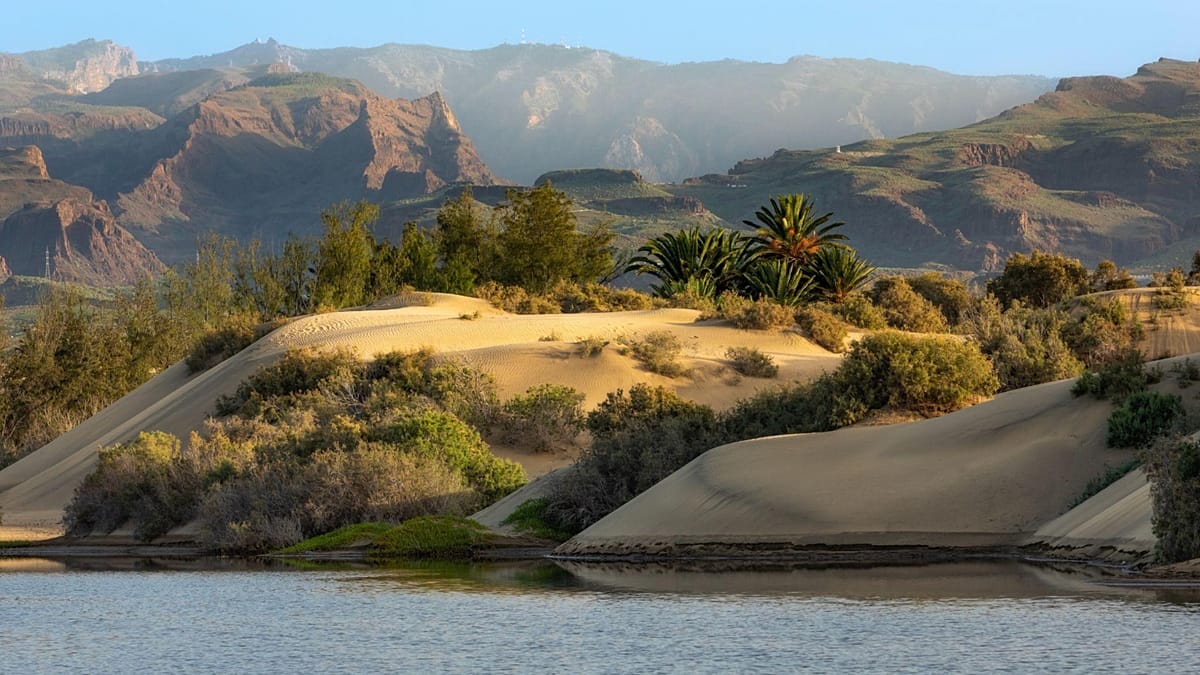
The coast still matters, of course. Gran Canaria's 236 kilometres of coastline hold more than 60 kilometres of beaches, from the Dunes of Maspalomas to Las Canteras, alongside quieter coves and natural rock pools around the island's edges.
Inland, the island's food culture tells a parallel story. Gran Canaria is currently home to five Michelin-starred restaurants, while a certified Wine Route links more than 50 local businesses, including wineries, restaurants, wine bars, estates, and cheesemakers. Local producers champion Flor de Guía, a protected cheese exclusively curdled with thistle flower, alongside gofio (roasted and ground maize), tropical fruit, sea salt, and Atlantic seafood. The Agaete valley's coffee plantations, among the few in Europe, add a further point of difference.
That emphasis on authenticity is reflected in the Gran Canaria Km.0 Fair, a travelling initiative supported by Gran Canaria Tourism that promotes agri-food products grown or produced on the island. The fair tours towns across Gran Canaria, bringing producers and consumers together and showcasing local cheeses, honeys, wines, fruit, and vegetables. The initiative encourages responsible consumption, supports the local economy, and helps sustain activities closely linked to the conservation of the landscape and the rural environment.
Las Palmas de Gran Canaria adds a cosmopolitan dimension. Its historic quarters of Vegueta and Triana hold landmarks such as the Casa de Colón and the Museo Canario, alongside architecture shaped by centuries of transatlantic trade. Las Canteras beach runs alongside the city's shops, bars, and restaurants, bringing the Atlantic into the heart of the capital.
As European tourism looks beyond the traditional summer peak, Gran Canaria offers a useful test case: an island that is spreading its appeal across the entire calendar. For travellers seeking a destination that combines natural variety, cultural depth, and year-round accessibility, this Atlantic island makes a compelling argument.