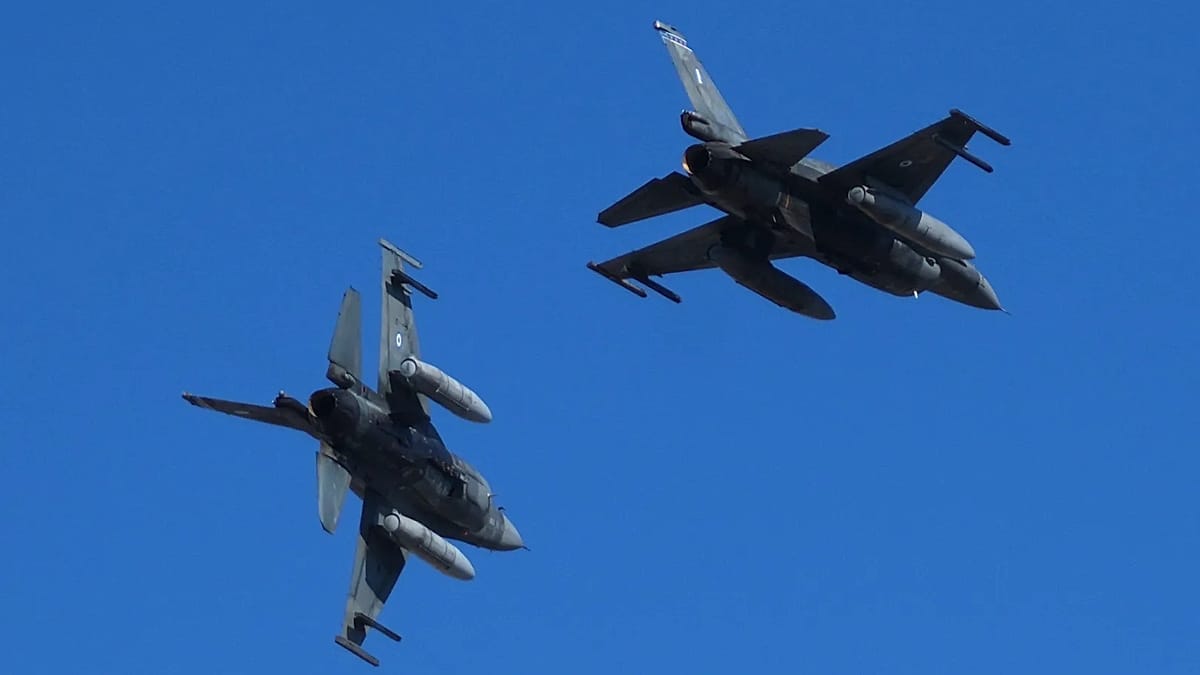
Greek fighter jets scrambled on Tuesday after a Turkish unmanned aerial vehicle was detected entering the Athens Flight Information Region and violating national airspace over the northern Aegean. The drone operated in the maritime area between the islands of Samothrace and Lemnos, prompting an immediate response from the Hellenic Air Force.
A pair of F-16s was launched to locate, identify, and intercept the UAV. The swift reaction underscores Athens' readiness to respond to any breach of its airspace, a recurring point of friction between the two NATO allies.
Close call near Alexandroupoli
The situation escalated when the Turkish drone approached the vicinity of Alexandroupoli Airport's terminal runway at the moment an Aegean Airlines passenger aircraft was preparing for takeoff. Coordination between Greek civil aviation authorities and the fighter jets ensured the UAV was driven away without endangering the commercial flight.
As a precaution, the passenger plane was instructed to follow an alternative flight path and maintain a low altitude until it had cleared the area. It then continued its journey normally to Eleftherios Venizelos Airport in Athens.
The incident carries added weight given its timing—just hours after the Turkish Ministry of Defence issued fresh statements about the potential establishment of a UAV base on the island of Rhodes. Ankara argued that such a development could undermine "peace and stability in the Aegean" and hinted at the possibility of taking "necessary measures."
In Athens, officials are assessing the recent incidents collectively, considering whether they represent a coordinated effort by Turkey to send political and military signals or indicate a broader shift in its posture in the Aegean. The region has long been a flashpoint, with disputes over airspace, territorial waters, and the demilitarization of islands.
This latest interception comes amid broader European concerns about drone proliferation and airspace security. As European nations rethink their defence strategies, the use of unmanned systems has become a focal point. For instance, Switzerland plans to field a drone battalion by 2028, reflecting a continent-wide trend. Meanwhile, the war in Ukraine has demonstrated the tactical importance of drones, with Ukrainian cities frequently targeted by Russian UAVs.
For Greece, the immediate priority remains safeguarding its airspace and ensuring the safety of civilian aviation. The interception near Alexandroupoli—a strategically vital city close to the Turkish border—highlights the delicate balance between vigilance and de-escalation.
As the situation develops, European observers will watch closely whether Ankara's rhetoric translates into concrete actions in the Aegean. For now, the Greek military remains on alert, ready to respond to any further incursions.