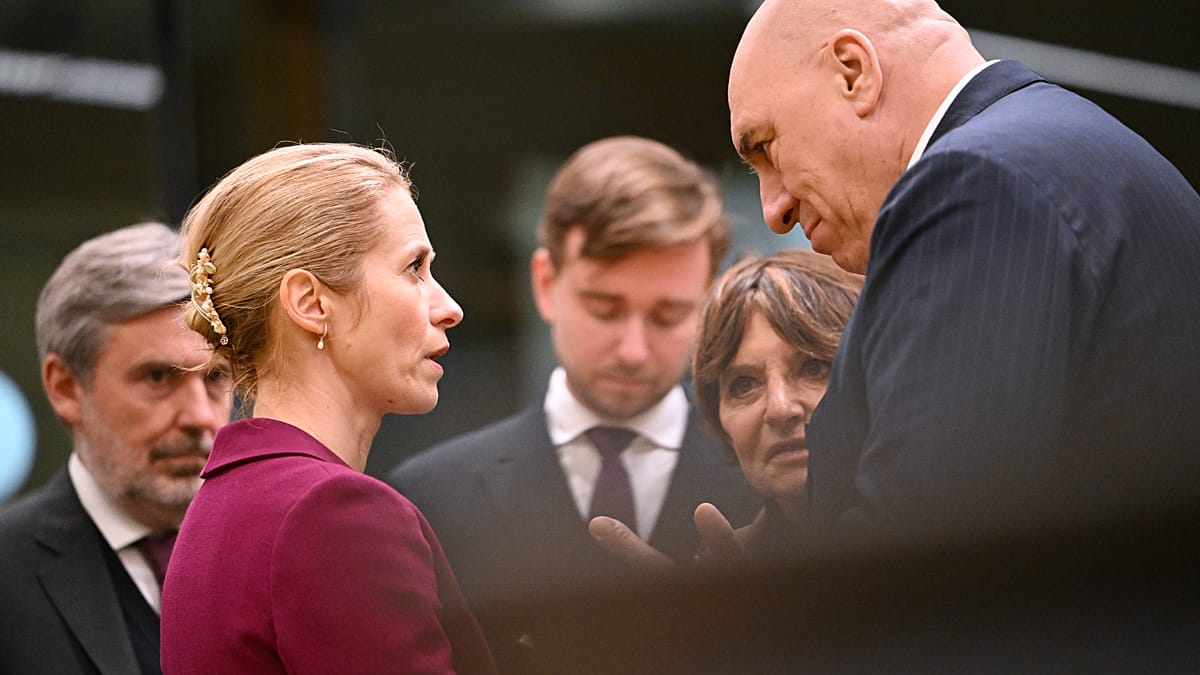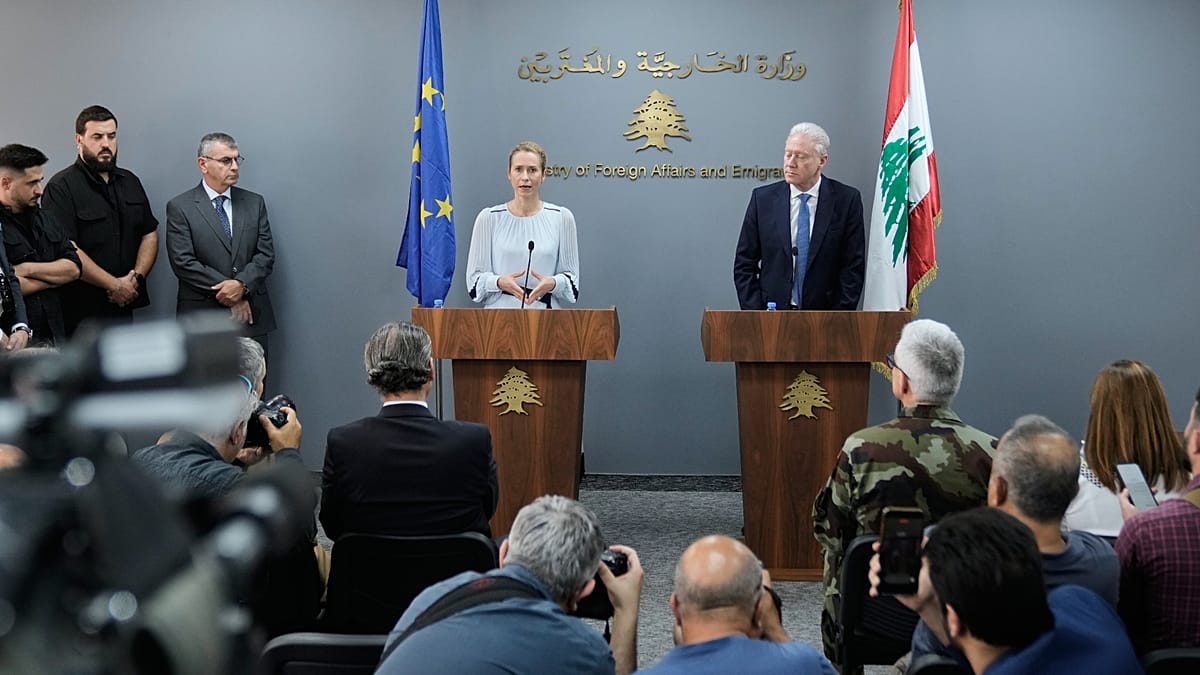
European Union foreign ministers gave the green light on Monday to a new civilian-military mission in Lebanon, aimed at bolstering the country's security forces as the United Nations prepares to wind down its long-running peacekeeping operation there. The decision, taken at the Foreign Affairs Council in Luxembourg, marks a significant step in the EU's efforts to support stability in the region.
The mission, which could be operational within months, will focus on border and maritime security, counter-drone operations, and training Lebanese security forces. Its precise mandate, staffing levels, and command structure have yet to be finalized, but EU officials expect it to run for up to three years under the bloc's Common Security and Defence Policy (CSDP).
Unlike the United Nations Interim Force in Lebanon (UNIFIL), whose mandate expires at the end of 2026, the EU mission will not deploy in the south of the country, where Israel continues its military campaign against the Iran-backed Hezbollah group. This distinction is crucial, as it avoids direct involvement in the volatile border region.
“We will establish a new mission in Lebanon. It has a civilian and military pillar,” said EU foreign policy chief Kaja Kallas ahead of the meeting. “We hope that this mission will be ready to work on the ground already, in a couple of months. I was just in Lebanon last week. This is highly welcomed by the local authorities.”
The decision comes as Lebanon faces an uncertain security future following the planned withdrawal of UNIFIL, which has served as a buffer between Israel and Lebanon for decades. Lebanese President Joseph Aoun has called for the UN operation's mandate to be extended, but Israel has long criticized UNIFIL as ineffective in containing Hezbollah, and the United States has also questioned its role, favoring a direct security arrangement between Israel and Lebanon.
EU officials insist the new mission is not meant to replace UNIFIL but to strengthen Lebanon's own security capabilities. “It will have a number of tasks to carry out over a period of up to three years, namely strengthening border security, ensuring maritime security and combating drones. In both its military and civilian aspects, the mission will support the Lebanese police in their day-to-day duties,” said Jean-Noël Barrot, France's Minister for Europe and Foreign Affairs.
Brussels is considering deploying around 150 personnel, a fraction of the roughly 7,500 peacekeepers currently serving with UNIFIL. Contributions of personnel and equipment by member states will be voluntary, and it remains unclear which countries will participate. However, several existing UNIFIL contributors—including Italy, France, Spain, Ireland, Germany, Austria, Finland, and Poland—have expressed interest in maintaining a presence in Lebanon.
Command structure and international coordination
The command structure is another unresolved issue. One proposal under discussion would see leadership rotate between Italy, France, and Spain. In June, French President Emmanuel Macron and Italian Prime Minister Giorgia Meloni announced that their countries would jointly lead an international coalition to support Lebanon following UNIFIL's withdrawal. It is not yet clear whether that initiative will operate separately or be incorporated into the EU mission.
Ireland, which currently holds the rotating presidency of the Council of the EU, has also signalled its intention to participate. Dublin is prepared to contribute to the civilian component, although its involvement in the military mission could be complicated by ongoing reforms to the legal framework governing overseas deployments of Irish troops.
The EU's move comes as the bloc seeks to enhance its security and defence posture, a theme that has gained urgency in recent months. Discussions on a European Security Council and new mechanisms to counter hybrid threats are part of a broader effort to make the EU a more credible security actor. The mission in Lebanon is a concrete example of this ambition, though its success will depend on the willingness of member states to contribute resources and personnel.
For now, the EU is positioning itself as a reliable partner for Lebanon, even as the international community's presence there shrinks. The mission's ability to deliver tangible results will be closely watched, not only in Beirut but also in capitals across Europe and the wider region.