European leaders are once again scrambling to present a united front after US President Donald Trump blindsided the continent with a tailored deal to release thousands of tonnes of previously sanctioned diesel to Russia. The agreement, announced on Truth Social, has sent shockwaves through the transatlantic alliance and deepened concerns about the reliability of Washington's commitments.
The move fits a pattern of unilateral diplomacy that has repeatedly sidelined European interests. Since February last year, when Trump first called Putin without consulting allies, Europe has been rattled by a series of unexpected developments: a hastily arranged summit in Alaska, a leaked 28-point plan widely seen as favourable to Moscow, and a sanctions waiver for Russian crude oil. The diesel deal adds another chapter to that unsettling story.
Trump has also resumed public attacks on Ukrainian President Volodymyr Zelenskyy's legitimacy, calling for fresh elections despite Ukraine's constitutional ban on voting during wartime. "I suggest they get a new leader who can make a deal," Trump said, drawing applause from Moscow. Zelenskyy has repeatedly reminded Trump that elections are impossible under martial law.
Europe's response: unity and defiance
In Brussels, EU foreign ministers moved quickly to counter the impression of transatlantic drift. They approved a record-breaking addition of 1,600 names to the sanctions list, half of them linked to the production of ballistic missiles used against Ukraine. The contrast with Washington's approach could hardly have been starker.
"We showed unity today on these listings," said EU foreign policy chief Kaja Kallas. "But, of course, it would be much stronger if we had acted together with the US. Our message to the United States is that only pressure works with Russia."
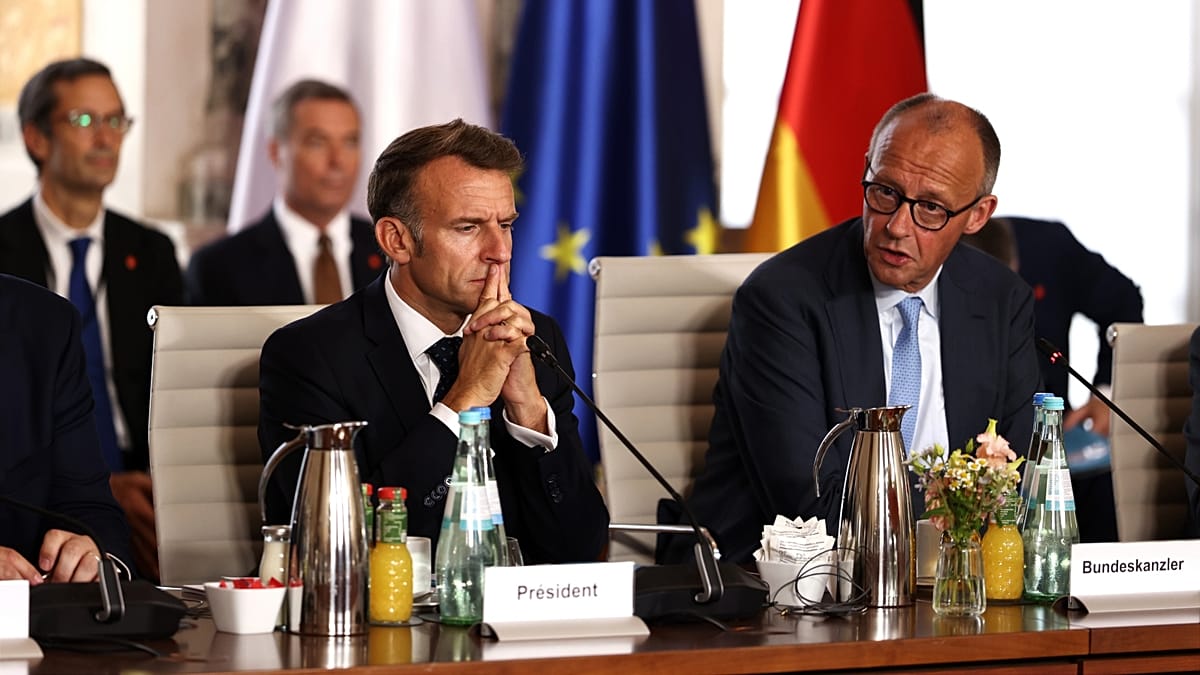
French President Emmanuel Macron echoed that sentiment, telling reporters: "I think we need to be collectively serious. Today, I believe, we have no factual reason to change our position." German Chancellor Friedrich Merz was equally blunt, saying that emulating the Trump-Putin diesel deal was "out of the question" for Europe, despite rising energy prices. "Russia will only negotiate seriously under pressure, and that is why we are sticking to our sanctions against Russia," Merz said.
The EU's resolve is being tested, however, by the escalating human and economic toll of the war. Russia has intensified its attacks on Ukrainian infrastructure, killing civilians and destroying power stations, data centres, warehouses and railways. The Black Sea blockade has crippled Ukrainian grain exports, depriving the state of vital revenue. As economic activity stagnates, the EU is realising that its multibillion-euro support packages will fall short by next year. With the US out of the picture, the burden is shifting to European taxpayers.
The prospect of Russia selling previously sanctioned diesel to fund its war effort is particularly galling for Kyiv and its allies. It also raises serious questions about the credibility of US security guarantees in any post-war settlement. Yet Europe's collective assessment remains that breaking away from Washington would cost more than it would gain.
"What we need to do is refocus and redouble our efforts in keeping pressure on Russia," said Irish Foreign Minister Helen McEntee. "Our priority has to be to maintain that pressure, but also to maintain our channels with the US, because this is not going to be achievable without the support of the US."
Just as the diesel deal broke, senior officials from Ukraine, France, Germany, the UK, the European Commission and NATO were meeting in Miami with Trump's envoys Steve Witkoff and Jared Kushner. The talks were the first of their kind since the US-Iran war diverted Washington's attention from Ukraine. The European Commission's chief spokesperson described the meeting as a "positive step" and confirmed that Europe would continue to engage with both partners and the US to bring the war to a close.
Europe's struggle to secure a seat at the negotiating table has been a recurring theme. It took months after the establishment of the "Coalition of the Willing" for European countries to be included in US-led talks. The statements from Brussels suggest that, despite the frustration, Europe sees no alternative but to stay engaged. As EU ministers push back on the diesel deal, the bloc is also grappling with internal budget disputes ahead of a crucial summit. The coming months will test whether Europe can translate its rhetorical unity into concrete action, especially as Trump pressures Kyiv and the EU's own financial constraints loom large.