The European Union's naval mission in the Red Sea is struggling to secure additional warships, even as Houthi attacks on shipping and regional targets escalate. Only the Netherlands and Belgium have pledged one extra vessel each, exposing the bloc's limited defence capacity at a critical moment for global energy routes.
Aspides, launched in February 2024 to protect merchant shipping in the Bab el-Mandeb Strait, currently relies on a rotating roster of ships from several member states. But the operation's commander has said at least ten vessels are needed for a credible presence, and that number remains out of reach.
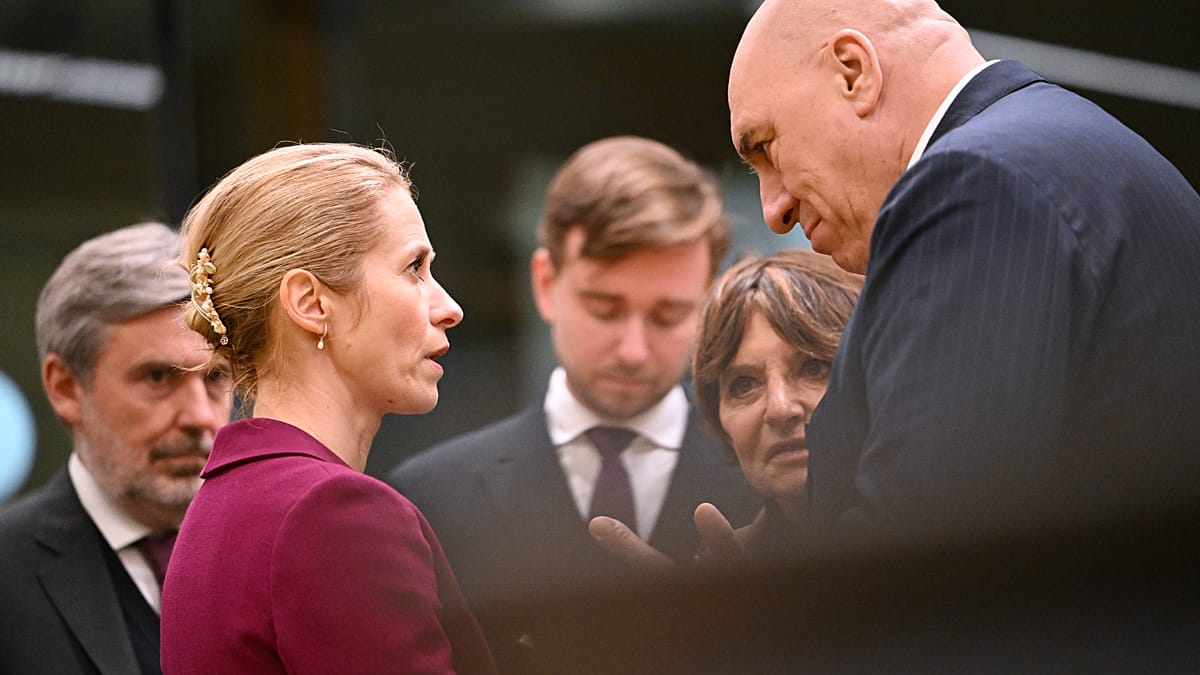
EU foreign policy chief Kaja Kallas told reporters after Monday's Foreign Affairs Council in Brussels that discussions with member states are ongoing but that concrete commitments are slow to materialise. "We need at least ten ships, and we are not there. But today we also heard from a few member states that the discussion is ongoing," she said. "So I hope that the ships the operation actually needs will materialise, because if we want to be a credible security provider in the region, then we need to have a credible mission."
Kallas sent a letter to European capitals on 19 September asking for additional naval and air assets, following a request from Italy. The Italian push came after an Italian frigate had to escort a merchant vessel off Yemen's coast. Since Aspides became operational, it has escorted hundreds of ships through the Red Sea, a vital corridor for oil and liquefied natural gas shipments to Europe.
The security situation has deteriorated sharply in recent days. The Houthis, an Iran-backed armed group controlling much of Yemen, have launched a series of strikes on Saudi Arabia, including an attack on Riyadh's international airport that killed 14 people and injured more than 300. The escalation threatens not only regional stability but also the free flow of energy supplies that European economies depend on.
Italian Defence Minister Guido Crosetto told The National earlier this month that Rome is willing to increase its own contribution, but only if other EU countries show similar commitment. "Given that the crisis that first emerged in Hormuz and now in Bab Al Mandeb is creating major difficulties for European economies, and therefore for European citizens, I believe Europe should play a much greater role than it has so far in trying to bring about peace," he said.
Italy, which relies heavily on Middle Eastern energy, has already provided air-defence and radar systems to Saudi Arabia, the UAE, Qatar, Bahrain and Kuwait in response to Iranian airstrikes. The country is also one of the main contributors to Aspides, alongside Greece, which together supply the mission's three core ships. Germany, France, Spain, the Netherlands and Belgium contribute vessels on a rotational basis, meaning the number of operational warships fluctuates.
The Netherlands has pledged to add a frigate, but only in an associate role focused on situational awareness and information gathering. Belgium will contribute one of its two frigates, the Leopold I, but the vessel is facing technical problems and is not expected to join the mission until next year. Other member states have preferred to keep their ships in the Baltic and Black Seas, where Russia's hybrid attacks have heightened tensions.
Thin capabilities across the board
The difficulty in reinforcing Aspides highlights a broader challenge for European defence: after decades of underinvestment, many navies are stretched thin. The war in Ukraine has also diverted attention and resources to the eastern flank, leaving fewer assets available for missions further afield.
Kallas's appeal for more ships comes as the EU tries to position itself as a credible security provider in the region, a role that has traditionally been dominated by the United States. But with Washington's focus shifting to the Indo-Pacific, European allies are under pressure to take on more responsibility in their own neighbourhood.
The Red Sea crisis is not isolated. Iranian-backed groups have also stepped up attacks on tankers in the Gulf of Hormuz, as recent reports indicate. The EU's ability to respond to these threats will depend on whether member states can overcome their reluctance to commit scarce naval assets.
For now, the Aspides mission continues to operate, but its effectiveness is limited by the shortage of ships. As the Houthis show no sign of backing down, the EU faces a stark choice: either find the political will to bolster its naval presence, or accept a diminished role in protecting one of the world's most important trade routes.