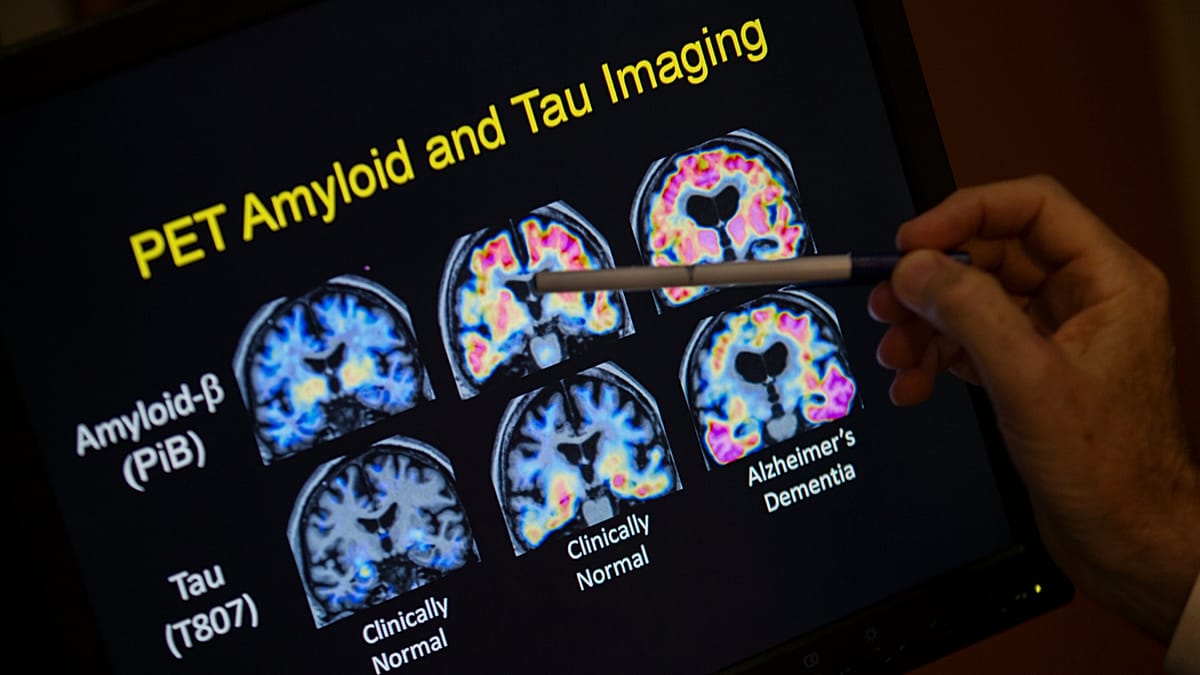
Researchers in Greece have developed a new pharmaceutical molecule that, in preclinical tests, restored learning and memory in animal models of Alzheimer's disease. The compound, named RSQ-020, targets the Tau protein, which when misfolded and clumped together is a hallmark of several severe neurodegenerative conditions.
The work was led by Giorgos Skretas, director of the Institute of Bioinnovation at the Alexander Fleming Biomedical Sciences Research Centre in Athens, in collaboration with the National Hellenic Research Foundation and the spin-off company ResQ Biotech. The results offer a fresh approach to tackling diseases that have so far resisted conventional drug development.
A different way to find drugs
Traditional drug discovery often relies on finding a molecule that fits a specific protein like a key in a lock. But proteins involved in misfolding diseases do not have a fixed shape; they constantly change, making it hard to design effective treatments. Skretas and his team took a different route.
“Instead of simply looking for a molecule that will bind to a specific site on the protein, we look directly for one that delivers the desired effect,” Skretas explained. “Our technology allows us to see when a faulty protein is restored, because the bacteria we use emit a green signal when that happens.”
The platform uses modified bacteria that can produce billions of different candidate molecules while simultaneously indicating which ones have genuine biological activity. The researchers insert a human protein of interest into a bacterium and program it to fluoresce only when that protein returns to a more normal state. When a bacterium lights up, it signals that the molecule inside has achieved the desired effect.
This method allows scientists to screen potential drugs inside living cells, which more closely mirrors real disease conditions than traditional laboratory tests. It also accelerates the identification of promising compounds, cutting down the time needed to move from discovery to preclinical testing.
The technology was initially developed for amyotrophic lateral sclerosis (ALS), focusing on the SOD1 protein, but its potential applications are much broader. Protein misfolding is a common feature of Alzheimer's, Parkinson's, and other serious nervous system disorders, so the platform could be adapted to target many of them.
In the current study, the team demonstrated that RSQ-020 restored cognitive function in animal models with Alzheimer's-like pathology. While the results are promising, further research and clinical trials are needed before the molecule can be considered for human use.
The discovery adds to a growing body of European research into Alzheimer's treatments. In France, for example, trials are testing robots and AI as companions for patients, highlighting the continent's multifaceted approach to the disease.
Skretas emphasized the importance of the collaborative effort: “This is a true example of how basic research, applied science, and entrepreneurship can come together to address one of the biggest medical challenges of our time.”
The team hopes that their platform will not only lead to new Alzheimer's therapies but also inspire similar efforts across Europe. As the continent faces an aging population, innovative solutions like this are crucial.