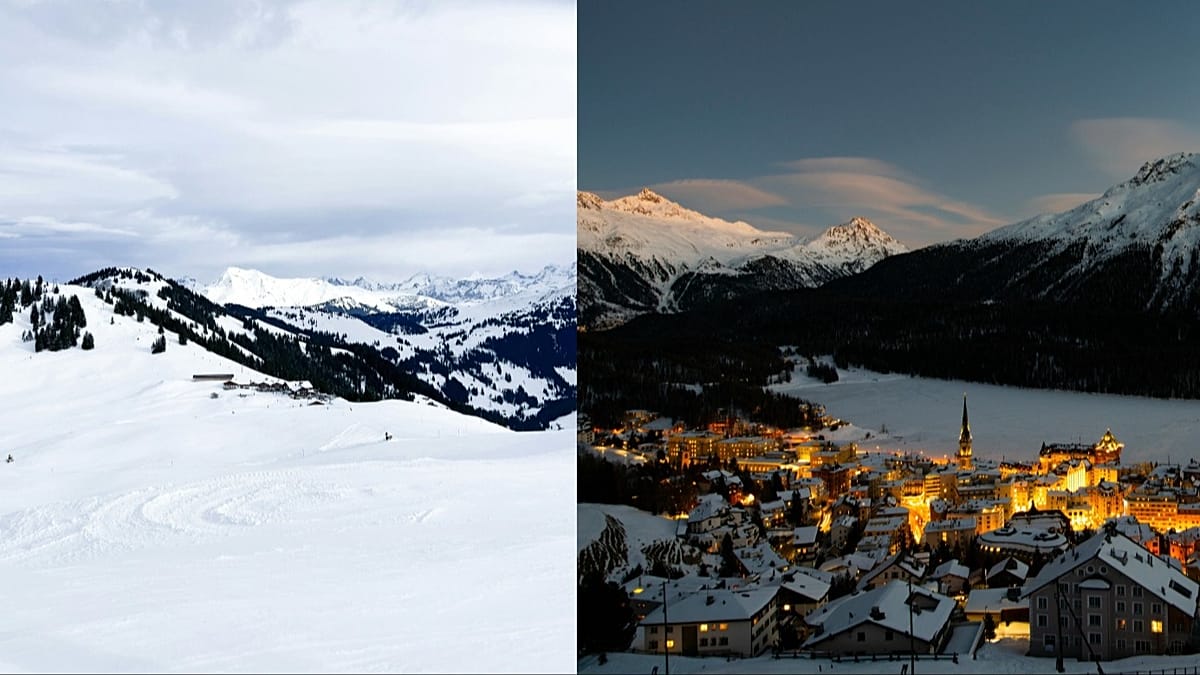
Switzerland has long been the benchmark for Alpine winter escapes, but when it comes to picking a base for a snow-filled holiday, two names dominate the conversation: Gstaad and St. Moritz. Both deliver postcard-perfect peaks, immaculate pistes, and a certain old-world glamour, yet they cater to different tastes. Whether you're chasing vertical drops or prefer your après-ski with a side of artisanal shopping, here's how they compare.
The skiing: scale versus serenity
For dedicated skiers, St. Moritz is the clear heavyweight. Its network spans 350 kilometres of pistes across four main areas—Corviglia-Piz Nair, Corvatsch-Furtschellas, Diavolezza, and Lagalb—while Gstaad offers a more modest 200 kilometres. St. Moritz also sits higher, at 1,856 metres above sea level, and its season stretches from late November to early May, compared with Gstaad's mid-December to early April window. Both resorts receive roughly four metres of snow annually, but the Engadin valley's sunny microclimate gives St. Moritz an edge in reliable conditions.
Gstaad, however, counters with a greater vertical drop. Its slopes descend 1,950 metres from the 3,000-metre summit of the highest ski point down to the valley floor. The longest run measures 7.5 kilometres, starting at La Videmanette, which also offers extensive snowshoeing trails. According to Gstaad tourism officials, the focus here is less on kilometre counts and more on "the peace and quiet and the impressive landscape with its perfectly groomed pistes."
On-mountain dining and costs
At St. Moritz's Corviglia, a cable car whisks skiers up to Piz Nair at 3,057 metres, where the Piz Nair 10'000 Feet restaurant serves local specialities like Güggeli (grilled chicken) with panoramic views. A day ticket for Corviglia in November costs between 52.50 and 57.50 CHF (€55.75–€61.06). In Gstaad, a day pass from Gsteig is cheaper at 45 CHF (€47.86), though the season is shorter.
Beyond the slopes: culture and cuisine
Gstaad leans into its pastoral charm. The pedestrianised village centre is lined with designer boutiques—Ralph Lauren, Zadig & Voltaire—alongside jewellery and watch shops, but the real draw is the Fondueland experience. Set among Alpine pastures, eight oversized caquelons (fondue pots) each seat eight people. Visitors can pre-order "fondue backpacks" stocked with traditional or truffle-infused fondue from local dairies, crusty bread from village bakeries, and spices, to enjoy against a mountain backdrop. For art lovers, Studio Naegeli in the historic Chalet Naegeli showcases contemporary fine art and photography.
St. Moritz, by contrast, wears its history on its sleeve. The Badrutt's Palace Hotel, open since 1896, remains a landmark, with lake-facing suites overlooking the frozen Lake St. Moritz. The town's legacy as the birthplace of Alpine winter tourism is palpable, and its sunny position in the Engadin valley ensures more days of sunshine than almost any other Alpine resort.
Getting there and getting around
Both towns are accessible, but the journeys differ. St. Moritz's maintained pass roads make it a three-hour drive from Zurich or Milan, four from Munich. Scenic rail options include the Glacier Express, Bernina Express, and Rhaetian Railway, while international visitors can fly into Engadin Airport at nearby Samedan. Gstaad, nestled in southwest Switzerland, is a straightforward train ride from Interlaken or Montreux—about an hour and 40 minutes—with many carriages featuring large windows to soak in the Alpine valleys. From London, a Eurostar connection via the Swiss rail network is the most scenic route.
The verdict
Choose St. Moritz if you're a serious skier who values extensive terrain, a long season, and a lively, historic resort atmosphere. Opt for Gstaad if you prefer a quieter, more intimate Alpine village with excellent snowshoeing, cultural touches, and a slower pace. Both deliver the Swiss winter dream—just in different keys. As Swiss Alpine villages face their own challenges, these resorts remain beacons of winter tourism, though visitors should always check current conditions and local guidance.