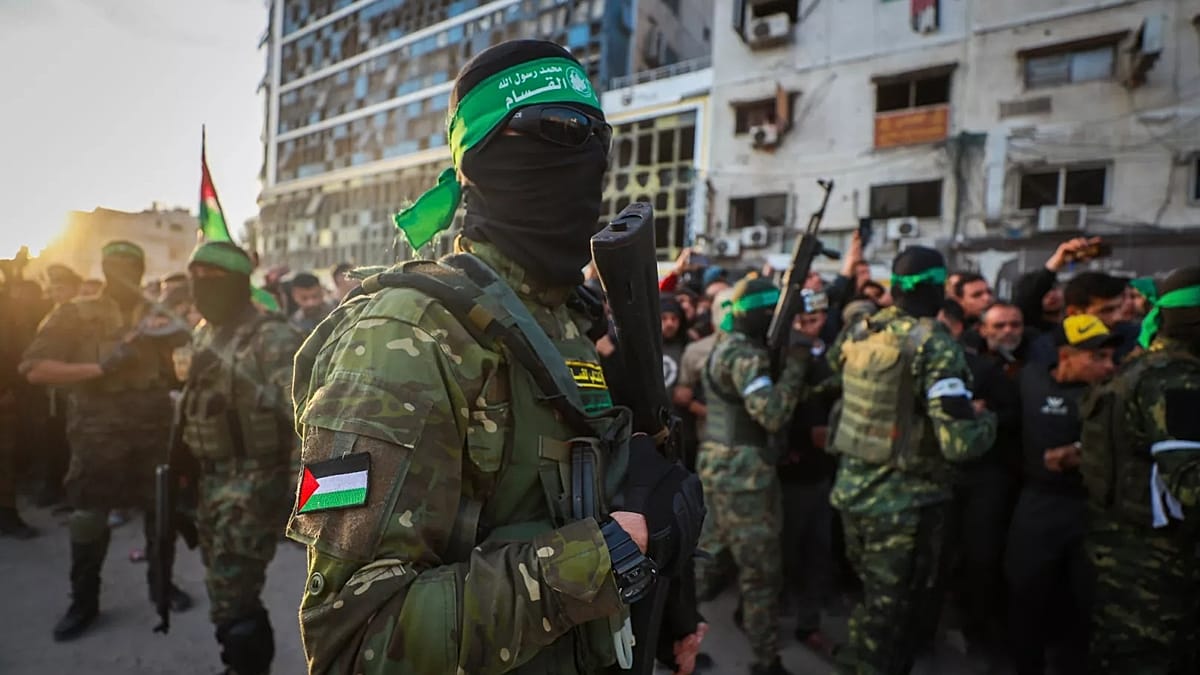
The Board of Peace, an initiative established by US President Donald Trump in January to oversee the end of hostilities in Gaza and its reconstruction, has submitted its first report to the UN Security Council. The document, seen by the AFP news agency, squarely blames Hamas for the lack of progress on the second phase of the ceasefire that was agreed in October.
“At this stage, the principal obstacle to full implementation remains Hamas' refusal to accept verified decommissioning, relinquish coercive control and permit a genuine civilian transition in Gaza,” the report states. Nickolay Mladenov, the board's high representative for Gaza, is scheduled to present the findings to the Security Council on Thursday.
Ceasefire Violations Persist
Despite the truce, Gaza remains mired in daily violence. Israeli strikes continue, and both the military and Hamas accuse each other of breaching the agreement. The report acknowledges that “violations continue to occur on a near daily basis, some of which are serious, and their human consequences — civilians killed, families living in fear, and continued impediments to humanitarian access — cannot be minimised.”
The first phase of the ceasefire, brokered by the Trump administration alongside Qatar and Egypt, saw the release of the last hostages seized in the 7 October 2023 attack on Israel, in exchange for Palestinians held in Israeli prisons. However, the transition to the second phase—which calls for Hamas disarmament and a gradual withdrawal of Israeli forces from more than 50% of the Strip—has stalled for weeks, as international attention has shifted to tensions in Iran and the Strait of Hormuz.
The report emphasises that decommissioning Hamas weapons is “critical for reconstruction to begin, for a timebound Israeli forces withdrawal, and for a credible pathway to Palestinian self-determination and statehood to be pursued.” It adds that “institutions, resources and plans are in place to take the next steps,” but that “the nature and sequencing of those next steps will be shaped by the decisions the parties make now.”
This assessment comes amid broader regional instability. The ongoing violence in Gaza has drawn comparisons to other fragile ceasefire situations, such as the Lebanese MP's warning that no real ceasefire exists as Hezbollah disarmament looms. Meanwhile, the US recently announced a 45-day extension of the Lebanon-Israel ceasefire, highlighting the persistent challenges across the region.
European diplomats have expressed concern that the impasse in Gaza could further destabilise the Eastern Mediterranean. The EU has long advocated for a two-state solution, but the lack of progress on the ground undermines these efforts. The report's focus on Hamas as the primary obstacle may influence European capitals as they consider their own diplomatic and aid strategies.
For now, the daily toll on civilians continues. The report's language is unequivocal: without Hamas relinquishing control and allowing a civilian transition, the path to reconstruction and a lasting peace remains blocked. The Security Council's response to Mladenov's presentation will be closely watched in Brussels, Berlin, and Paris.