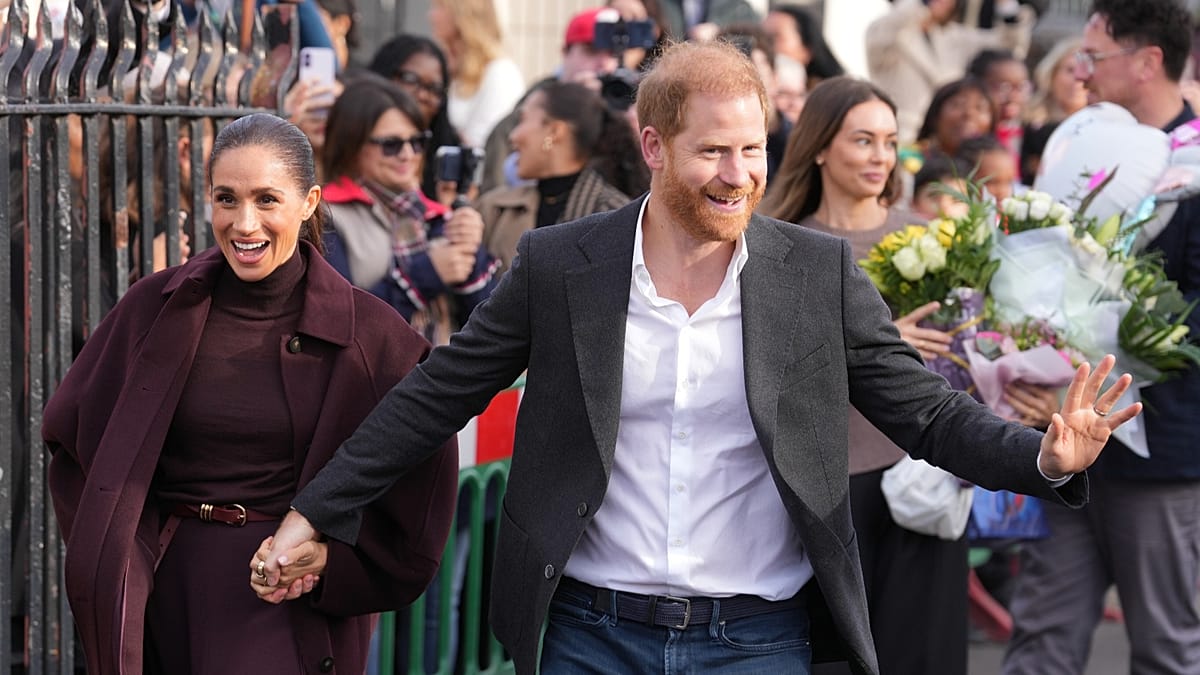
Prince Harry and Meghan, the Duke and Duchess of Sussex, made their first joint public appearance in Britain on Thursday since their unexpected return to the UK in August. The couple were greeted by cheering crowds in Nottingham, where they spent the day visiting three charities focused on supporting young people through music, film, sport, and tackling food poverty.
The visit, which included selfies, hugs, and accepting flowers from well-wishers, has reignited questions about the couple's role within the monarchy. Buckingham Palace, in a letter released last month, made clear that Harry and Meghan are now considered "akin to private citizens" rather than public figures, and that they should not be addressed as "His Royal Highness" or "Her Royal Highness."
A delicate balance
The Nottingham engagement underscores the delicate balance the couple must strike. They have built bridges with King Charles III, but remain estranged from Prince William, the heir to the throne. The palace's guidance, issued by the Lord Chamberlain, acknowledged the couple's financial independence and desire for privacy, stating that their position "will continue to be fully respected."
The letter noted that in January 2020, the Duke and Duchess stepped down from representative duties on behalf of the sovereign and are no longer working members of the royal family. This status distinguishes them from the seven senior working royals: King Charles and Queen Camilla, Prince William and Catherine, Princess of Wales, Princess Anne, and Prince Edward and his wife Sophie.
Harry and Meghan, who moved to California in 2020, returned to the UK with their children, Archie, seven, and Lilibet, five, in a surprise move last August. The late Queen Elizabeth II had previously made clear there was no "half-in/half-out" option, a stance that shaped their departure.
The couple's return has been met with mixed reactions. Some see it as a chance for reconciliation, while others question the implications for the monarchy's image. The Nottingham visit, however, was warmly received by the public, with many expressing support for the couple's charitable work.
This development comes amid broader discussions about the role of the monarchy in modern Britain. As the royal family adapts to changing times, the Sussexes' position remains a point of contention. The palace's guidance, while respectful, draws a clear line between the working royals and those who have chosen a different path.
For now, Harry and Meghan appear committed to their charitable endeavors, even as they navigate their unique status. Their next steps will be closely watched, both by royal observers and the public, as they seek to define their role in the UK and beyond.
In related news, the ongoing legal battles involving other members of the royal family continue to make headlines. A recent court ruling quashed warrants used to search Prince Andrew's homes, adding another layer of complexity to the monarchy's public image.
As Europe watches, the Sussexes' return raises broader questions about the intersection of public duty and personal freedom. Their story resonates beyond Britain, touching on themes of family, identity, and the evolving nature of public service.