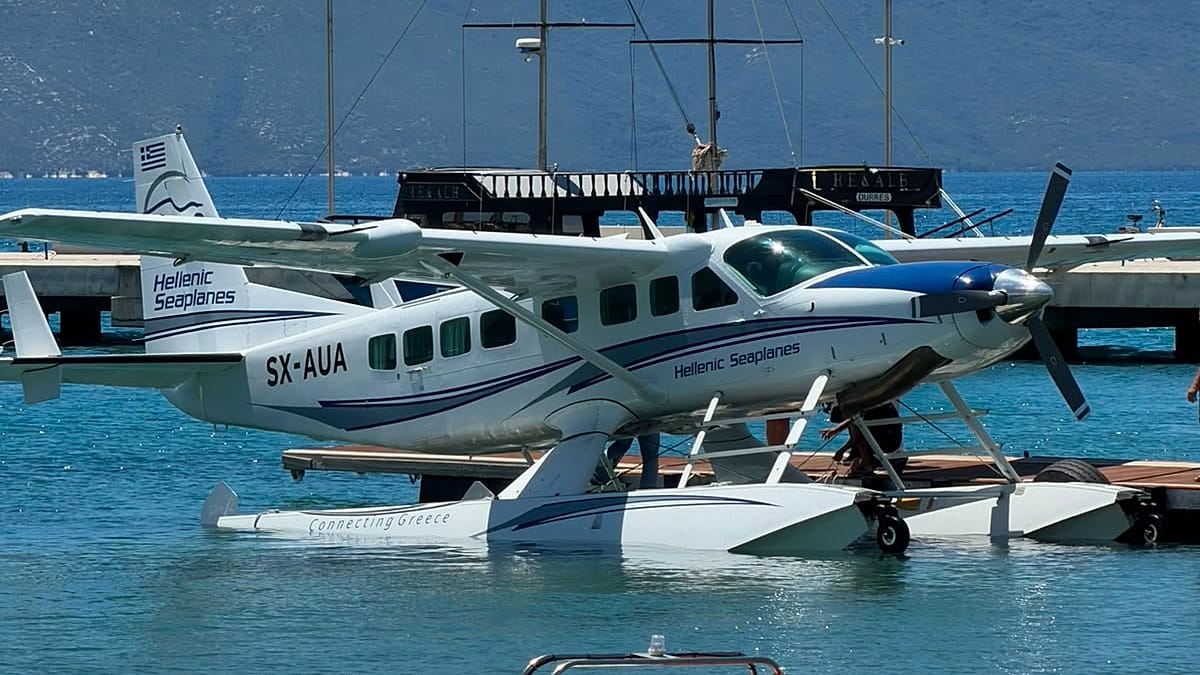
Hellenic Seaplanes has inaugurated the first international seaplane service between Greece and Albania, connecting the city of Ioannina with the Albanian coastal towns of Vlorë and Pogradec. The inaugural flight to Vlorë marks what the company describes as a milestone in regional maritime aviation, aiming to create a new transport corridor across the Ionian and Adriatic seas.
The initiative follows an official invitation from Albanian authorities and is part of a broader cooperation framework to develop seaplane infrastructure and cross-border mobility. Hellenic Seaplanes already operates a network of licensed water aerodromes across Greece, and this expansion into Albania represents its first step beyond national borders.
Strategic Expansion Across the Mediterranean
According to the company's strategic plan, the Greece-Albania link is only the beginning. Hellenic Seaplanes intends to build a wider network covering countries along the Adriatic, the Ionian Sea, the Eastern Mediterranean, and North Africa. The goal is to strengthen connectivity, tourism, and economic cooperation between these regions by using coastal and marine environments as natural runways.
“This is a new model of connectivity for the Mediterranean,” a company spokesperson said. “We are turning the sea into an infrastructure for mobility.” The company sees Greece as a hub of expertise for seaplane operations in the wider region, leveraging its geography and existing licensed sites.
The new routes are expected to benefit both tourism and local economies. Ioannina, a city in northwestern Greece near the Albanian border, serves as a gateway to the Epirus region. Vlorë and Pogradec are popular destinations on the Albanian Riviera and along Lake Ohrid, respectively. The flights reduce travel time significantly compared to road journeys over mountainous terrain.
This development comes amid growing interest in alternative transport links in Southern Europe. As Greece, Spain, and Italy lead a summer 2026 travel surge, seaplanes could offer a novel way to access island and coastal destinations without relying solely on ferries or conventional airports.
Albania has been actively pursuing infrastructure projects to boost tourism, though some have sparked controversy. Albania has pledged EU environmental compliance for a Kushner-linked resort, while protests against that project have entered their 14th day. The seaplane initiative, by contrast, appears to enjoy official support and is framed as a sustainable transport solution.
Hellenic Seaplanes has not disclosed specific ticket prices or flight frequencies for the new routes, but expects to release a full schedule in the coming weeks. The company is also in talks with authorities in Italy, Croatia, and Montenegro to establish additional international connections.
For now, the Ioannina–Vlorë and Ioannina–Pogradec services represent a practical test of cross-border seaplane operations in European airspace. If successful, they could pave the way for a more integrated maritime air network across the continent's southern flank.