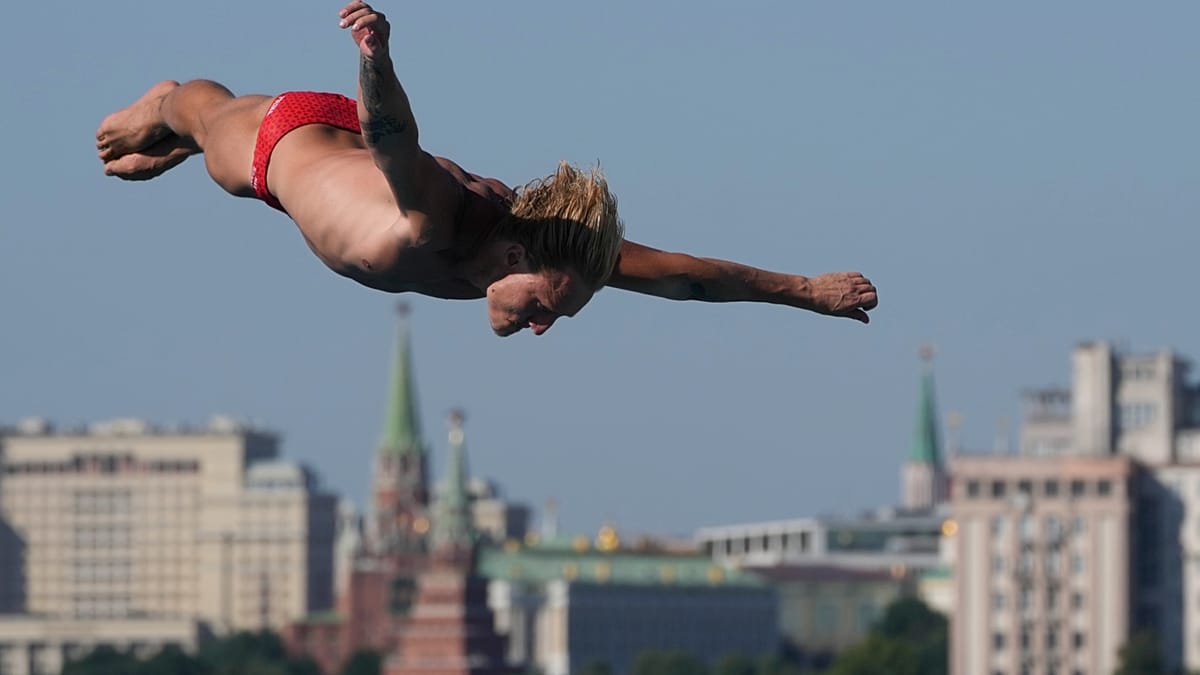
Moscow's annual Two Rivers Festival turned the city's waterways into a stage this weekend, as high divers from 11 countries took turns leaping from towering platforms into the Moskva River. The event, which has become a fixture in the Russian capital's summer calendar, combined sport, spectacle, and a celebration of urban water culture.
Competitors from Russia, Belarus, China, the United States, and several European nations—including Germany, France, and Italy—performed intricate somersaults and twists before slicing into the water. The platforms ranged from 18 to 27 meters, demanding not only athletic precision but also considerable nerve.
A test of nerve and technique
High diving is among the most unforgiving disciplines in sport. Athletes reach speeds of up to 85 kilometres per hour before entry, and the margin for error is measured in centimetres. "You have to commit fully to every jump," said Aleksei Petrov, a Russian diver who has competed internationally for over a decade. "One moment of hesitation and the landing can be dangerous."
The festival's setting added an extra layer of challenge. Unlike the controlled conditions of an indoor pool, the Moskva's current and wind can alter a dive's trajectory. Organisers stationed safety boats and divers nearby, but the risk remained palpable for the crowd lining the embankment.
Among the standout performances was a triple somersault with a half twist from 27 metres, executed by a German competitor, which drew gasps and applause. The judges, a mix of former divers and sports officials, awarded scores based on difficulty, execution, and entry.
The event also served as a qualifier for the upcoming World High Diving Championships, adding competitive stakes to the spectacle. Several athletes used the Moscow meet to fine-tune routines ahead of the global contest.
Beyond the competition, the Two Rivers Festival is part of a broader effort to revitalise Moscow's riverfronts. In recent years, the city has invested in pedestrian zones, parks, and cultural venues along the Moskva and its tributaries. The festival, which also includes music performances and food stalls, drew tens of thousands of visitors over the weekend.
For many spectators, the appeal was the sheer audacity of the dives. "It's terrifying and beautiful at the same time," said Yelena Sokolova, a Muscovite watching with her family. "You can't look away."
The event's international roster underscored the sport's global reach, even as geopolitical tensions have complicated cultural exchanges. Russian sports officials have sought to maintain ties with international federations, and the festival's lineup reflected that effort.
High diving has grown in popularity across Europe, with events in Switzerland, Austria, and Portugal drawing large audiences. The sport's inclusion in the European Championships has also boosted its profile. For athletes, the Moscow stop was a chance to compete in a unique setting and test their skills against the best.
As the sun set over the river, the final dives were met with a standing ovation. The winners—a Russian, a German, and a Chinese diver—shared the podium, a reminder that sport can still bridge divides.