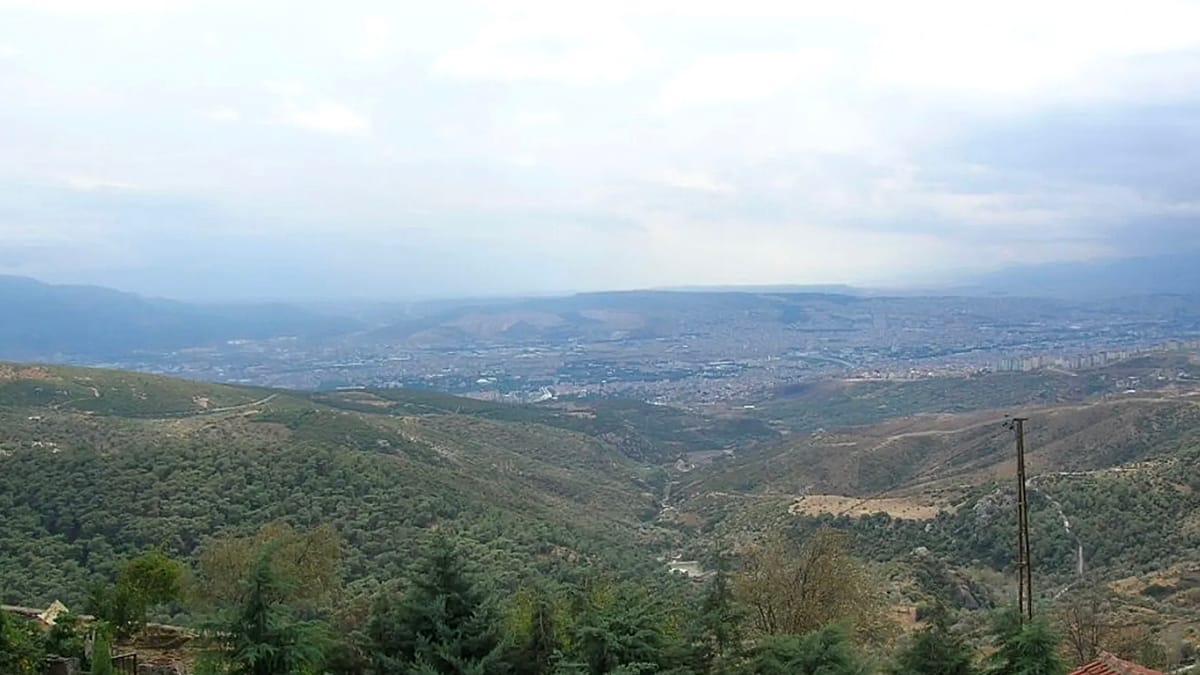
Christopher Nolan's The Odyssey has become a global phenomenon, and with it, a centuries-old question has resurfaced: where did Homer actually compose his epic poems? For archaeologists in Turkey, the answer may lie in the hillsides of İzmir, where a cave in the Bornova Valley has long been venerated as the poet's studio.
Prof. Aylin Ümit Erdem, an archaeologist at Ege University in İzmir, believes the cinematic attention offers a fresh chance to examine the historical and linguistic clues that tie Homer to ancient Smyrna, the city now known as İzmir. In an exclusive interview with Euronews, she outlined the evidence and the limits of current knowledge.
The case for Smyrna
Ancient sources, from Herodotus in the 5th century BC to Strabo in the 1st century BC, consistently name Smyrna as Homer's birthplace. While other candidates like Chios and Cyme have been proposed, Smyrna has remained a strong contender since antiquity.
Erdem points to the linguistic texture of the epics as a key clue. "The Iliad and the Odyssey are written predominantly in the Ionic dialect, but they contain significant Aeolic vocabulary and archaic Greek terms," she explained. This dual-dialect character aligns with the geography of 8th-century BC Smyrna, located at Bayraklı Höyük, which sat precisely on the boundary between the Aeolian and Ionian regions. A bard working in this hub would naturally adopt both dialects.
Bayraklı Höyük was the only fortified urban center in the İzmir basin during that period, making it the most plausible setting for Homer's life. Yet Erdem is careful to distinguish between later reverence and contemporary proof. "We do not yet have direct, concrete archaeological evidence explicitly proving Homer lived or wrote in Smyrna," she said. No 8th-century BC artifacts bearing his name have been found, largely because the deepest layers of the site remain unexcavated.
Later finds, such as Hellenistic coins depicting Homer and a cult statue at the nearby sanctuary of Klaros, reflect how subsequent generations claimed the poet as their own, but they do not confirm his lifetime presence.
Folklore and the cave
Despite the academic caution, local enthusiasm is strong. The Bornova Valley cave, damp and nestled among olive groves, has been called "Homer's Cave" for generations. Ancient texts refer to the poet as Melesigenes, "born of the Meles," a river that flows near Bayraklı. Local researchers point to ancient reliefs that seem to mirror the cave's contours.
Bornova Mayor Ömer Eşki told AFP that preserving Homer's legacy is "a duty we owe to humanity," and the municipality plans to restore the cave for cultural tourism. Researcher Altan Altın expressed no doubt: "Homer is 2,800 years old, while modern borders are just a century old. Homer is Greek. Homer is Anatolian."
The debate over Homer's origins is not merely academic; it touches on national identities and cultural heritage. As a Kyiv stage reimagines the Odyssey for contemporary audiences, the epic's themes of war and homecoming remain as relevant as ever.
For Erdem, the path forward is clear: sustained excavation. "If a direct finding linked to Homer is ever to emerge, it will come from digging deeper into these layers," she said. Until then, the mystery endures, and İzmir's claim rests on a blend of ancient testimony, linguistic analysis, and a cave that has inspired awe for millennia.