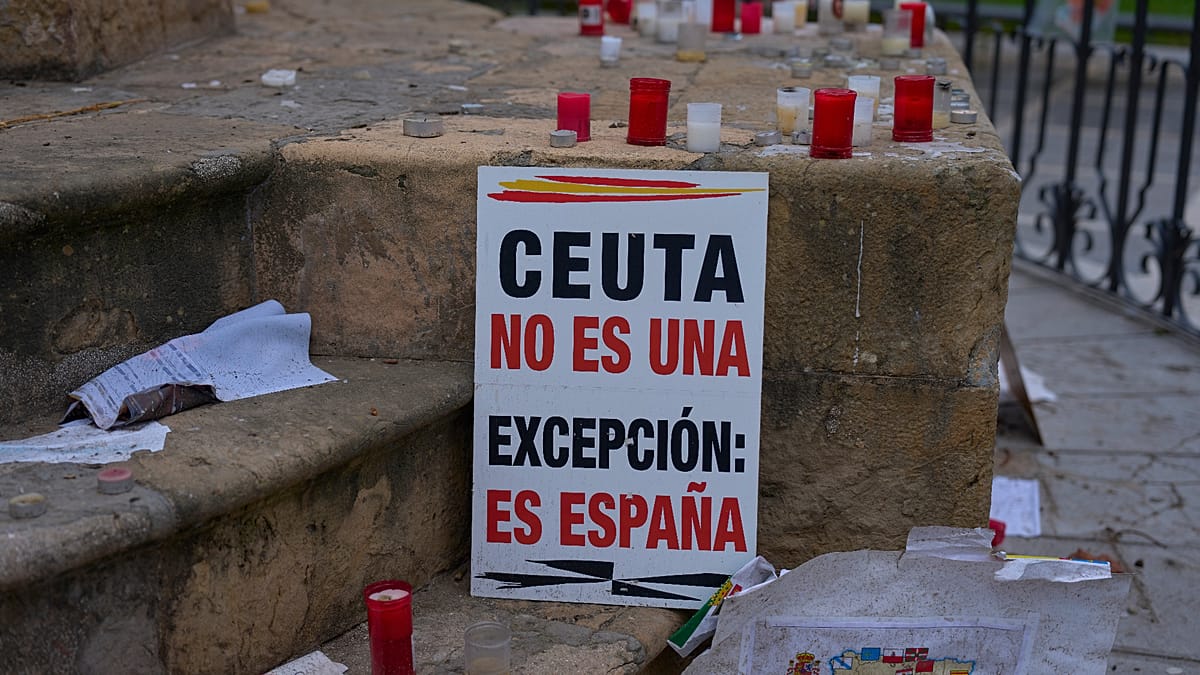
King Felipe VI and Queen Letizia have begun a two-day official visit to the Spanish autonomous cities of Ceuta and Melilla, marking the first time the monarchs have set foot in both territories since Felipe took the throne twelve years ago. The trip, which started in Ceuta's Plaza de África, is the first royal visit to the cities since November 2007, when Juan Carlos I and Queen Sofía made the journey.
The timing is significant: it comes just two and a half months after a mass influx of migrants overwhelmed Ceuta, a city of just over 80,000 residents. On 30 and 31 July, around 72,000 people crossed illegally from Morocco into the city, an event that Prime Minister Pedro Sánchez described as an attack on Spain's territorial integrity. The visit also coincides with the anniversary of a royal trip by Felipe's great-grandfather, Alfonso XIII, who arrived in Ceuta in October 1927.
A symbolic itinerary
In Ceuta, the president of the autonomous city, Juan Jesús Vivas, presented the royal couple with the keys to the city, a gesture also extended to Juan Carlos and Sofía in 2007. The itinerary includes a visit to the Vicente Aleixandre school and a ceremony at the Muslim cemetery of Sidi Embarek, where dozens of migrants who died attempting to swim across the border are buried. Morocco has refused to take back the bodies, leaving them in Spanish soil.
Unlike the 2007 visit, the King and Queen will spend the night in Ceuta, a decision that underscores the importance of the trip. Tomorrow, they will travel to Melilla, where they will visit the Assembly Palace, the Pintor Eduardo Morillas school, and meet representatives of civil society at the Melilla Puerto hotel. The Royal Household has mirrored the schedule in both cities to give them equal weight, even though Melilla did not experience a comparable migrant surge.
Prime Minister Sánchez will not accompany the royals, as is customary for official trips. The minister on duty is likely to be Ángel Víctor Torres, head of Territorial Policy, who has been coordinating the government's response to the migration crisis.
Migration crisis still unresolved
According to the Interior Ministry, more than 70,000 people entered Ceuta from Morocco on 30 and 31 July. Since then, 11,026 people have returned to Morocco, with 10,513 doing so voluntarily and 513 expelled, according to Torres. The situation remains tense, and the royal visit has been planned with careful attention to security. Spanish police cleared a beach camp in Ceuta ahead of the royal arrival, a reminder of the ongoing challenges.
In late September, during a state visit by French President Emmanuel Macron, King Felipe called for greater solidarity from European countries and described the situation in Ceuta as "unacceptable." His comments reflect a broader European concern about migration pressures on the continent's southern borders.
Historical echoes
The last royal visit to Ceuta and Melilla was in November 2007, when Juan Carlos I and Queen Sofía spent about five hours in Ceuta, where the King spoke of an "outstanding commitment" to the city. That visit was the first by a monarch in 80 years, and it drew a sharp reaction from Morocco, which recalled its ambassador in Madrid and saw protests in Tetouan and at the border. In Ceuta, thousands of residents cheered the King.
Alfonso XIII's visit in 1927 was also fraught with historical significance. He arrived aboard the battleship Jaime I, accompanied by Queen Victoria Eugenia and General Primo de Rivera, then head of government. The visit came six years after the disaster of Annual, near Melilla, where thousands of Spanish soldiers were killed, a blow to the monarchy. Alfonso XIII was accused of having encouraged the advance that led to the catastrophe. Four years after the trip, his reign ended with the proclamation of the Second Republic.
Morocco's reaction
Morocco has long claimed sovereignty over Ceuta and Melilla, which have been under Spanish control since the 17th and 15th centuries respectively. So far, Rabat has not officially responded to the royal visit, and successive Moroccan governments have avoided mentioning the cities in official statements. However, a demonstration has been called in Castillejos for tomorrow to protest the presence of the Spanish monarchs.
The visit also comes amid heightened political tensions in Spain, with National Day rallies in Barcelona and a far-right presence in Ceuta highlighting divisions. The royal couple's presence is seen as a gesture of support for the cities' Spanish identity, but it also risks inflaming relations with Morocco at a delicate time.
As the King and Queen continue their tour, the eyes of Europe are on these two small enclaves, which have become a symbol of the continent's migration challenges and the enduring complexities of Spanish-Moroccan relations.