Sweden's Social Democratic leader Magdalena Andersson has conceded that her second attempt to build a governing coalition has failed, deepening the political uncertainty that has gripped Stockholm since September's razor-thin election result.
Speaking to reporters on Tuesday, Andersson said that while negotiations had made some headway, the conditions were not yet in place for a government that could survive a parliamentary vote. "My overall assessment is that progress has been made, but at the same time, the conditions are currently not in place to form a government that can be tolerated by the parliament," she said.
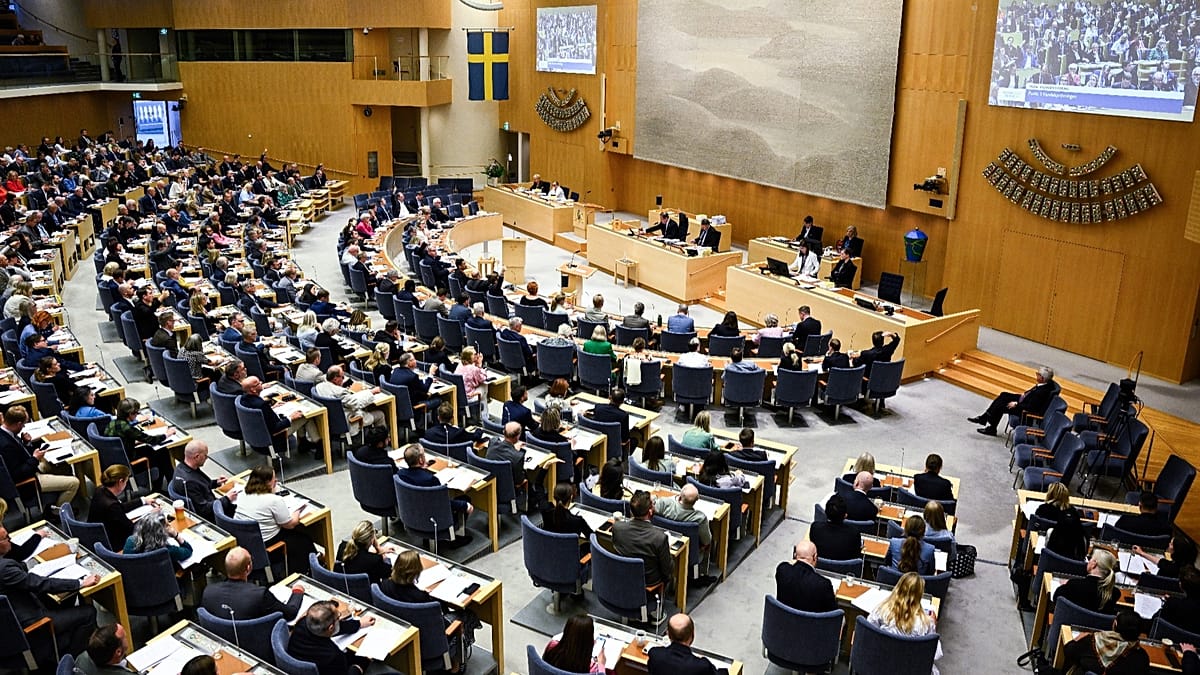
The admission came after she reported back to parliament speaker Andreas Norlén, who had tasked her with exploring whether a left-leaning administration could command enough support. Norlén, however, confirmed that parliament would still vote on her candidacy on Thursday, as had been agreed from the outset, even though he conceded she would likely be rejected.
A narrow victory, a deep divide
The September 13 election delivered a slender majority for the centre-left opposition bloc, which took 176 seats in the Riksdag against 173 for outgoing Prime Minister Ulf Kristersson's right-wing coalition, which includes the anti-immigration Sweden Democrats. But that numerical advantage has not translated into a workable coalition.
The stumbling block remains the Centre Party's refusal to accept a government that includes the Left Party in cabinet posts. The Left Party, for its part, has insisted it will only back a left-wing government in which it holds ministerial positions. These irreconcilable positions have left Andersson unable to bridge the ideological gap.
This is the second time Andersson has been forced to abandon coalition talks. Her first attempt, which began on September 18, collapsed ten days later for the same reasons. With no shift in the parties' positions, Norlén gave her another chance, but the outcome has been identical.
What happens next
After Thursday's vote, Norlén said he would consult party leaders again to decide who should be the next candidate. The speaker has four attempts to propose a prime minister; if all fail, a snap election must be called.
Attention is now likely to turn to Kristersson, who currently leads a caretaker administration. Norlén described him as a "natural candidate" but said he would "respect the process" and not commit prematurely. Kristersson would need to persuade at least one opposition party to support him or abstain in a confidence vote.
The impasse reflects a broader fragmentation in Swedish politics, where the traditional left-right divide has been complicated by the rise of the Sweden Democrats and the reluctance of centrist parties to cooperate across blocs. For now, the country faces the prospect of prolonged political paralysis, with no clear path to a stable government.
Under Sweden's constitution, a prime minister can take office as long as a majority of MPs do not vote against them. This negative parliamentarism means that abstentions can be as valuable as explicit support, but so far no candidate has been able to assemble even a passive majority.
The coming days will be crucial. If Kristersson also fails, Sweden could be heading for an unprecedented repeat election, a scenario that would further test the resilience of its political system.