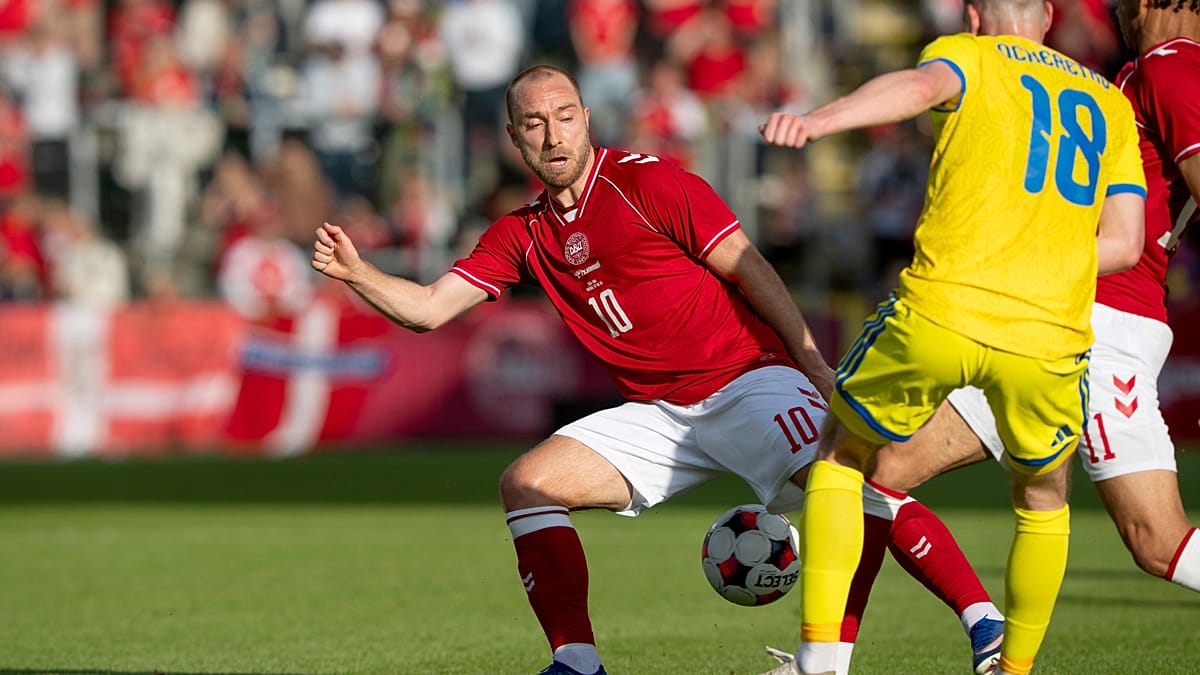
On Sunday, during a friendly match against Ukraine in Odense, Danish midfielder Christian Eriksen collapsed on the field. For the 34-year-old, it was a frightening echo of the cardiac arrest he suffered at the European Championship in 2021. But this time, the outcome was different: Eriksen later confirmed on social media that his implantable cardioverter defibrillator (ICD) had performed exactly as intended, delivering a life-saving shock.
Eriksen thanked the medical staff at the stadium and the doctors who have monitored him since 2021. “Thanks to their expertise, my ICD did exactly what it was designed to do: protect me when I need it,” he wrote. He is now recovering at home with his family.
What Is an ICD and How Does It Function?
An implantable cardioverter defibrillator is a small, battery-powered device placed under the skin of the chest. Thin wires connect it to the heart, where it continuously monitors the heartbeat. If it detects a dangerously irregular rhythm — known as an arrhythmia — the ICD delivers an electric shock to restore a normal beat.
These devices are typically prescribed for patients who have survived a cardiac arrest or heart attack, or who suffer from ventricular arrhythmias, where electrical misfires originate in the heart's lower chambers. Without intervention, such rhythms can cause the heart to stop pumping effectively, leading to sudden death.
Living and Competing with an ICD
According to Johns Hopkins Medicine, once implanted, an ICD generally lasts over a decade, and most patients can lead a normal life — returning to work, driving, and even playing sports after medical clearance. For years, high-intensity sports were discouraged for ICD wearers, but recent guidelines have shifted toward individual assessments.
The ICD Sports Registry, the largest study of its kind, followed 440 athletes for up to four years and found no sports-related deaths, injuries, or cardiac arrests among those who returned to competition with an ICD. The study also noted that the devices can be programmed to a higher shock threshold without increasing negative outcomes, allowing athletes to push their limits safely.
Eriksen is not alone in this. Dutch footballer Daley Blind, now playing for Girona in Spain's La Liga, has an ICD after being diagnosed with myocarditis, an inflammation of the heart muscle. German pole vaulter Katharina Bauer received a subcutaneous ICD in 2018 after childhood heart surgeries and continues to compete at a high level.
While such cases remain uncommon, they highlight how medical technology is enabling athletes to pursue their careers despite serious cardiac conditions. For Eriksen, the ICD has become a silent guardian on the pitch — one that, as Sunday showed, can make the difference between life and death.