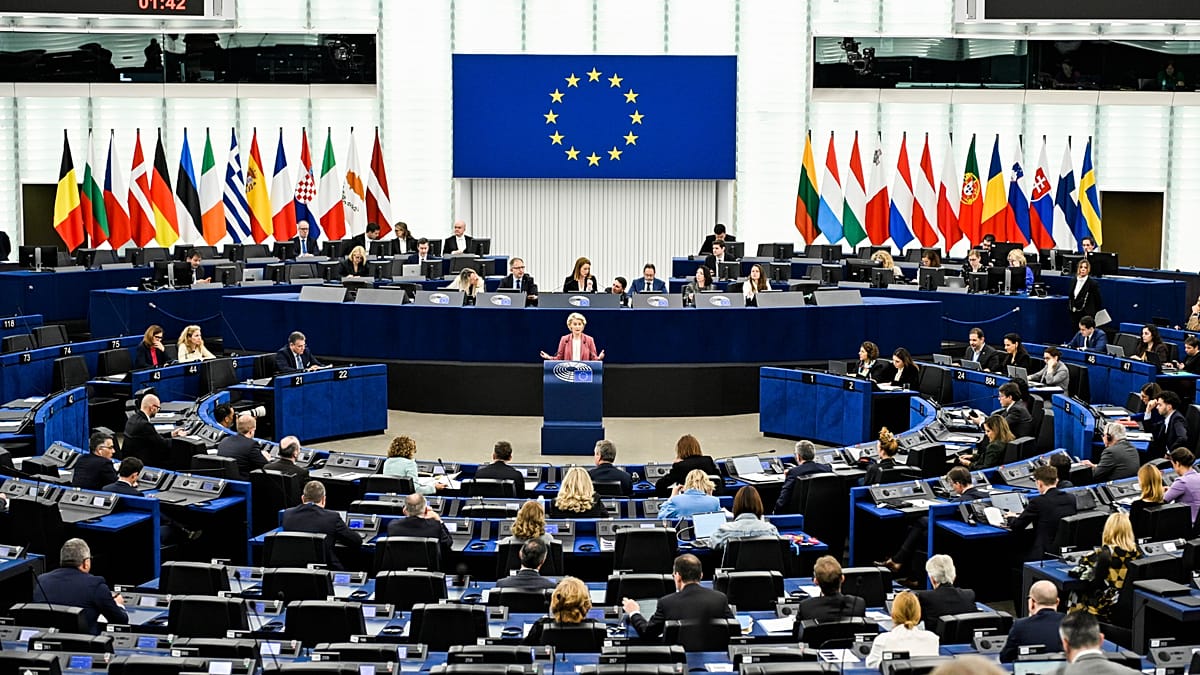
In December 2025, the European Parliament debated a topic that might never have reached its agenda without a push from ordinary citizens: access to safe abortion across the European Union. The debate was the culmination of the European Citizens' Initiative (ECI) "My Voice, My Choice," spearheaded by Slovenian anthropologist Nika Kovač and her institute "8 March." The initiative gathered over 1.1 million signatures from across the bloc, forcing Brussels to take notice.
The ECI is a unique instrument of participatory democracy in the EU, allowing citizens to directly propose legislation or action. However, the bar is high: organizers must collect one million signatures from at least seven member states within twelve months. Since its introduction in 2012, only twelve initiatives have succeeded. "My Voice, My Choice" is one of them.
Why Abortion Access Became a European Issue
The initiative's core argument is that restricted access to abortion in many EU countries—such as Poland, Malta, and parts of Italy—does not only endanger women's physical health. It also places "additional economic and mental burdens on women and families, often in marginalised groups who can least afford it," as the motion stated. The campaign framed the issue as a matter of public health and social equity, not just reproductive rights.
In response, the European Parliament called on the European Commission to establish a voluntary funding mechanism under the European Social Fund+. This would allow member states with more liberal abortion laws to help citizens from countries with restrictive legislation access safe procedures, within the bounds of national law. The Commission adopted follow-up measures in March 2026, though it stopped short of proposing a binding EU law.
"In the case of the My Voice, My Choice initiative, the result was that the EU recognised this issue as an important public health issue," explained Nino Kavelashvili, an ECI ambassador and consultant at the Federal Network for Civic Engagement (BBE) in Berlin. "And without this initiative, the issue might not be on the agenda at all."
The Mechanics of a Citizens' Initiative
Kavelashvili, who recently acquired German citizenship after moving from Georgia, knows the system from the inside. She emphasizes that the ECI is not just about collecting signatures—it is about building a coalition across borders. Nika Kovač started with her institute in Slovenia but quickly sought allies in other countries. The campaign submitted 1,124,513 signatures to the European Commission in September 2025, meeting the threshold from seven member states.
Once validated, the initiative is heard in the European Parliament. "European parliamentarians are discussing it, the media are there, and the initiative and the topic are getting attention," Kavelashvili said. "And in my opinion, this is when things really take off in the direction of politics." The Commission must then publish a reasoned response within six months, though it is not obliged to propose legislation.
This limitation is a key criticism of the ECI. "The EU Commission is not obliged to develop a legislative proposal," Kavelashvili noted. Yet she argues the impact is still significant. The initiative has put sexual and reproductive health firmly on the European political agenda, sparking public debate and shifting priorities even without immediate legal change.
Challenges and the Road Ahead
Despite its potential, the ECI remains underused. Many Europeans are unaware they can directly influence the EU Parliament's agenda—a body of 720 MEPs. Kavelashvili calls for better communication strategies: more social media outreach, information sessions in schools, and clearer messaging. "A strong topic is not enough; it must also be understandable," she said.
The success of "My Voice, My Choice" shows that the instrument can work, but it also highlights the hurdles. The one-million-signature requirement is daunting, and the lack of a legislative follow-up can leave activists feeling their efforts have fizzled. Still, Kavelashvili remains optimistic. "It's important that we have a voice, that we have a say, that we help shape democracy," she said. "Democracy in the EU does not only work through institutions, but is also complemented by direct participation."
As the EU grapples with issues from digital regulation to trade tensions, the ECI offers a reminder that citizens can still drive the agenda—if they are willing to organize, campaign, and persist.