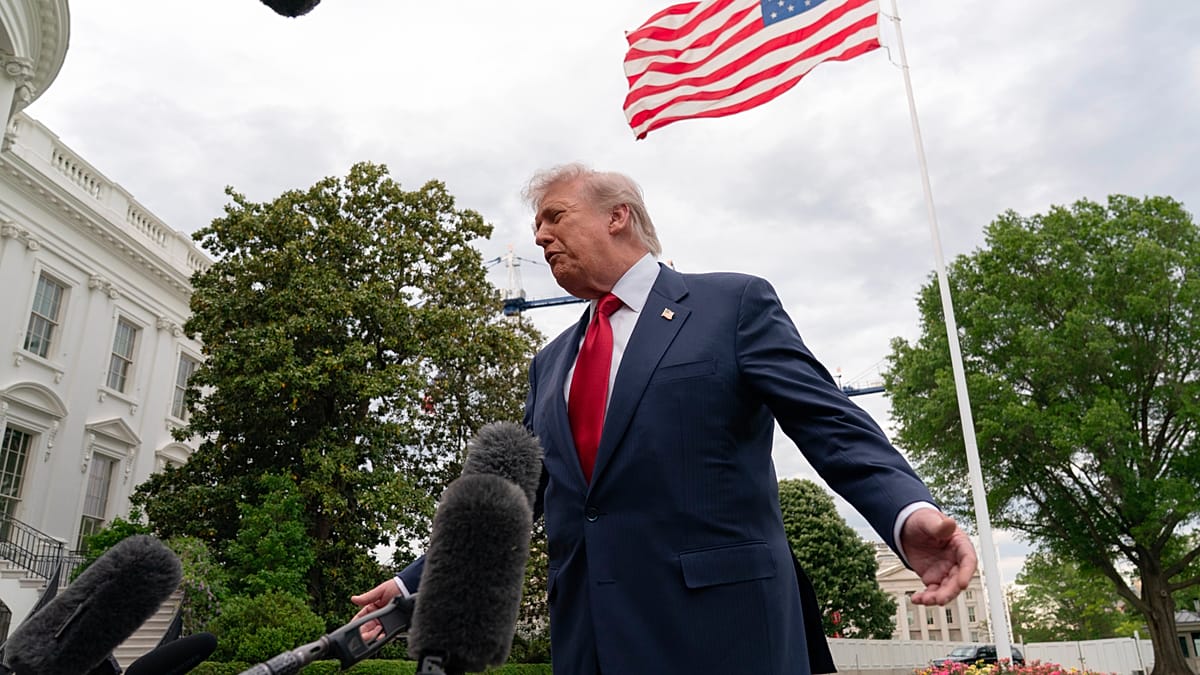
US President Donald Trump has confirmed he is weighing the possibility of relocating American troops currently being withdrawn from Germany to Poland. Speaking to reporters at the White House, Trump said such a move was “possible,” highlighting his close relationship with Polish President Karol Nawrocki.
“Poland would like that. We have excellent relations with Poland. I have excellent relations with President [Nawrocki]. Remember, I endorsed him, and he won – even though he was trailing badly, he still won. He's a great fighter, a terrific guy, I like him a lot, so it's possible... I might do it,” Trump stated.
The US administration plans to reduce its military footprint in Germany by approximately 5,000 troops over the next six to twelve months. Trump has hinted that the reduction could be larger. Currently, between 35,000 and 37,000 American service members are stationed in Germany, a legacy of post-World War II deployments that have long served as a cornerstone of NATO's deterrence posture.
Poland's Readiness and Regional Security
President Nawrocki has declared that Poland is prepared to host additional US forces, citing existing military infrastructure and the strategic importance of bolstering NATO's eastern flank. “We already have the infrastructure in place, and it is in the interests of Poland, Lithuania and the Baltic states for as many American troops as possible to be stationed here,” Nawrocki said.
Warsaw views an increased US presence as a counterbalance to Russian assertiveness and a reinforcement of regional security. The potential redeployment comes amid broader tensions between the Trump administration and Berlin, which Trump has repeatedly criticized for insufficient defence spending. During his first term, Trump announced a similar troop reduction from Germany, though it was never fully implemented.
Experts note that the location of redeployed forces will be as critical as their numbers. Tomasz Szatkowski, a former Polish ambassador to NATO, argued in a recent interview: “The US forces in Germany have their military importance, and an even greater political and historical significance. From our point of view, the American military presence in Germany should remain, that is clear. But once this reduction is underway, we should be making a strong case for those troops to be moved to Poland. That is in our interest. And Poland should send a clear signal on this.”
The debate over troop movements intersects with wider European security concerns, including the ongoing war in Ukraine. Trump recently announced a three-day ceasefire between Ukraine and Russia, though its implementation remains uncertain. Meanwhile, the EU is grappling with internal divisions over defence policy, as Germany pushes to end the unanimity rule in EU foreign policy, citing blockades by Hungary.
For Poland, hosting more US troops would mark a significant shift in the transatlantic security architecture. It would also deepen the country's role as a key NATO ally on the eastern frontier, a position Warsaw has actively cultivated since Russia's annexation of Crimea in 2014.
The potential redeployment is likely to be closely watched in Berlin, where the reduction of US forces could accelerate Germany's own defence modernization efforts. It also raises questions about the future of US bases in Germany, which have been a symbol of American commitment to European security for decades.