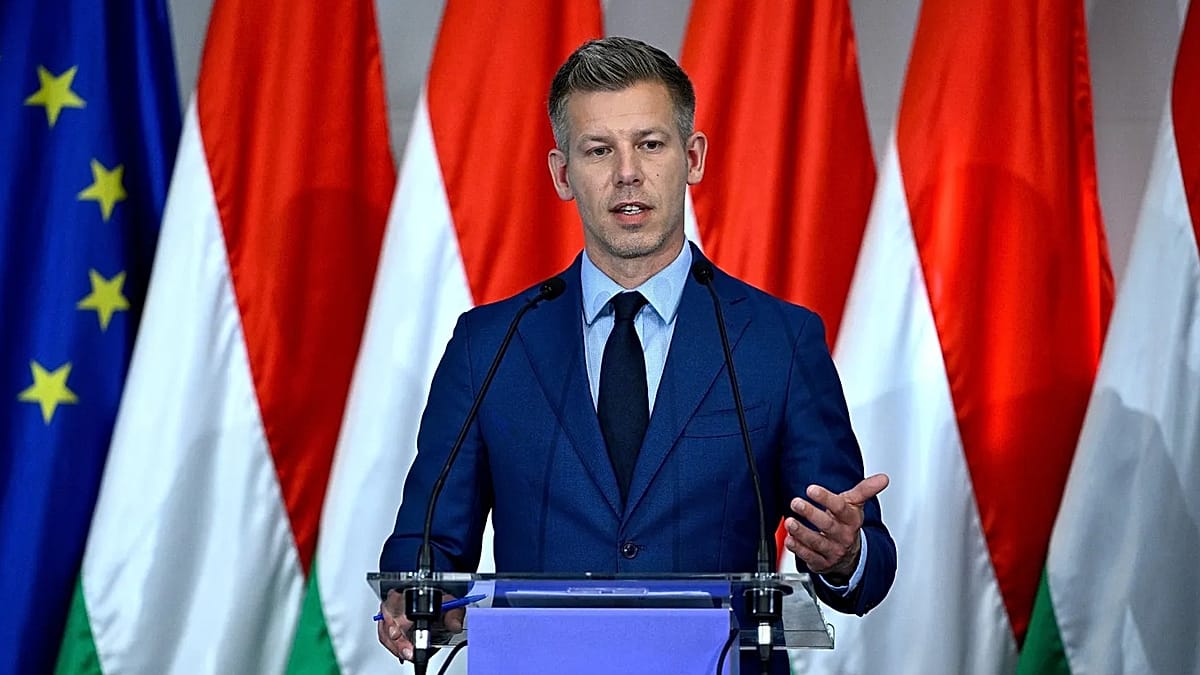
Hungary's incoming prime minister, Péter Magyar, has extended an olive branch to Ukraine, proposing a meeting with President Volodymyr Zelenskyy in early June. The offer, made on Tuesday, aims to "open a new chapter in bilateral relations" and address the contentious issue of ethnic Hungarian rights in Ukraine's Transcarpathia region.
Magyar, who defeated long-serving nationalist premier Viktor Orbán in Hungary's 12 April election, has signaled a more conciliatory approach toward Kyiv. Orbán's 16-year tenure was marked by frequent vetoes of EU financial aid to Ukraine and obstruction of its membership aspirations, straining ties to a historic low.
A Symbolic Venue for Dialogue
Magyar proposed holding the meeting in Berehove, a city in Transcarpathia with a Hungarian majority. "I am initiating a meeting with Ukrainian President Volodymyr Zelenskyy for early June, symbolically in Berehove," he wrote in a social media post after meeting the city's mayor in Budapest. "The purpose of the meeting is to help improve the situation of Hungarians in Transcarpathia and enable them to remain in their homeland."
Ukraine's Transcarpathia region is home to a significant ethnic Hungarian community, a legacy of the former Kingdom of Hungary, which controlled the area until the end of World War I. Tensions escalated in 2017 when Kyiv passed a law mandating Ukrainian as the primary language for secondary education, a move Budapest argued disenfranchised tens of thousands of ethnic Hungarians.
Magyar has called for Ukraine to lift what he described as "legal restrictions that have been in place for more than a decade." He insists that ethnic Hungarians in Transcarpathia should "regain all their cultural, linguistic, administrative and higher education rights, so that they may once again become equal and respected citizens of Ukraine." He added, "If we can resolve these issues, we can certainly open a new chapter in Ukrainian-Hungarian bilateral relations."
Earlier in April, Zelenskyy visited the western region and met representatives of the Hungarian community, thanking them for their "resilience throughout this difficult winter and for supporting the front." In a post on X, he said, "Thank you for your service."
Unlocking EU Support for Ukraine
Magyar's overture comes shortly after the European Union approved a €90 billion loan for Ukraine, following Hungary's decision to lift its veto. The blockage, orchestrated by Orbán in February, had stalled the aid for two months and drew sharp criticism from other EU leaders, who condemned it as an "unacceptable" attempt at "blackmail."
The breakthrough occurred two days after Zelenskyy announced that the Druzhba pipeline, which supplies cheap Russian oil to Hungary and Slovakia, had been repaired and resumed operations. The interruption of oil flows through Druzhba had been central to Orbán's veto decision.
Magyar, viewed as a more moderate successor, has expressed a desire to reset relations with Brussels and evaluate joining the eurozone. He has also taken a firmer stance on Ukraine's territorial integrity, stating that "no other country has the right to say that you should give up this or that territory. Anyone who says such a thing is a traitor himself." This contrasts with Orbán's ambiguous position and aligns more closely with EU and NATO consensus.
The proposed meeting in June could mark a turning point in Hungarian-Ukrainian relations, potentially easing tensions that have complicated EU unity on support for Kyiv. As Magyar prepares to take office, his willingness to engage directly with Zelenskyy suggests a pragmatic shift, though the success of any dialogue will depend on concrete progress on minority rights and broader bilateral issues.