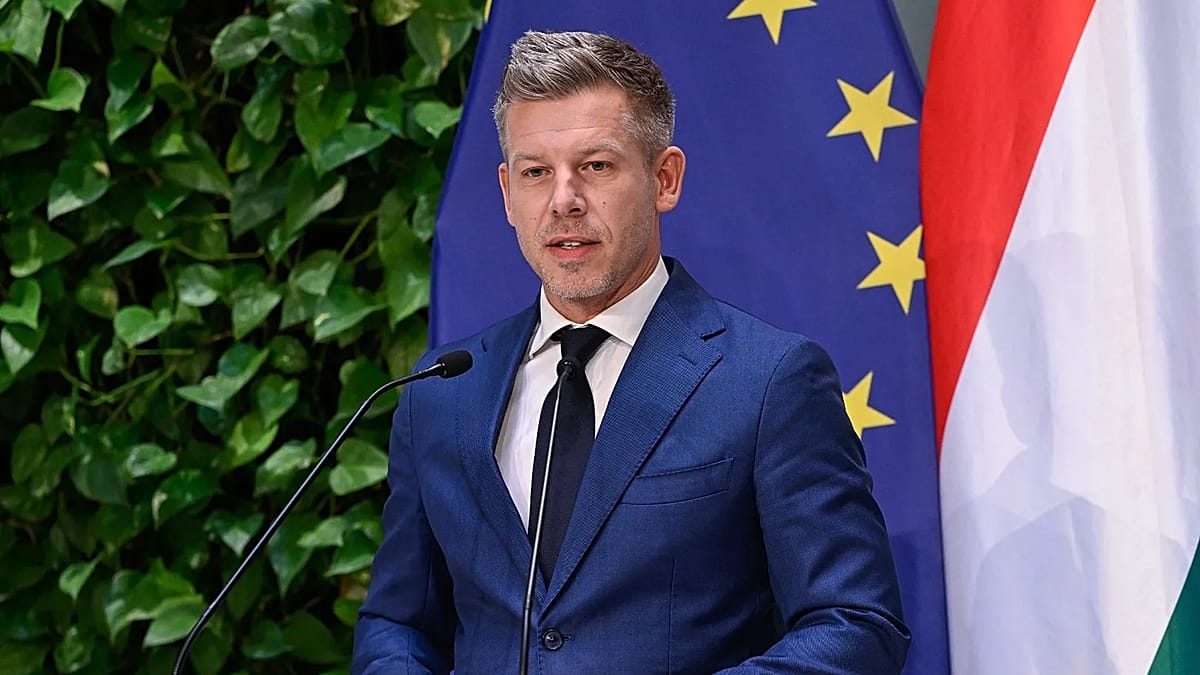
Hungarian Prime Minister Péter Magyar announced on Monday evening in Budapest that he hopes to sign a political agreement with the European Commission during a visit to Brussels next week, aiming to unlock €10.4bn in recovery funds frozen under the previous government of Viktor Orbán.
“Both sides will do everything they can to ensure that next week, when I travel to Brussels, we can sign the political agreement between the Hungarian government and the European Commission, which will allow us to conclude all issues by August 31, despite the hard work throughout the summer,” Magyar told reporters.
The funds, part of the EU’s Recovery and Resilience Facility, were blocked due to persistent rule-of-law concerns under the Orbán administration. If Hungary fails to meet the August 31 deadline, it risks losing the entire allocation. Magyar said technical-level discussions with the Commission are already underway in Budapest and will continue through Friday.
Budget Disputes and Tax Policy
Magyar revealed that he has exchanged letters with European Commission President Ursula von der Leyen regarding outstanding issues. However, he made clear that his government will reject some Commission demands, particularly those related to phasing out windfall taxes on the financial and energy sectors.
“There are requests from the Commission regarding the Hungarian budget, which we will not fulfil. Sometimes, by the way, these requests contradict each other. One day they expect us to stabilise the budget, and then they also tell us to phase out some taxes,” Magyar said.
The new Hungarian government is also expected to submit a revised spending plan for the recovery funds before the end of May. Magyar said the previous programme is under review, with priority given to projects that are both feasible and genuinely beneficial to the public. “We obviously want suburban trains, railway renovation, energy-related projects and electricity grid development. Those must be truly useful for Hungarian society and Hungarian companies,” he added.
Defence and Geopolitical Context
Magyar also announced that his government is reviewing Hungary’s defence loan request under the EU’s Security Action for Europe (SAFE) programme, the bloc’s main financial instrument for supporting defence preparedness. This comes amid broader shifts in Hungarian foreign policy, including a recent signal of openness on Ukraine’s EU accession talks, a departure from the Orbán era’s obstructionist stance. Hungary Signals Shift on Ukraine EU Accession Talks After Orbán Era
The push to unlock EU funds is a key test for Magyar’s new government, which took office after years of strained relations between Budapest and Brussels. The outcome will have implications not only for Hungary’s economy but also for the EU’s broader approach to enforcing rule-of-law conditionality. Five EU States Resist Brussels' Centralized Grid Plans, Push Regional Approach
As the August deadline approaches, all eyes will be on next week’s meeting in Brussels. If an agreement is reached, the funds could start flowing to Hungary by autumn, providing a much-needed boost to infrastructure and energy projects. If not, the standoff could deepen, further testing the EU’s ability to enforce its values and financial rules.