Hungary's new government has published a comprehensive 220-page child-protection report concluding that the country's adoption system is on the verge of collapse. The document is set to become the basis for a sweeping rewrite of adoption rules, a move that has already drawn sharp criticism from opposition parties.
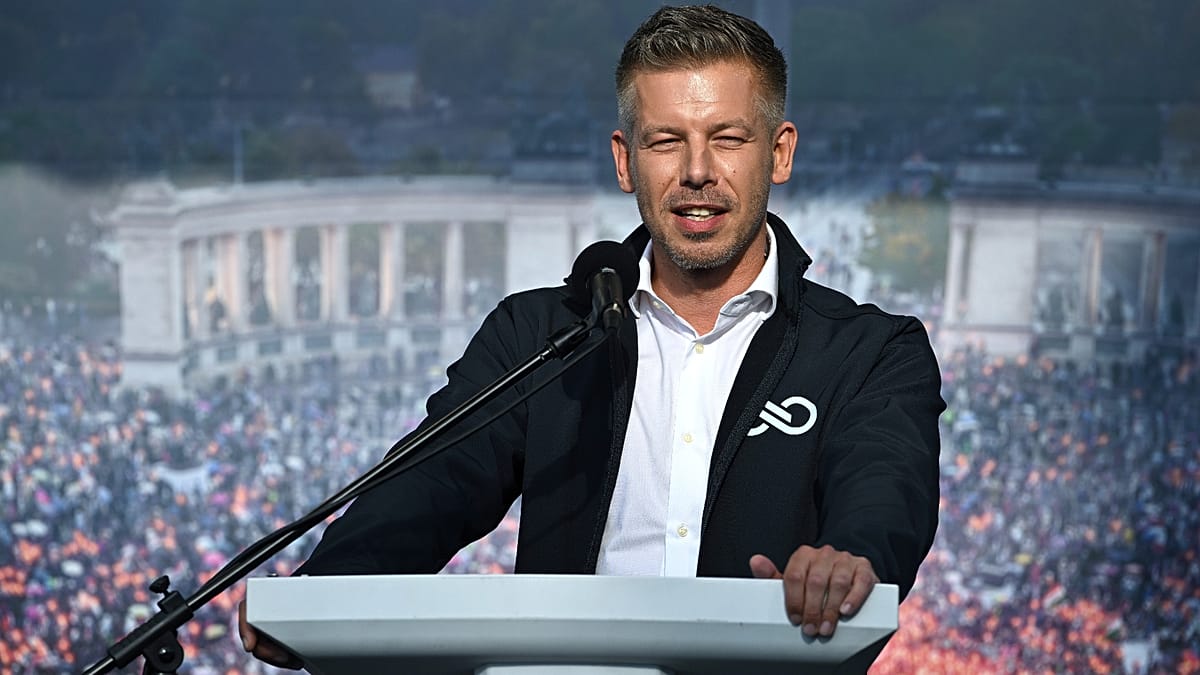
Prime Minister Péter Magyar announced that the government will change regulations governing adoption by single individuals and same-sex couples, arguing that the current framework is unsustainable. He insisted that deciding who may adopt a child should not be a political matter but one left to professionals such as psychologists and child-protection experts. Politicians, he said, need to step back from this issue.
Magyar stressed that the system cannot function properly in its current state, and that the overriding consideration must always be that children grow up in a loving family, regardless of the parents' sexual orientation or marital status. The government is already working on amendments to legislation introduced under his predecessor, Viktor Orbán, whose Fidesz party had shaped adoption policy for over a decade.
A break with the Orbán era
The announcement marks a sharp ideological and policy break with the Orbán governments that ruled from 2010 to 2026. It is one of the most significant steps taken on human rights and child protection since the change of government in April 2026, when Magyar's Tisza Party won a landslide victory, ending Fidesz's 16 years in power.
In December 2020, the Orbán government amended Hungary's Fundamental Law and the adoption act, tightly defining a mother as a biological female and a father as a biological male, effectively making married couples the default for adoption. Because same-sex couples cannot marry in Hungary and can only enter registered partnerships, they had previously been able to adopt by having one partner apply as a single person. The 2020 law closed that loophole by requiring single applicants to obtain a personal ministerial permit, initially granted by former President Katalin Novák and later by the minister responsible for family policy. In practice, this blocked LGBTQ individuals almost entirely from adopting children.
International and domestic human rights organisations had expected immediate steps to restore LGBTQ rights after the election. Pressure grew further when, just before the vote, the Court of Justice of the European Union ruled that Hungary's earlier child-protection law, widely seen as homophobic, seriously breaches EU law.
According to the government's narrative, the current system is unsustainable because, while large numbers of children remain in state care, suitable prospective parents—whether single or in same-sex relationships—are blocked by strict political filters and bureaucratic hurdles. The new measure effectively restores the pre-2020, profession-based assessment system and signals that the new government intends to approach social issues, previously used as symbolic political battlegrounds, in a pragmatic, expert-led way.
The announcement has generated strong reactions in local media. Opposition outlets have accused Magyar of giving in to the LGBTQ lobby, while independent media have reported it as a pledge to restore professional standards. The debate echoes broader European discussions about the rights of same-sex couples and the role of the state in family matters. In neighbouring countries, similar battles have played out in courts and parliaments, and the EU has increasingly weighed in on the protection of children's rights across the bloc.
For now, the Hungarian government says it will move quickly to draft the new legislation, with the aim of ensuring that every child in state care has a realistic chance of finding a permanent, loving home. Whether the political opposition can slow the process remains to be seen, but the direction is clear: Hungary is turning the page on an era in which adoption policy was used as a tool of ideological warfare.