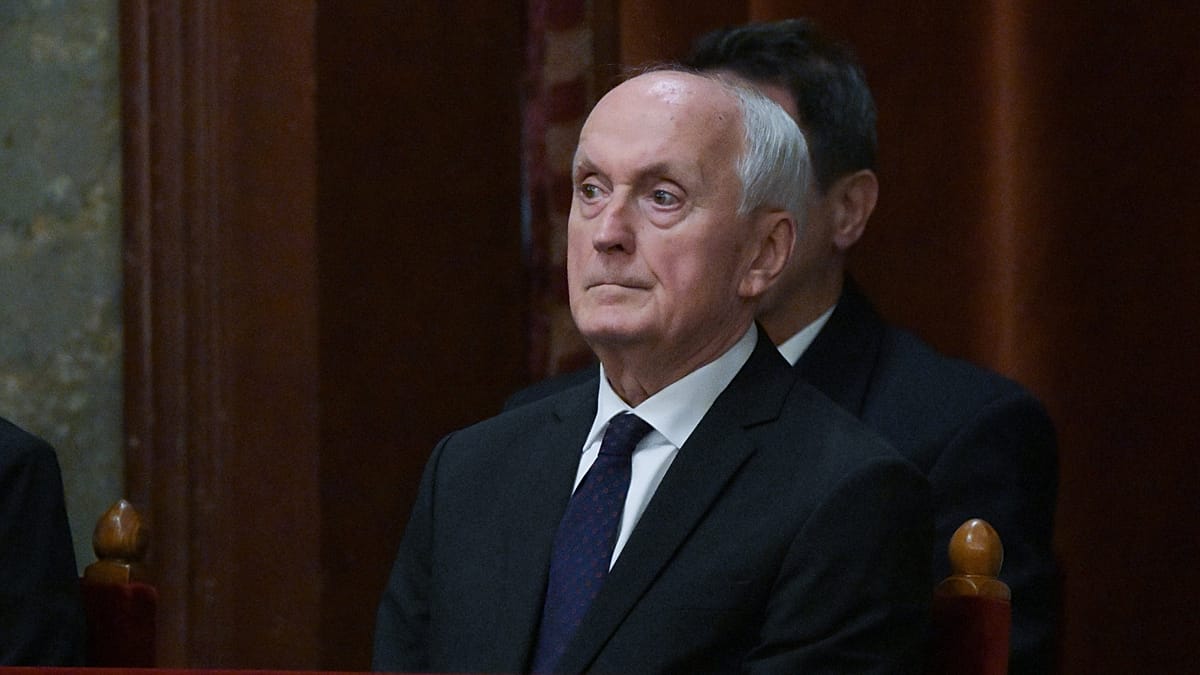
Hungarian lawmakers on Tuesday elected András Baka, a former chief justice of the Supreme Court and long-serving judge at the European Court of Human Rights (ECHR), as the country's new president. The vote, held in Budapest, saw 140 deputies in favour and six against, with the ruling Tisza party's two-thirds majority ensuring a comfortable victory.
Baka, 73, was nominated by Prime Minister Péter Magyar's Tisza party on Saturday for the largely ceremonial role. Magyar, whose pro-EU conservative movement swept to power in April's elections, ending Viktor Orbán's 16-year rule, described Baka's career as "an example of commitment to the democratic rule of law and constitutional principles." He added that Hungary needed to be "guided back onto the path of the rule of law and constitutional governance."
A break with the Orbán era
The election comes weeks after parliament, under Tisza's direction, amended the constitution to cut short the mandate of previous president Tamás Sulyok. That move, part of Magyar's broader reform agenda, drew criticism from rights watchdogs who compared it to Orbán's methods of consolidating power. Orbán's Fidesz party and its ally KDNP boycotted Tuesday's vote, calling Sulyok's removal "tyrannical" and "illegitimate."
Baka, however, has not condemned Sulyok's ouster. In an interview with AFP last month, he argued that while such extraordinary measures are not typical in a rule-of-law state, Hungary had become a "captured state" under Orbán. He said state officials, including the presidency, were appointed not to restrain government power but to ensure the political survival of the old system even after an electoral defeat.
Analysts see Baka's election as a deliberate signal. "His nomination also carries a symbolic meaning, given that Baka went all the way to prove that what happened to him was not really in line with European Union norms," said Bulcsu Zsiga of the Centre for Fair Political Analysis. Zsiga added that installing Baka guarantees "the restoration of liberal democracy will proceed along a clearly defined path."
Baka's own history with the Orbán government is instructive. After a brief stint as a lawmaker in 1990, elected from the conservative Hungarian Democratic Forum's list, he served as a judge at the Strasbourg-based ECHR from 1991 to 2008. In 2009, he was appointed head of the Supreme Court, but was removed in 2012 after he condemned a government decree that lowered the mandatory retirement age for judges from 70 to 62—a measure widely seen as a purge of the judiciary. The European Union and the United States both called the age-limit reduction illegal, and in 2016 the ECHR ruled that Baka's dismissal violated his freedom of expression.
Magyar had initially offered the presidency to chess legend Judit Polgár, but she declined after the prime minister faced criticism for not consulting the public as promised. Baka's mandate is expected to be temporary; Magyar has indicated the new president will serve only until a new constitution, drafted through broad public participation, replaces the Orbán-era Basic Law. The prime minister estimates the rewriting process will take one to one and a half years, with consultations set to begin next month.
The transition in Budapest is being watched closely across Europe, as Hungary's return to democratic norms is seen as a test for the broader region. For now, the election of a former ECHR judge—one who has personally challenged Orbán's judicial overreach—offers a clear break with the past. As Baka himself put it, the country must move beyond the "captured state" and rebuild trust in its institutions.