Ukraine's foreign ministry spokesperson Heorhii Tykhyi on Monday sharply rebuked Jean-Luc Mélenchon, leader of the hard-left France Unbowed party, after Mélenchon suggested that Ukrainians in the Donbas should be "consulted" about their future. The exchange highlights growing divisions in France over the war in Ukraine as the presidential election approaches.
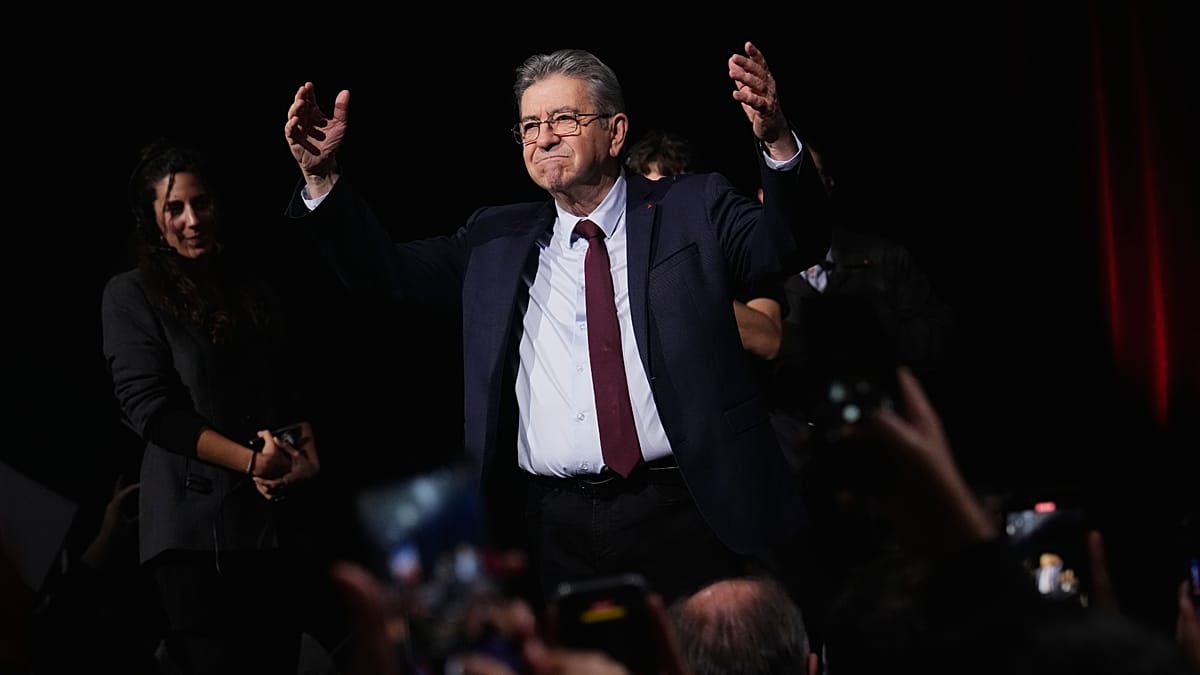
Speaking at a campaign event on Saturday, Mélenchon said his party would not allow European leaders to dominate discussions about peace in Ukraine. His remarks came ahead of US-mediated talks in Abu Dhabi on Tuesday, where France, Germany, the UK, and a joint EU team are expected to participate.
"We cannot accept the notion of a peace agreement that involves territorial concessions in Ukraine without first seeking the consent of the affected populations to live on either side of the border," Mélenchon said.
Tykhyi responded on X, asserting that Ukrainians had "already settled the question of their country's border" through the 1991 independence referendum. He argued that Russia had chosen to "disregard the choice of Ukrainians" by launching its full-scale invasion, and that "'referendums' under occupation are a tool of annexation, not an expression of the people's will."
"No civilised, democratic country would ever accept this for its own borders, so it should not be proposed to Ukrainians," Tykhyi added.
Moscow has staged sham consultations in Crimea and in four partially controlled regions of south-eastern Ukraine, procedures that Kyiv and the international community have rejected. The Kremlin has used these votes to justify its annexation claims, a narrative that Mélenchon's comments appear to echo.
French political fallout
France's Foreign Affairs Minister Jean-Noël Barrot weighed in on Sunday, describing Mélenchon as a "mouthpiece of the Kremlin." Barrot said that "all over the world the Kremlin is trying to convince heads of state and government that, basically, the Donbas is Russian and that the war of aggression is a war to liberate the Donbas."
"This is obviously of unprecedented seriousness and, in my view, definitively disqualifies him [Mélenchon] from holding the offices he aspires to," Barrot added.
The controversy comes as Mélenchon's campaign gains traction, with his party's programme devoting less space to Russia's war against Ukraine than to the Israeli-Palestinian conflict. The war has become a polarising issue in France's presidential race, with far-right candidate Marine Le Pen saying in mid-October that she would end French financial aid to Ukraine—estimated at €6 billion a year—if she won the 2027 election.
Mélenchon's stance has drawn criticism not only from the government but also from within the left, as some see his position as aligning with Russian narratives. The debate underscores the challenge European leaders face in maintaining unity on Ukraine as domestic politics intrude.
Meanwhile, the human cost of the war continues to mount. Russian strikes have cut power for 850,000 Ukrainians as winter approaches, and Moscow has used North Korean KN-23 missiles in attacks on Ukraine's energy grid. These developments highlight the urgency of a just peace, which Kyiv insists must respect its territorial integrity.
As European leaders prepare for the Abu Dhabi talks, the question of how to engage with Russia while upholding international law remains fraught. Mélenchon's proposal, which Kyiv sees as legitimising occupation, is unlikely to gain traction among EU partners, but it reflects a broader debate in France about the limits of support for Ukraine.