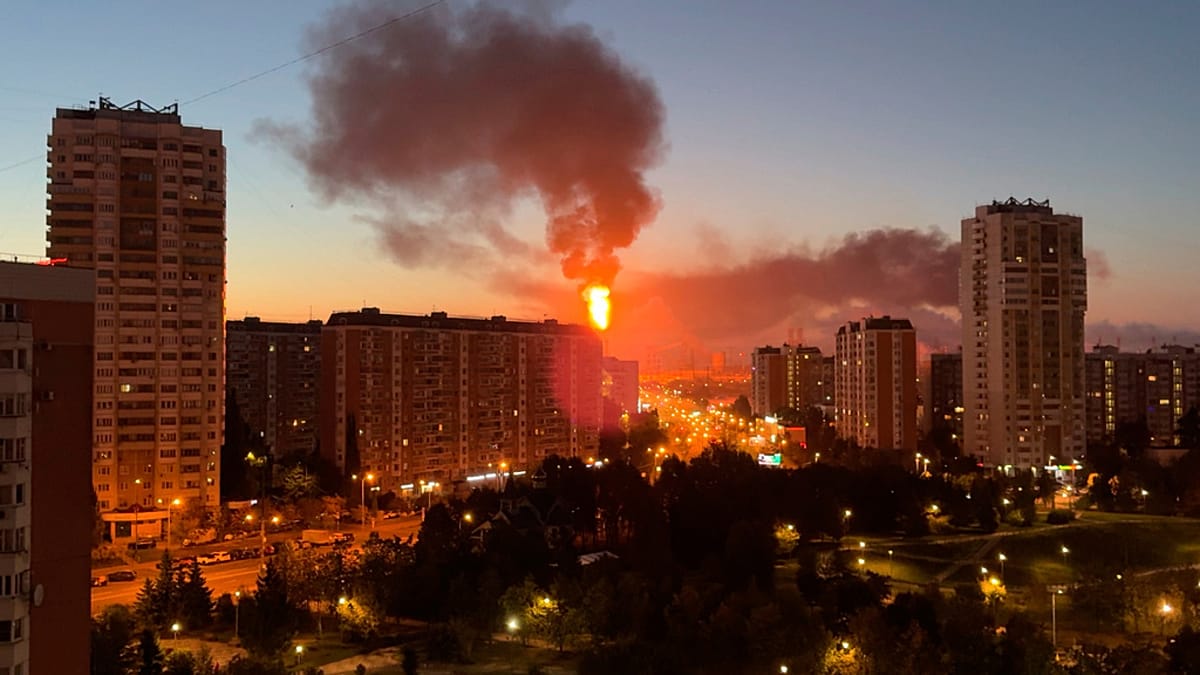
Ukrainian long-range drones struck the KINEF refinery in Russia's Leningrad region on Monday, igniting major fires and damaging three key processing units. The attack marks another escalation in Ukraine's campaign against Russian energy infrastructure, which has been ongoing since Moscow's full-scale invasion in February 2022.
Leningrad Governor Alexander Drozdenko reported that air defences intercepted 113 drones targeting the region, but debris from one struck a multi-storey building in Vsevolozhsk, killing a resident. The Kirishinefteorgsintez (KINEF) plant, owned by Surgutneftegaz, is the largest refinery in northwest Russia and the second largest in the country after the Omsk facility. It processes roughly 18 million tonnes of crude oil annually, accounting for about 7% of Russia's total refining capacity, with a design capacity of 20–21 million tonnes.
The refinery produces petrol, diesel, aviation kerosene, fuel oil, bitumen, and petrochemical products, and is a critical supplier of aviation fuel to St Petersburg's Pulkovo airport. Surgutneftegaz has been under EU, US, and UK sanctions since 2025, reflecting the international community's efforts to constrain Russia's energy revenues.
Russia's Defence Ministry claimed its forces shot down 430 Ukrainian drones across 14 regions and occupied Crimea overnight. These figures could not be independently verified.
Fuel rationing takes hold
In a sign of mounting pressure on Russia's domestic fuel market, Rosneft announced on Monday that it would cap petrol and diesel sales at its filling stations. The restrictions apply in Karelia, Buryatia, Zabaykalsky Krai, and the Novosibirsk, Arkhangelsk, and Penza regions, according to Russian media. In cities, customers are limited to 30 litres of petrol per transaction; on motorways, the cap is 50 litres. In Krasnoyarsk Krai, separate limits apply: 30 litres of AI-95, 50 litres of AI-92, and 100 litres of diesel per customer. Authorities in the Leningrad region have also recommended similar caps.
The rationing underscores the cumulative impact of Ukrainian drone strikes on Russian refineries, which have disrupted production and strained supply chains. As winter approaches, these disruptions could exacerbate fuel shortages for both civilian and military use.
Russian strikes continue to devastate Ukraine
Meanwhile, Russian forces have maintained their relentless bombardment of Ukrainian cities and infrastructure. Ukraine's air force reported that Russia launched 317 Shahed drones since Monday evening, including 105 jet-powered variants and decoy drones. Of these, 276 were shot down, but impacts were recorded in 31 locations, with falling debris in nine more.
A drone strike on a food warehouse in Odesa on Monday morning killed three people and left one in serious condition. In the Dnipropetrovsk region, two people were killed and seven injured. Nine people, including children, were wounded in attacks on the Kharkiv region overnight on Tuesday. Six people, including one child, were injured in strikes on Zaporizhzhia and its surroundings.
In Kremenchuk, in the Poltava region, seven people were injured in a drone strike, among them a 16-year-old. A rehabilitation centre for children with disabilities was destroyed in the attack. In Sumy, three power workers were injured on Monday morning when a Russian strike hit their vehicle.
Russian forces also struck rescue teams in Kamyshivakha three times with drones as they cleared rubble from a Russian air strike on 2 November that killed 55 people. Up to 19 people may still be trapped under the debris, and police have identified 30 of the dead.
The ongoing attacks on civilian infrastructure, including energy grids, have left hundreds of thousands of Ukrainians without power as winter sets in. Recent strikes have cut power for 850,000 Ukrainians, compounding the humanitarian crisis. The EU has been seeking a unified stance on Ukraine, with talks in Abu Dhabi aimed at finding a diplomatic path forward, though suggestions of territorial changes have sparked concern in European capitals.