Russian forces fired North Korean-made ballistic missiles at a critical Ukrainian energy facility overnight, President Volodymyr Zelenskyy said on Saturday, renewing his appeal to allies to speed up deliveries of interceptor missiles.
"Technical assessments are ongoing at the sites hit by ballistic missiles. According to preliminary findings, at one of the key energy facilities that was damaged, the Russians used KN-23 missiles manufactured and supplied by North Korea," Zelenskyy wrote on social media.
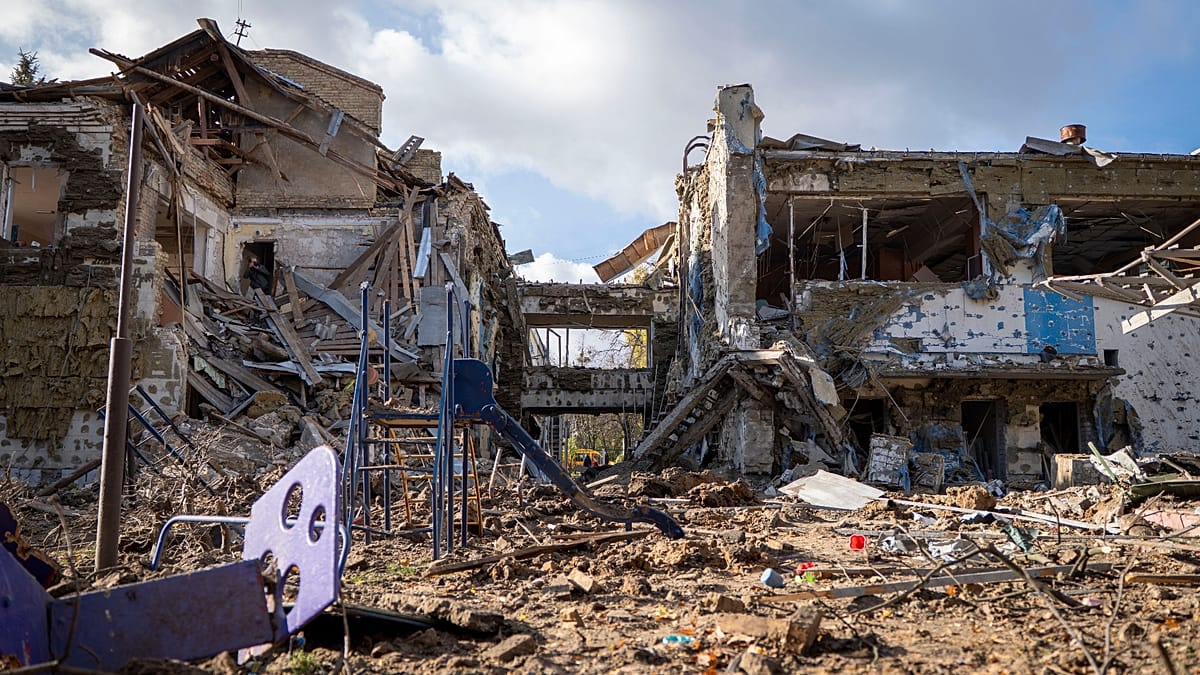
He said Russia launched 36 ballistic missiles at the capital Kyiv and the surrounding region, of which four were shot down. The overnight barrage wounded at least six people, including a child, and damaged a bridge and energy installations, according to local authorities and Ukraine's State Emergency Service.
North Korea's growing role in Russia's war
The KN-23 is a North Korean short-range ballistic missile with a maximum range of roughly 690 kilometres, according to the Center for Strategic and International Studies' Missile Threat project. First tested in May 2019, it closely resembles Russia's own Iskander-M missile. Ukraine's defence ministry said in April that the weapon had been used in previous attacks and that it is "extremely difficult for air defence systems to deal with."
North Korea is believed to have sent more than 16,000 troops to support Russian forces since October 2024, along with substantial munitions. In June of that year, President Vladimir Putin and North Korean leader Kim Jong-un signed a Comprehensive Strategic Partnership Treaty, cementing military cooperation between Moscow and Pyongyang.
The use of North Korean missiles on European soil underscores the deepening entanglement of Asian and European security, a theme that has drawn concern from Brussels and national capitals. The EU has repeatedly condemned North Korea's arms transfers to Russia, and Pyongyang has told the EU to stay out of its affairs.
Winter campaign against Ukraine's grid
Ukrainian Foreign Minister Andrii Sybiha said the latest strikes targeted "critical energy infrastructure" as Moscow again escalates its campaign ahead of winter. Russia has systematically attacked Ukraine's power grid during wartime winters in an effort to break the country's resolve.
"Moscow is deliberately seeking to leave millions of Ukrainians without electricity, heating, and water as winter approaches," Sybiha wrote on X.
Kyiv Mayor Vitali Klitschko said the Pivnichnyi Bridge had been hit, and energy infrastructure in the Kyiv and Zhytomyr regions was damaged. "The situation regarding the capital's energy supply is extremely difficult. Consequently, there are disruptions to the city's heating and water supply systems," he wrote on Telegram.
Zelenskyy suggested the strikes were also part of a Kremlin ploy to pressure Ukraine's negotiating position ahead of planned trilateral talks between Kyiv, Moscow, and Washington in Abu Dhabi. The talks, reportedly focused on energy infrastructure and prisoner exchanges, have yet to yield a public agenda.
European leaders have watched the winter campaign with alarm, as Ukraine's grid faces another season of strain. The EU has pledged additional air-defence support, but deliveries remain slow. Brussels has also pushed back against any US-Russia framework that would sideline European security interests.
Meanwhile, Ukraine has sought to diversify its energy partnerships, including deeper energy and defence ties with Azerbaijan. The EU, for its part, has been courting alternative energy suppliers to reduce dependence on Russian hydrocarbons.
The overnight attack is a stark reminder that Russia's war on Ukraine's civilian infrastructure is far from over, and that the Kremlin is willing to outsource its arsenal to maintain the pressure as temperatures drop.