On Wednesday, the International Atomic Energy Agency (IAEA) board of governors passed a resolution demanding that Iran fully cooperate with the UN nuclear watchdog, provide complete information about its stockpile of near weapons-grade uranium, and grant inspectors access to its nuclear sites. The resolution, adopted at the IAEA headquarters in Vienna, describes these steps as “essential and urgent” to verify that no nuclear material has been diverted.
Twenty-one of the 35 board members voted in favor, according to diplomats who spoke on condition of anonymity. Russia, China, and Niger opposed the measure, while ten countries abstained and one did not vote due to arrears. The resolution was tabled by France, the United Kingdom, Germany, and the United States.
A senior Western diplomat, speaking anonymously, said the resolution “aims to keep diplomatic pressure on Iran to come into compliance with its legal safeguards obligations.” The move comes at a time of heightened tensions in the Middle East: the US launched airstrikes against Iran early Wednesday, and Tehran retaliated against countries in the region. The escalating attacks threaten to derail peace negotiations, with US President Donald Trump warning that Iran would “pay the price” for stalled talks.
Background of Non-Compliance
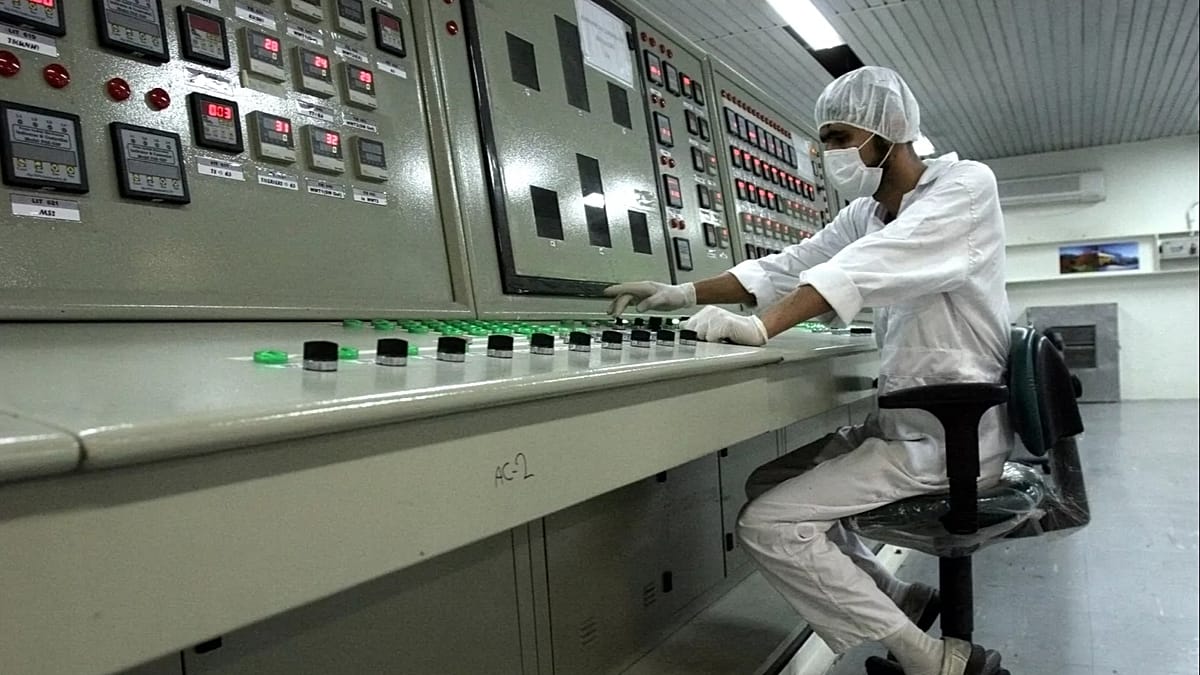
Since Israel and the United States struck Iran’s nuclear sites during a 12-day conflict in June 2025, Iran has not allowed IAEA inspectors access to the affected facilities, despite its legal obligations under the Nuclear Non-Proliferation Treaty (NPT). The agency has also been unable to verify the status of Iran’s stockpile of uranium enriched up to 60% purity—a short technical step from weapons-grade levels of 90%. According to IAEA Director General Rafael Grossi, Iran holds 440.9 kilograms of such material, enough to potentially build up to ten nuclear bombs if it decided to weaponize its program. Grossi stressed, however, that this does not mean Iran possesses a nuclear weapon. Tehran insists its program is entirely peaceful and that it is not pursuing nuclear arms.
The resolution “deeply regrets” Iran’s “failure to remedy” its non-compliance over the past twelve months. The IAEA board first declared Iran in non-compliance with its safeguards agreement in June 2025—the first such finding in twenty years—just before the US and Israeli strikes. Central to the dispute is a long-running investigation into uranium traces found at undeclared sites in Iran. Since 2019, Tehran has failed to provide “technically credible answers” about the origin and current location of this material. Western officials suspect the traces could indicate a secret nuclear weapons program that ended in 2003.
Wednesday’s resolution stops short of referring Iran to the UN Security Council for further sanctions—a step last taken in February 2006. However, it leaves that door open, stating that the board “will stand ready to take further action,” including addressing the timing and content of a formal non-compliance report for the Security Council’s consideration.
The European Union has long been a key player in nuclear diplomacy with Iran, notably through the Joint Comprehensive Plan of Action (JCPOA). The current crisis underscores the challenges facing European capitals as they seek to maintain a unified stance on non-proliferation while navigating transatlantic tensions and regional instability. The resolution’s passage in Vienna highlights the continued relevance of multilateral institutions in addressing security threats, even as geopolitical rivalries complicate consensus-building.