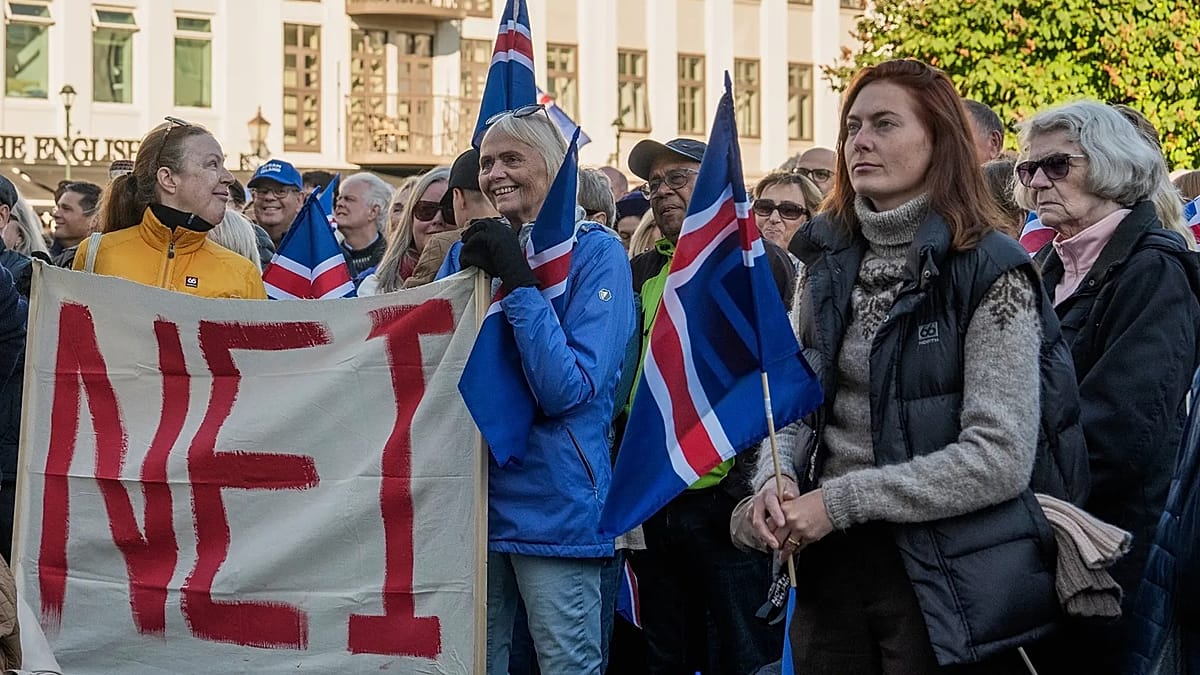
Icelanders have narrowly voted against resuming European Union membership negotiations, a result that will shelve the bloc question in domestic politics for at least two years. According to broadcaster RUV, with almost all constituencies counted, 52.5% of voters said “No” to restarting talks, while 47.5% backed “Yes”. One constituency, the southwest, had yet to confirm its final tally, but RUV declared the outcome clear.
The referendum, held on Saturday, was consultative rather than legally binding, but the government of Prime Minister Kristrún Frostadóttir had pledged to respect the outcome. The result marks a setback for her Social Democratic-led coalition, which had argued that a more volatile international climate made it worth asking Icelanders whether to pursue closer ties with Brussels.
A night of swings
The count swung back and forth through the night. Early results from the capital, Reykjavík, showed the “Yes” camp comfortably ahead, with nearly 58% support in the first partial tallies. Pro-EU campaigners were cautiously optimistic, pointing to strong urban turnout. But as rural and coastal constituencies reported after midnight, the picture shifted sharply.
Fishing communities, where opposition to EU quota-sharing rules has run deep for over a decade, delivered “No” majorities above 65% in several districts. By 2 a.m. CET, the national tally had narrowed to a near-even split. The turning point came around 7 a.m. CET, when the northern agricultural region — traditionally a bellwether — reported a 60/40 split in favour of “No”, pushing the national count into “No” territory for the first time. From there, the lead never fully reverted.
In the southwest constituency, which encompasses the commuter towns ringing the capital including Garðabær, Hafnarfjörður, Kópavogur and Mosfellsbær, early tallies were dead even, with 9,900 votes apiece. As counting progressed, the “No” side edged ahead: with 32,800 ballots counted, “No” led with 51.5%. RUV said it was “unlikely that the final result will bring Yes that enormous recovery, against the trends of the evening”.
What the result means
Iceland first sought EU membership after the 2009 financial crisis pushed its economy to the brink, but accession talks stalled in 2013 once a eurosceptic coalition took power. The current government revived the question this year, arguing that a more volatile international climate made it worth asking voters whether to pursue closer EU ties.
The outcome does not fundamentally alter Iceland’s relationship with Brussels. The country already participates in the European Economic Area and the passport-free Schengen zone, and both arrangements remain intact. The referendum itself carries no legal force, but the government has committed to abiding by whatever Icelanders decide.
Prime Minister Frostadóttir, Foreign Minister Þorgerður Katrín Gunnarsdóttir and Education Minister Inga Sæland have called a press conference for 3 p.m. CET, where party leaders will discuss the result and take questions from the media.
The result will be closely watched in other Nordic countries, particularly Norway, which has its own long-running debate over EU ties. As analysts have noted, Iceland’s decision could influence perceptions in Oslo, though Norway’s situation differs in key respects.
For now, the EU question in Iceland is likely to remain dormant for at least two more years. The narrow margin, however, suggests the debate is far from settled. As one Reykjavík-based political commentator put it, “This is not a resounding no, but a reluctant one.”