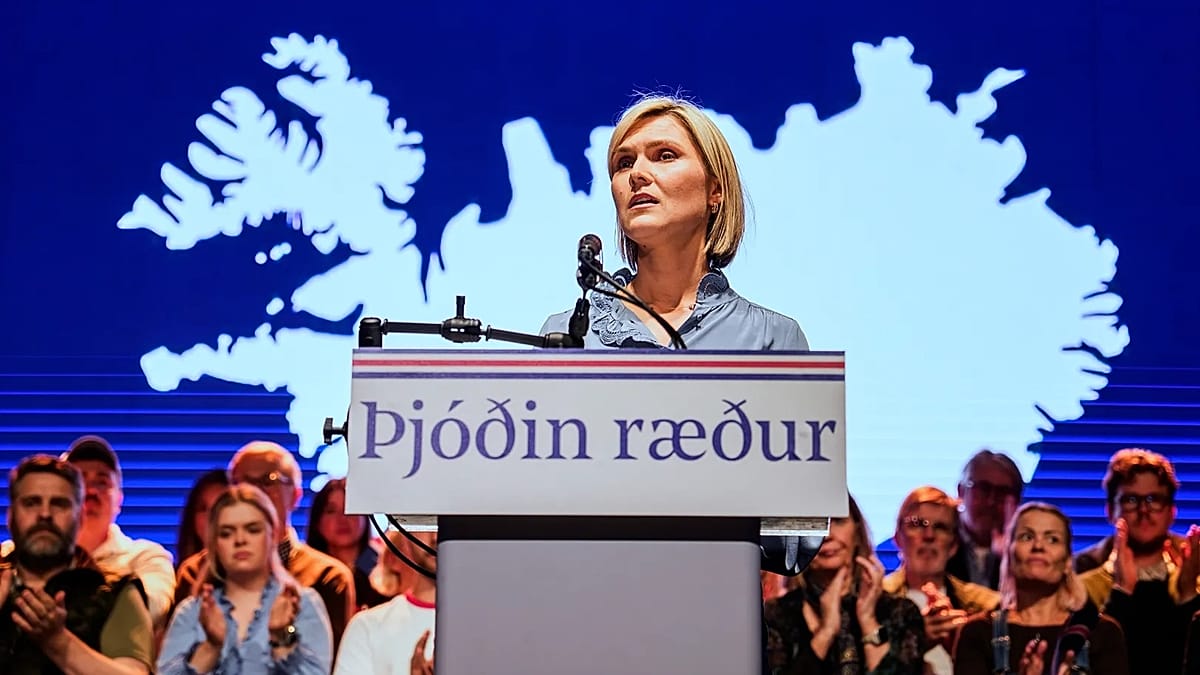
Reykjavík is bracing for a political cliffhanger. With just days to go before Iceland's referendum on whether to resume European Union membership negotiations, the latest polling suggests the outcome could hinge on a few thousand votes.
Maskína, a Reykjavík-based polling firm, published a survey on Wednesday showing the "Yes" camp at 51.3 percent and "No" at 48.7 percent — a gap of just 2.6 percentage points, within the margin of error. The poll, conducted between 21 and 25 August, sampled roughly 1,000 voters from a population of about 400,000, making it one of the most comprehensive reads of public sentiment in the campaign's final stretch.
The trend has been unmistakable. In June, Maskína's survey for the Icelandic broadcaster Vísir put the pro-accession lead at 6.2 points. By early August, that had shrunk to 4.4 points. A Gallup poll released on 17 August found a similar picture: 51.5 percent in favor of restarting talks, 48.5 percent against, with a 2.5-point margin of error.
A vote shaped by sovereignty and seafood
The campaign has been dominated by two intertwined concerns: national sovereignty and the future of Iceland's fishing and farming sectors. These were the same sticking points that froze accession negotiations in 2015, when the previous government suspended the process without a formal vote.
In Maskína's latest survey, 40 percent of respondents said they were worried about losing sovereignty in the event of EU membership, while 47 percent said they had little or no concern. The issue cuts across traditional party lines, with supporters of the centre-right Independence Party largely opposed and many on the left and centre favouring a return to the negotiating table.
Proponents argue that EU membership would bring economic stability, access to the single market, and a stronger voice in European affairs. Opponents counter that Iceland's unique fisheries management system — the backbone of its export economy — would be jeopardised by EU common fisheries policy, and that Brussels would erode the island's hard-won independence.
The referendum is advisory, but political leaders have indicated they would respect the result. If the "Yes" side wins, the government in Reykjavík would formally request the reopening of accession talks with the European Commission — a process that could take years and would ultimately require approval from all 27 member states.
The outcome will also be watched closely beyond Iceland's shores. A "Yes" vote could have ripple effects across the Nordic region, particularly in Norway, where EU membership has long been a dormant question. Iceland's EU vote could reshape Norway's European ties, analysts say, potentially reviving debate in Oslo about the country's own relationship with the bloc.
For the EU itself, the referendum is a test of its continued appeal as a club of democracies. With Armenia moving toward an EU membership bid and other Eastern European nations eyeing closer integration, a successful Icelandic bid would signal that the union remains an attractive partner even for wealthy, resource-rich countries outside its borders.
Yet the narrow margin suggests deep ambivalence. Many voters, like farmer Guðrún Jónsdóttir in the northern town of Akureyri, remain torn. "I want Iceland to have a say in Europe, but I don't want to lose control over our own waters," she told local media. "It's a leap into the unknown."
As Icelanders prepare to cast their ballots on Saturday, both camps are urging their supporters to turn out. With the outcome on a knife's edge, every vote will count.