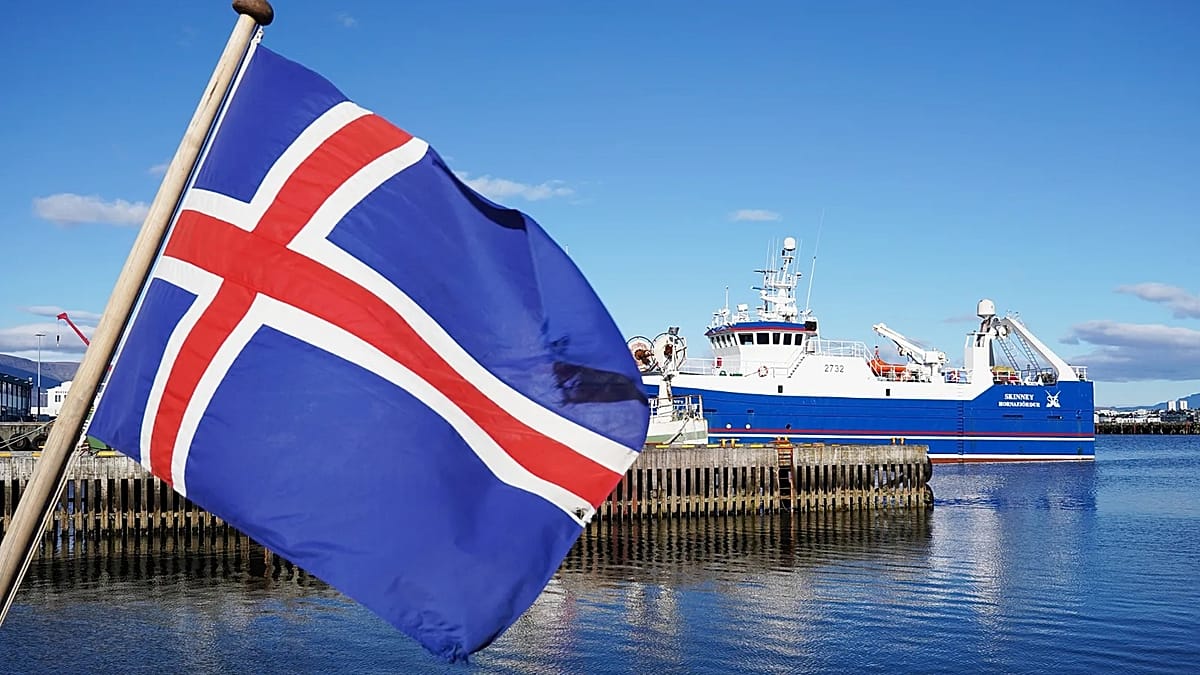
On Saturday 29 August, roughly 270,000 Icelandic voters will answer a single question: "Should Iceland resume accession negotiations with the European Union?" Polling stations across the island, from Reykjavík to Akureyri, open at 9am and close at 10pm local time. The result will determine whether the government of Prime Minister Kristrún Frostadóttir can begin formal talks with Brussels, or whether the idea of EU membership is shelved for the foreseeable future.
The referendum is advisory, not binding. Even a "yes" vote would only authorise the government to restart negotiations; a second referendum would be needed before Iceland could actually join the bloc, and all 27 EU member states would have to ratify the accession treaty. Still, the outcome will send a powerful signal about the country's direction.
A knife-edge vote
Recent polling suggests the result is on a razor's edge. An August survey by the Icelandic polling firm Maskína put support for resuming talks at 51.3%, with 48.7% opposed. That narrow margin reflects deep divisions over issues ranging from national security to the future of the country's vital fishing industry.
Defence has become a particularly sensitive topic. Iceland, a founding member of NATO but with no standing army, relies on the 1951 US-Iceland defence agreement for its security. The re-election of Donald Trump, who has repeatedly threatened to annex Greenland, has cast doubt on Washington's reliability. Meanwhile, Russia's growing economic and strategic interest in the High North has made the island's position more precarious. For many Icelanders, EU membership could offer a more predictable security anchor.
But domestic concerns may weigh just as heavily. The cost of living has soared in recent years, and inflation has eroded household budgets. Finance Minister Daði Már Kristófersson has argued that joining the EU could boost the economy by providing access to a larger market and greater investment. Others, however, fear that Brussels' rules would undermine Iceland's control over its own resources.
Fisheries: the perennial sticking point
No issue has historically been more contentious than fishing. Iceland's fisheries account for about 6.5% of GDP and employ thousands of people. The EU's Common Fisheries Policy, which sets catch limits and quotas, has long been a source of friction between Reykjavík and Brussels. The so-called "mackerel wars" of the 2010s, when Iceland unilaterally set quotas that the EU deemed excessive, remain fresh in many voters' minds.
Foreign Minister Þorgerður Katrín Gunnarsdóttir has acknowledged that fisheries are a major concern for "no" voters. Fisheries Iceland, the industry's representative body, argues that EU membership would strip Iceland of its ability to act as an independent coastal state. "We would lose the power to manage our own waters," a spokesperson said.
Proponents of EU membership counter that Iceland already adopts roughly 75% of EU rules through its membership in the European Economic Area (EEA). By joining the EU, they argue, Iceland would gain a seat at the table when those rules are written, rather than simply implementing them. "We are already in the single market," said one campaigner. "The question is whether we want a say in how it operates."
The road to Saturday
Iceland first applied to join the EU in 2009, in the aftermath of the global financial crisis that devastated its banking sector. Formal negotiations began in 2010, but the process stalled in 2013 when a Eurosceptic government took office. The application was never formally withdrawn, but it lay dormant for over a decade.
The geopolitical upheaval of recent years has revived the debate. Russia's full-scale invasion of Ukraine in 2022 reshaped security calculations across the Arctic and northern Europe. Trump's return to the White House has further strained transatlantic ties, prompting Iceland to reconsider its reliance on the United States.
In 2024, Frostadóttir's centre-left coalition came to power with a promise to hold a referendum on EU membership. The European Commission confirmed that Iceland's original application remains valid, and in early 2026 the prime minister announced the vote would take place on 29 August.
What Brussels thinks
EU officials have welcomed the prospect of renewed talks. "We share values, we know each other very well, we are like-minded, so we are close partners," said a Commission spokesperson. However, they have been careful not to interfere in the campaign, stressing that the decision rests with the Icelandic people.
The outcome will also be watched closely in other non-EU European states, particularly Norway, which shares Iceland's EEA arrangement. A "yes" vote could reignite debates in Oslo about the merits of full membership, while a "no" would reinforce the status quo. As analysts have noted, the ripple effects could extend well beyond Reykjavík.
For now, both camps are making their final appeals. "This is about our future, our identity, and our place in Europe," said one "yes" supporter in Reykjavík. A "no" campaigner countered: "We are already independent. Why give that away?"
The polls close at 10pm, and results are expected within hours. Whatever the verdict, Iceland's relationship with the European Union will remain a defining issue for years to come.