On Saturday, Icelanders delivered a clear verdict: 58.2% voted against resuming European Union membership talks, effectively closing the door on a process that had been dormant since 2015. The government of Prime Minister Kristrún Frostadóttir, which had made reopening negotiations a flagship initiative, now lacks a mandate to return to the table.
Iceland is not a typical candidate. It is a wealthy, politically stable Nordic democracy that already applies a substantial portion of EU law through the European Economic Area (EEA) and the Schengen Agreement. During its previous accession bid, 27 of 35 negotiating chapters were opened and 11 provisionally closed, according to Christine Leuchtenmüller, head of the Regional Programme Nordic Countries at the Konrad-Adenauer-Stiftung. "Iceland already applies a substantial part of EU legislation and is deeply integrated into the Single Market," she noted.
Yet the referendum result, Leuchtenmüller cautioned, "primarily reflects Iceland's particular political and economic circumstances" and should not "allow for broader conclusions about EU enlargement." Still, the timing is awkward for Brussels, which has increasingly framed enlargement as a geopolitical necessity in the wake of Russia's war in Ukraine, strained transatlantic relations, and instability in the Middle East.
Why Iceland said no
For the Frostadóttir government, the push for EU membership was driven by economic and security concerns. Inflation peaked at 10.2%, interest rates reached 9.25%, and the country faced heightened Arctic security threats, including diplomatic friction over Greenland. Adopting the euro and joining the EU Customs Union, proponents argued, would lower living costs and strengthen Iceland's defence and sovereign interests.
But many Icelanders saw little added value. As MEP Mika Aaltola (EPP, Finland), shadow rapporteur on the European Parliament's Arctic report, put it: "Icelanders did not vote against Europe; they voted against redundancy. When a country already has the single market, Schengen and open borders, the marginal value of a seat must outweigh shared control of its core resource."
The result has been interpreted as a signal that even a country deeply integrated into European structures can choose to stay outside the political union, complicating the EU's narrative that membership is the natural next step for like-minded democracies.
Enlargement as a security tool
The EU's current enlargement strategy is heavily security-driven. Ukraine and Moldova, both official candidates since 2022, view membership as a bulwark against Russian aggression and interference. Montenegro and Albania are the frontrunners, with Montenegro having opened all 33 negotiating chapters and Albania accelerating its talks. For these countries, membership promises investment, access to a market of 450 million people, and a stronger geopolitical position.
However, the path is slower for Serbia, North Macedonia, and Bosnia and Herzegovina, each facing bilateral disputes, democratic backsliding concerns, or rule-of-law deficits. Georgia's process has stalled over democratic concerns, while Turkey's talks remain frozen after two decades.
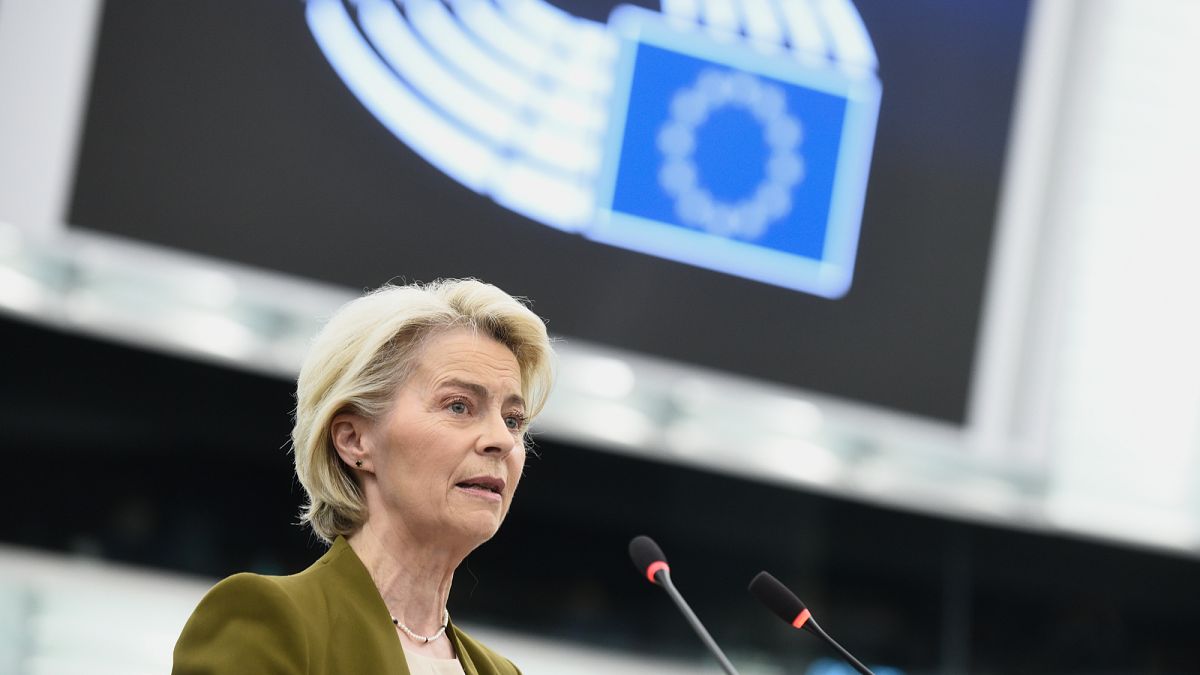
The EU's interest in enlargement is not purely altruistic. Integrating the Western Balkans would bring a region surrounded by member states more firmly into European security structures, while a larger bloc would boost its negotiating power on trade, energy, and foreign policy amid great-power competition. As Berlin and Paris propose folding EU foreign policy under von der Leyen, the bloc is seeking to act more cohesively on the world stage.
Yet Iceland's rejection underscores a potential weakness: if a stable, wealthy democracy with deep EU integration chooses to remain outside, what does that say about the attractiveness of membership for others? The answer, as Leuchtenmüller suggests, may be that Iceland's decision is sui generis, driven by domestic factors rather than a broader European trend. Still, the Icelandic No vote undercuts the EU's security-driven enlargement pitch, which assumes that closer ties automatically translate into political union.
For now, the EU will continue to focus on the Western Balkans and the Eastern Partnership, where the security stakes are higher and the economic gap with the bloc is wider. But the Icelandic referendum serves as a reminder that enlargement is not a one-way street, and that even the most integrated neighbours can choose a different path.