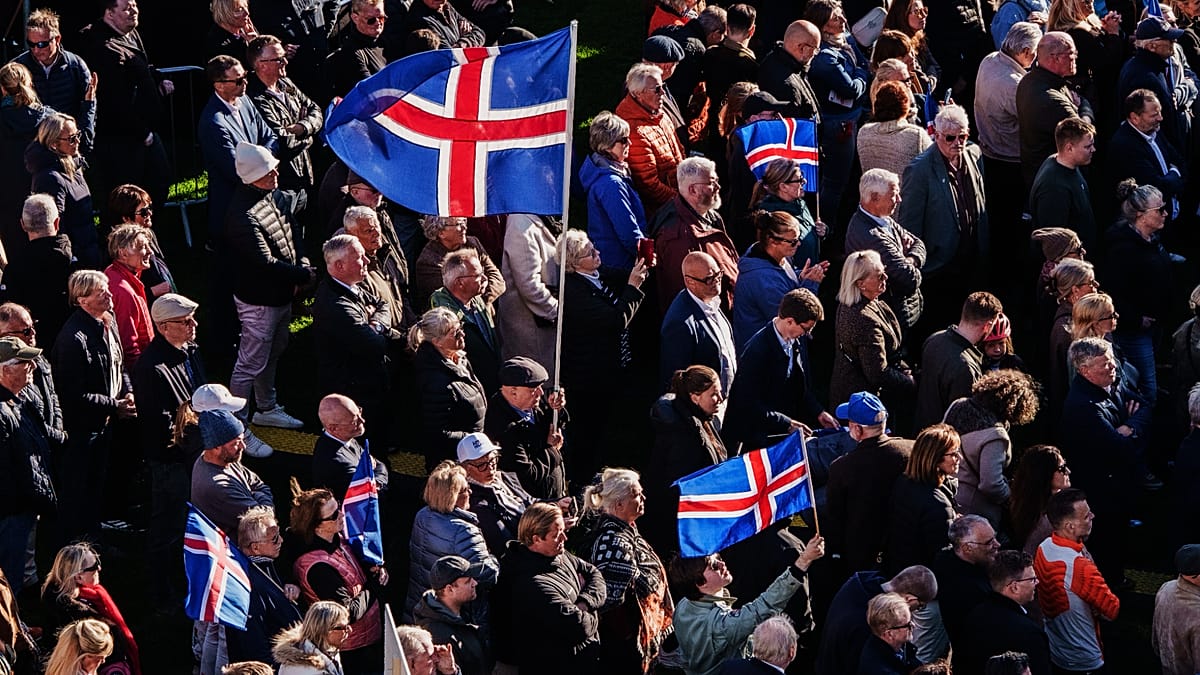
Reykjavík — Icelanders are casting ballots today in a referendum that could determine whether the island nation reopens its long-dormant bid to join the European Union. Polling stations opened at 9 a.m. and close at 10 p.m. local time, with voters asked a simple but consequential question: should the government resume accession talks with Brussels?
A "Yes" vote would not obligate Iceland to join the bloc, but it would formally restart negotiations, and any eventual membership deal would still require a separate referendum. A "No" would likely shelve the EU question for years, if not a generation.
The vote comes a decade after the UK's Brexit referendum, and it carries symbolic weight for a European project seeking to regain momentum on enlargement. For Iceland, with a population of just under 400,000, membership would make it the EU's smallest member state, a title currently held by Malta. But the stakes extend far beyond the island's size.
A decade of stop-start relations with Brussels
Iceland first applied to join the EU in 2009, in the aftermath of the global financial crisis that devastated its banking sector. Negotiations progressed until a Eurosceptic government took office in 2013, suspended the talks, and formally withdrew the candidacy in 2015.
The political landscape shifted again in 2024, when a pro-EU coalition won the general election on a promise to hold a referendum on resuming the accession path. That promise is now being fulfilled, with the vote taking place under the watchful eye of other Nordic nations, particularly Norway, which has its own long-standing relationship with the EU through the European Economic Area but has never joined.
Early voting has been unusually brisk. According to Icelandic media, more than 40,000 people — nearly 15% of the electorate — had already cast ballots by Wednesday, just days after early voting opened on 27 July. The extended early-voting window makes direct comparisons with past elections difficult, but the numbers suggest high engagement.
The campaign has been tight and increasingly tense. Polls have narrowed steadily, with the "Yes" camp's early lead eroding. A survey by the market research firm Maskína, conducted 21–25 August, put support for resuming talks at 51.3% against 48.7% for "No". A Gallup poll released on Thursday went further, showing "No" narrowly ahead, though within the margin of error.
"This is a generational decision," said one Reykjavík-based political analyst, speaking on condition of anonymity. "It's not just about fish and farming subsidies — it's about Iceland's place in Europe and the world."
The referendum is advisory, not legally binding. But a clear "Yes" would put significant pressure on the government in Reykjavík to move forward with formal negotiations. A "No" would likely be interpreted as a decisive rejection, at least for the foreseeable future.
Observers note that the outcome could have ripple effects beyond Iceland's shores. A "Yes" would bolster the EU's enlargement narrative, particularly as it seeks to demonstrate appeal to wealthy, stable democracies. Norway, which has twice rejected EU membership in referendums, is watching closely — a fact that has not been lost on campaigners on either side.
For now, the focus is on the count. Results are expected early on Sunday, and with the race this close, every ballot will matter.