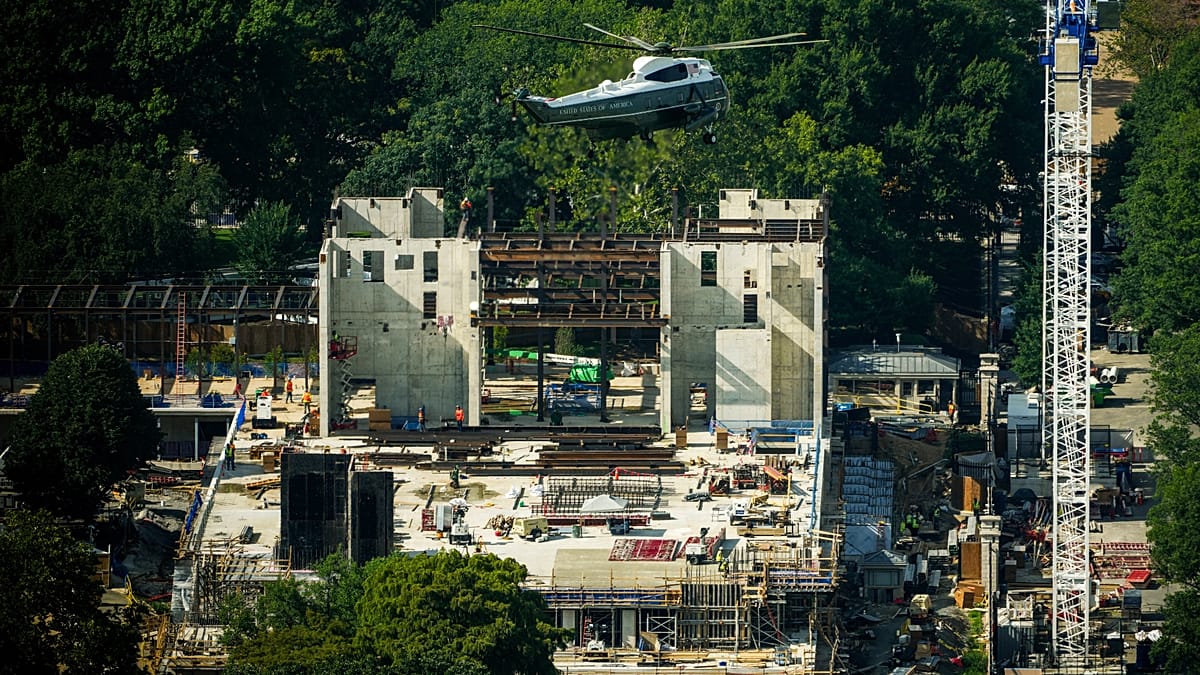
The White House has confirmed that the columns for its new ballroom will be carved in Italy, using limestone quarried in the US state of Indiana. The announcement, made by Joshua Fisher, director of White House Management and Administration, did not name the sculptors, but said they are "some of the greatest artists in the world" and are based in Italy.
The project, which has a budget of $400 million, received the green light from the US Supreme Court after a legal challenge from the National Trust for Historic Preservation. The new ballroom will replace the traditional East Wing and will be larger than the main White House building, spanning more than 8,000 square metres and accommodating up to 1,000 guests.
A nod to a historic tradition
The decision to send American stone to Italy for carving echoes a long-standing practice. In 1815, President Thomas Jefferson brought Italian craftsmen to Washington to carve the capitals for the Capitol building, a task later completed by Giovanni Andrei in Carrara, the Tuscan city renowned for its marble. The new ballroom's Corinthian colonnade is designed to mirror that of the Capitol and the Supreme Court.
While the White House has not disclosed which Italian firms are involved, the mention of Carrara is telling. The city has supplied stone for Trump properties before: MTStone Carrara S.r.l. produced 150 square metres of white onyx panels for the Trump International Hotel in 2010, a project still showcased on the company's website. However, the firm does not specialise in sculpture, so the actual carving may be done elsewhere.
Another possible location is Pietrasanta, a town 20 kilometres south of Carrara, which has a history of public commissions in the United States. The area is also associated with Michelangelo, who personally selected marble from the Apuan Alps for his masterpieces.
The ballroom will be a lavish addition to the White House, featuring air-raid shelters, medical facilities, rooms for top-secret meetings, a rooftop landing pad for drones and helicopters, drone-proof ceilings, and bulletproof windows. The façade is expected to be "virtually completed" by April 2028, according to Fisher.
Funding for the project is entirely private, with around $355 million already raised. The construction site employs about 200 workers and will use tonnes of steel, concrete, marble, and gold—a signature of Trump's building career, already visible in the Oval Office.
The project has drawn criticism from preservationists, but the Supreme Court's ruling allows work to proceed. The new ballroom is part of Trump's broader efforts to leave a lasting mark on the White House, with completion timed to the end of his second term.
For Italy, the commission is a reminder of its enduring role in American monumental architecture. As the White House looks to the future, it is once again turning to the Old World for craftsmanship that has defined public buildings in Washington for over two centuries.