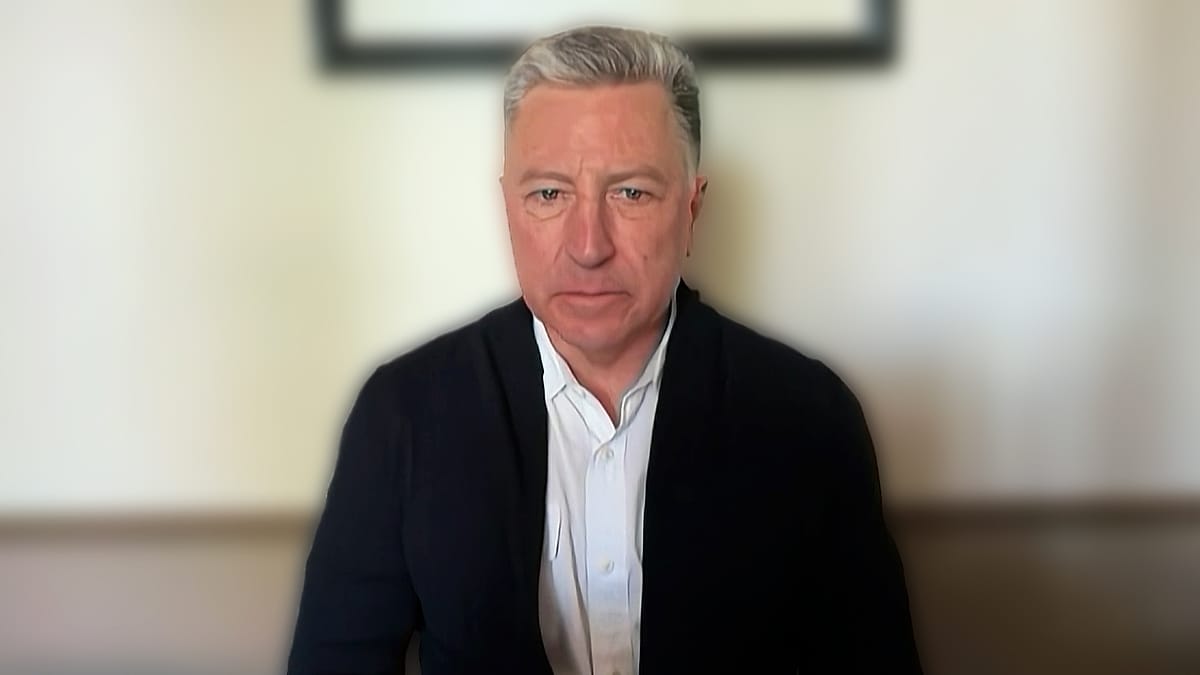
Despite weeks of US-Israeli military strikes against Iran, the regime in Tehran remains intact and retains the power to disrupt one of the world's most critical maritime chokepoints, according to Kurt Volker, the former US Ambassador to NATO under the first Trump administration.
Speaking to Euronews' Europe Today programme, Volker argued that the conflict has effectively handed Tehran the ability to strangle shipping through the Strait of Hormuz whenever it chooses. “The regime does stay in place, and it does have the capability and the will to shut down shipping in the Persian Gulf if it wants to,” he said.
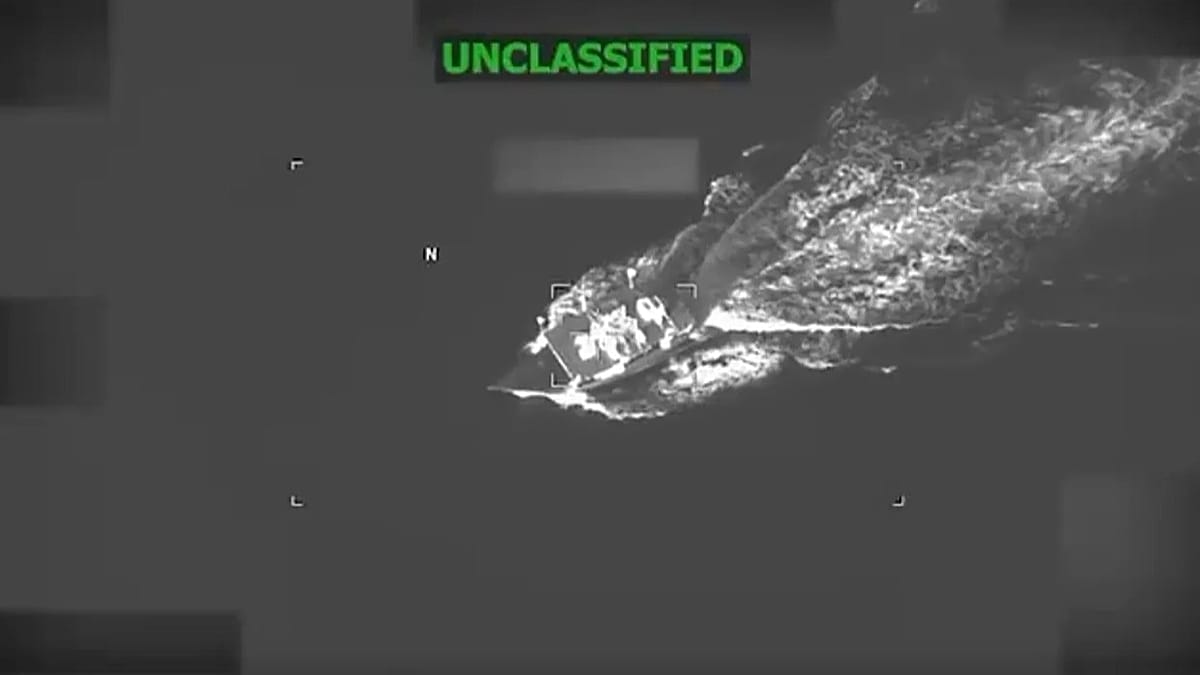
The Strait of Hormuz, a narrow passage between the Persian Gulf and the Gulf of Oman, carries nearly a quarter of the world's seaborne oil trade, along with significant volumes of liquefied natural gas and fertilisers. Its closure in response to the US-Israeli offensive has sent shockwaves through global energy markets, with oil prices remaining above $100 a barrel even as hopes of a reopening have lifted stock markets.
A deal reminiscent of the JCPOA
Volker, who also served as US Special Representative for Ukraine, described the emerging Pakistan-mediated ceasefire as strikingly similar to the 2015 Joint Comprehensive Plan of Action (JCPOA), from which President Donald Trump unilaterally withdrew in 2018. “There'll be an end to fighting, and there'll be a moratorium on uranium enrichment and a nuclear programme with inspections,” Volker said. “It’ll probably involve the lifting of sanctions and returning funds to Iran. This is actually very, very similar to what was already in the JCPOA that was torn up.”
The US and Israel launched surprise attacks against Iran earlier this week, targeting missile infrastructure, military sites, and leadership compounds. Among those killed was Supreme Leader Ayatollah Ali Khamenei on 1 March. His son, Mojtaba Khamenei, a known hardliner, was swiftly sworn in as his successor but has not been seen in public after reportedly suffering severe injuries in an attack on his compound in Tehran.
Despite these losses, Volker argued that the regime emerges “emboldened, even though they have been substantially weakened.” The survival of the authoritarian government, which has long funded proxies such as Hezbollah and Hamas, means that the underlying geopolitical instability in the region persists.
Trump had earlier indicated that regime change in Tehran was a war aim, following the killing of thousands of Iranians by the Islamic Revolutionary Guard Corps (IRGC) during civilian protests in January. The US had pledged to “help” Iranian civilians opposing the regime. Yet the impending deal suggests a return to a containment strategy rather than outright removal of the leadership.
On Wednesday, Trump told reporters in the Oval Office that the US had held “very good talks” with Iran and that “it’s very possible that we’ll make a deal.” The potential reopening of the Strait of Hormuz would ease pressure on global supply chains, but Volker’s warning underscores the fragility of any arrangement that leaves the regime’s coercive capabilities intact.
For European capitals, the situation presents a familiar dilemma. The EU had been a key architect of the original JCPOA, and its collapse under Trump left Brussels scrambling to maintain diplomatic channels with Tehran. The new deal, if concluded, would likely require European support for sanctions relief and verification mechanisms. However, the broader strategic risk remains: Iran’s ability to disrupt energy flows at will means that any future crisis could once again threaten Europe’s energy security, especially as the continent grapples with the fallout from the war in Ukraine and rising costs.
Volker’s analysis serves as a stark reminder that military strikes alone cannot eliminate the structural leverage Iran holds over global energy markets. As the US and its allies pursue a diplomatic off-ramp, the question of whether Tehran will honour its commitments—or simply bide its time—remains open.