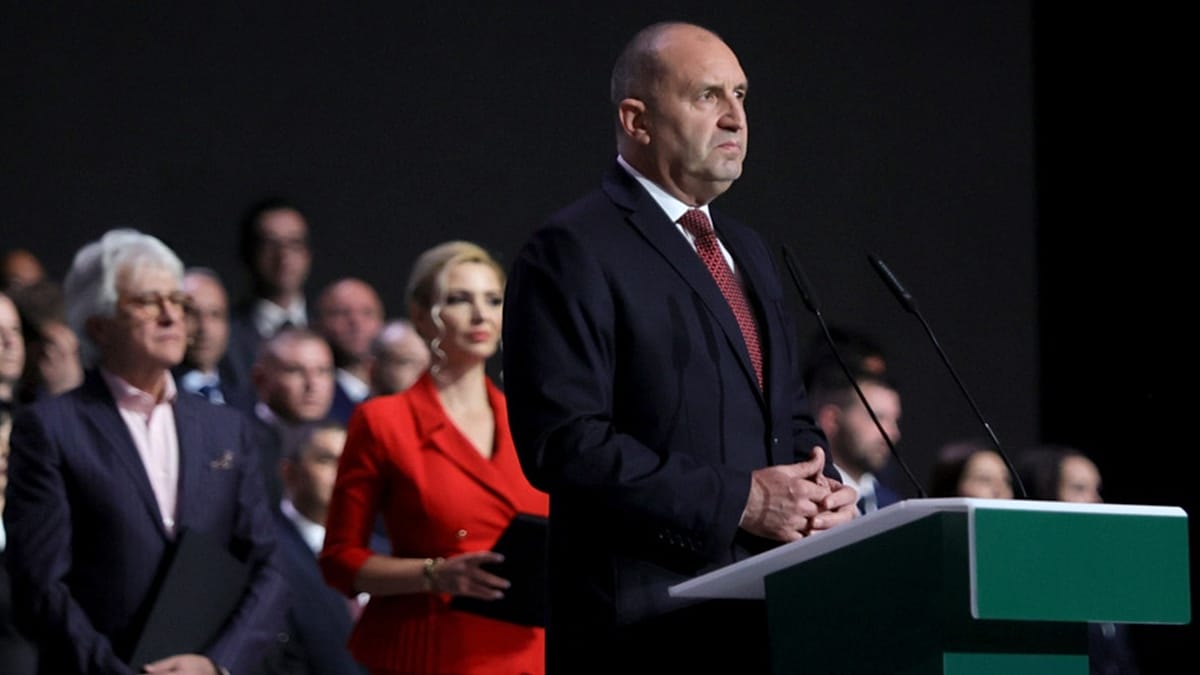
Rumen Radev, the former Bulgarian president and a vocal critic of the European Union, was formally appointed as the country's new prime minister on Thursday. His appointment follows a landslide victory in last month's parliamentary elections, which delivered the first outright majority for a single party since 1997.
Radev, a 62-year-old former fighter pilot, resigned from the presidency earlier this year to lead his party into the election. He campaigned on a platform of eradicating corruption and dismantling what he described as Bulgaria's 'oligarchic model.' His victory raises hopes for a period of political stability in the Balkan nation of 6.5 million, which has endured eight parliamentary elections in just five years.
A Mandate for Change
After receiving the mandate to form a government from President Iliana Iotova, Radev stated: '(Through the vote, Bulgarians) confirmed their desire for stable institutions and for the defence of freedom, democracy and justice.' He also presented his cabinet line-up on Thursday, which is expected to be confirmed by parliament on Friday.
Radev inherits a daunting set of challenges. His government must draft a 2026 budget, tackle rising inflation, and reform a judicial system widely seen as paralyzed by political interference. Bulgaria ranks as the EU's most corrupt country alongside Hungary in Transparency International's corruption perception index.
To unlock nearly €400 million in EU funds, Radev will need to implement a series of reforms, particularly in the area of anti-corruption. This is a delicate task for a leader who has been a staunch critic of Brussels and has campaigned on resuming dialogue with Moscow.
Bulgaria's political turmoil has been a persistent feature since 2021, when anti-corruption protests brought down the conservative government of long-time pro-European leader Boyko Borissov. The latest conservative-backed administration resigned last year after a new wave of anti-graft demonstrations, which Radev publicly supported.
Radev's victory marks a significant shift in Bulgarian politics. His party's outright majority—the first since 1997—offers the prospect of a stable government, but his eurosceptic stance and openness to Russia raise questions about Bulgaria's future direction within the EU. The country, a member of the bloc since 2007, has traditionally been a strong supporter of European integration.
As Radev prepares to take office, the EU will be watching closely. His government's ability to deliver on anti-corruption reforms will be critical not only for unlocking EU funds but also for restoring public trust in a political system that has been plagued by instability and graft. The coming months will test whether Radev's promises of change can translate into tangible progress for one of Europe's poorest member states.