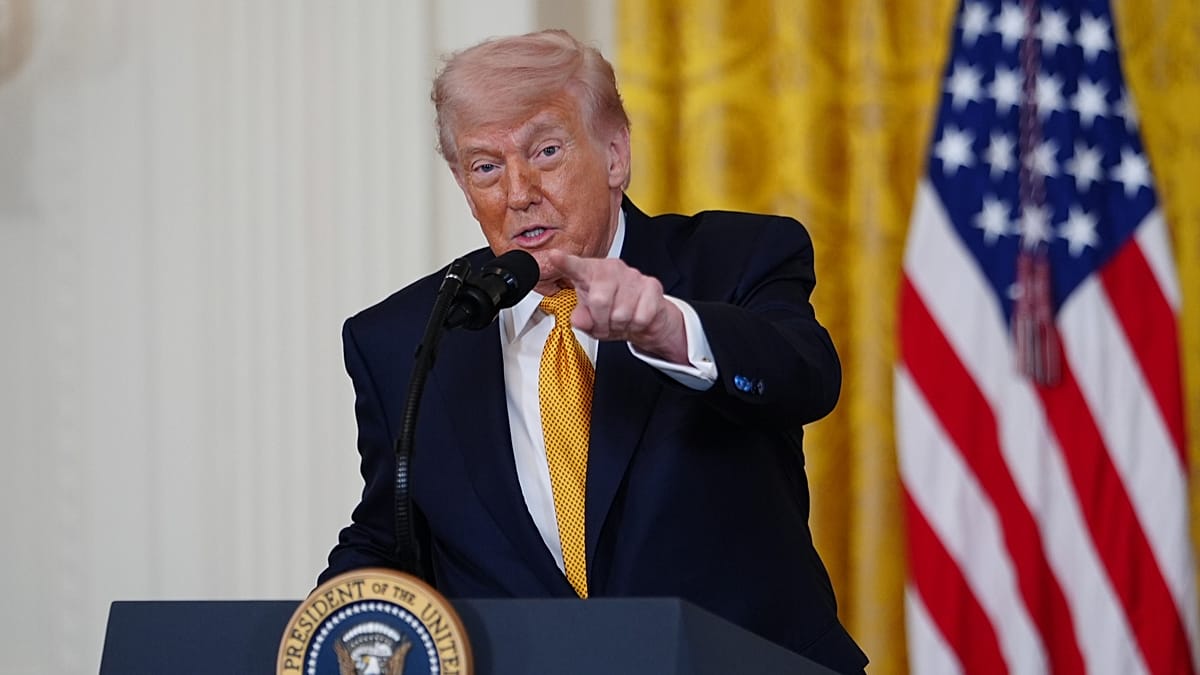
United States President Donald Trump has issued a new ultimatum to the European Union, demanding full implementation of a bilateral trade deal by July 4 or facing steep tariff increases. The announcement came late Thursday after a phone call with European Commission President Ursula von der Leyen, temporarily postponing an earlier threat to raise duties on EU-made cars from 15% to 25%.
In a social media post, Trump claimed the EU had failed to deliver on commitments made during a summit in Turnberry, Scotland, last summer. He wrote: “I’ve been waiting patiently for the EU to fulfill their side of the historic trade deal we agreed in Turnberry, Scotland, the largest trade deal, ever! A promise was made that the EU would deliver their side of the deal and, as per agreement, cut their tariffs to zero!”
Referring to the US Independence Day, Trump added: “I agreed to give her until our country’s 250th Birthday or, unfortunately, their tariffs would immediately jump to much higher levels.”
Internal EU Divisions Over Safeguards
The trade deal, struck last year, commits the EU to eliminating remaining tariffs on US goods. In exchange, the US agreed to a blanket 15% tariff on most EU products, preventing additional duties. However, the European Parliament and member states are still negotiating the legislation needed to enact the tariff cuts. A round of talks collapsed on Wednesday evening, though negotiators reported progress toward a possible resolution on May 19.
The main sticking point is a demand by MEPs to include safeguards in case Trump violates the agreement or threatens the EU’s territorial integrity—as he did earlier this year when he suggested forcefully seizing Greenland from Denmark. Member states prefer to stick to the original wording without safeguards, aiming to implement the deal quickly. This internal rift has been highlighted in recent reporting, with MEPs and member states clashing over safeguards.
Trump’s latest threat has emboldened critics of the agreement, who argue the US president will eventually backtrack and demand further concessions. The White House has repeatedly attacked EU digital and environmental regulations, calling for their abolition.
Von der Leyen’s Response
Earlier this week, von der Leyen pushed back against Trump’s pressure. Speaking in Armenia, she said: “A deal is a deal, and we have a deal. And the essence of this deal is prosperity, common rules and reliability.” She added: “We want from this work (to achieve) mutual gain, cooperation and reliability. And we’re prepared for every scenario,” hinting at potential retaliation. Von der Leyen also reminded Trump that the 15% all-inclusive cap in the trade deal prevents the US from unilaterally hiking tariffs.
Thursday’s phone call, which Trump described as “great,” appeared to ease tensions for now. The two leaders also discussed the conflict in the Middle East, with Trump stating: “We discussed many topics, including that we are completely united that Iran can never have a nuclear weapon. We agreed that a regime that kills its own people cannot control a bomb that can kill millions.”
The standoff underscores broader transatlantic friction, as the EU navigates not only US trade demands but also rising tensions with China. Brussels is currently debating how to maintain a firm stance in EU-China trade relations. Meanwhile, the US has labeled Europe an “incubator” for terrorism in a new strategy, further straining ties.
With the July 4 deadline looming, EU institutions face intense pressure to resolve internal disagreements and deliver on the trade deal—or prepare for a new wave of tariffs that could disrupt industries from German automakers to French wine producers.