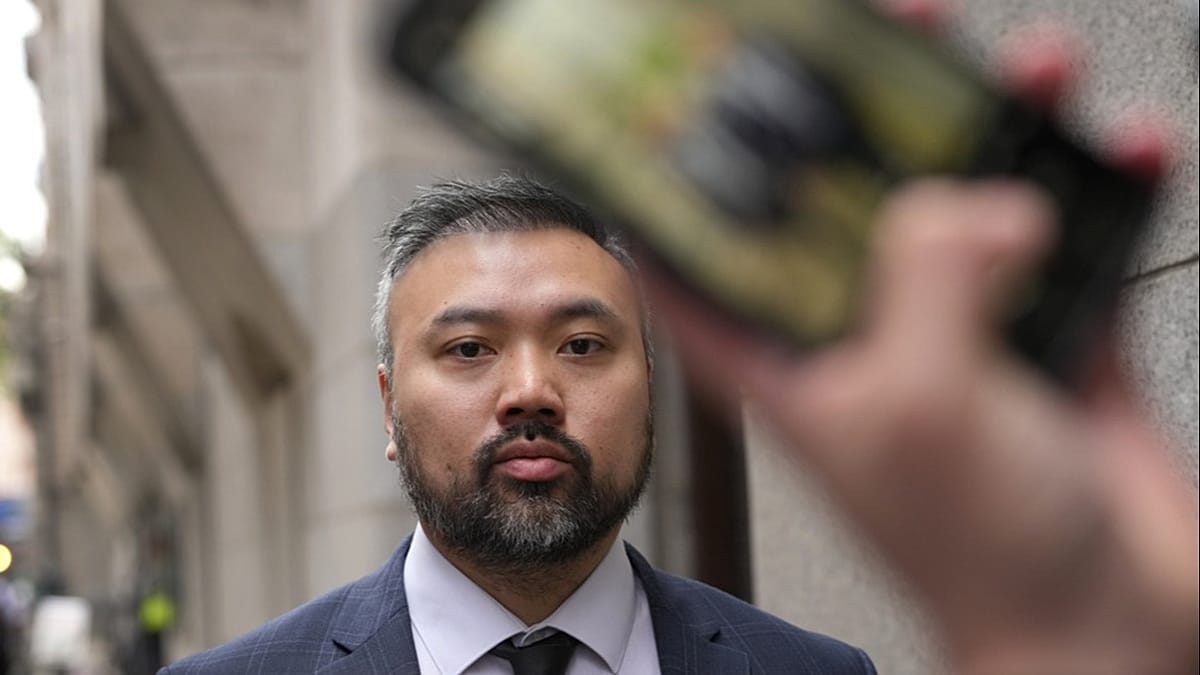
The United Kingdom has announced it will summon China's ambassador to London after two dual UK-Chinese nationals were convicted of conducting covert surveillance on Hong Kong dissidents living in Britain. The case, which concluded this week at the Old Bailey, has heightened diplomatic tensions between London and Beijing.
Peter Wai, 38, a former UK Border Force officer, and Bill Yuen, 65, a retired Hong Kong police superintendent, were found guilty of assisting a foreign intelligence service under the UK's National Security Act. Wai was also convicted of misconduct in a public office for accessing the interior ministry's computer system to identify individuals of interest to Hong Kong authorities.
The jury deliberated for nearly 24 hours before reaching verdicts on the espionage charges but failed to agree on a separate count of foreign interference against each defendant. Prosecutors said they would not seek a retrial, and both men were remanded in custody pending sentencing, which is expected to be scheduled after a hearing on 15 May.
Shadow Policing on British Soil
Court proceedings revealed that Wai acted on instructions from Yuen, who at the time was a senior manager at the Hong Kong Economic Trade Office (HKETO) in London, the de facto diplomatic representation of Hong Kong's government. The pair targeted Hong Kong dissidents and pro-democracy protesters who had sought refuge in the UK following crackdowns in the territory.
Their operations included physical surveillance, photography, and deception. One operation involved photographing prominent activist Nathan Law, who resides in London. Messages on Yuen's phone showed that surveillance of Law began as early as 2021. The court also heard that the pair paid "special attention" to politicians, including senior Conservative MP Iain Duncan Smith.
The surveillance coincided with bounties posted by Hong Kong authorities offering around £100,000 (€115,600) for information leading to the identification of several UK-based activists, including Law. One witness, a protester who testified during the trial, told the jury that Wai had threatened him with arrest after he confronted a Hong Kong diplomat in London.
The defendants' activities came to light after British police foiled an alleged attempt to snatch a former Hong Kong resident from her flat in Yorkshire in May 2024. Wai, known to associates as "Fatboy," lived in Staines-upon-Thames, southwest of London, while Yuen resided in Hackney, east London. Both had denied all charges.
The UK government's decision to summon China's ambassador underscores the seriousness with which London views the case. It follows a pattern of diplomatic friction between European capitals and Beijing over alleged espionage and interference, as seen in recent incidents such as Italy's extradition of a Chinese hacker accused of COVID-19 vaccine espionage to the US and the EU's decision to phase out Chinese inverters in funded energy projects over cyber threats.
The case has also drawn attention to the broader issue of foreign interference in European democracies. As European Pulse has reported, Italy recently summoned the Russian ambassador over a separate incident, highlighting a growing unease across the continent about external meddling.
The convictions mark a significant application of the UK's post-Brexit national security legislation, which was strengthened in 2023 to counter espionage and foreign interference. The case is likely to reverberate in Brussels and other European capitals, where concerns about Chinese intelligence activities have been rising.