The European Commission has announced a phased ban on Chinese-made inverters in all EU-funded energy projects, a decisive step to shield critical infrastructure from potential cyberattacks that could destabilise Europe's power grids. The policy, framed as an economic security measure rather than industrial protectionism, will take full effect by April 2027.
An EU official, speaking on condition of anonymity, told reporters on Monday that the Commission had identified 'serious economic and cybersecurity risks' linked to inverters produced by companies such as Huawei and Sungrow. The assessment drew on both classified and open-source intelligence submitted by several member states, the official said.
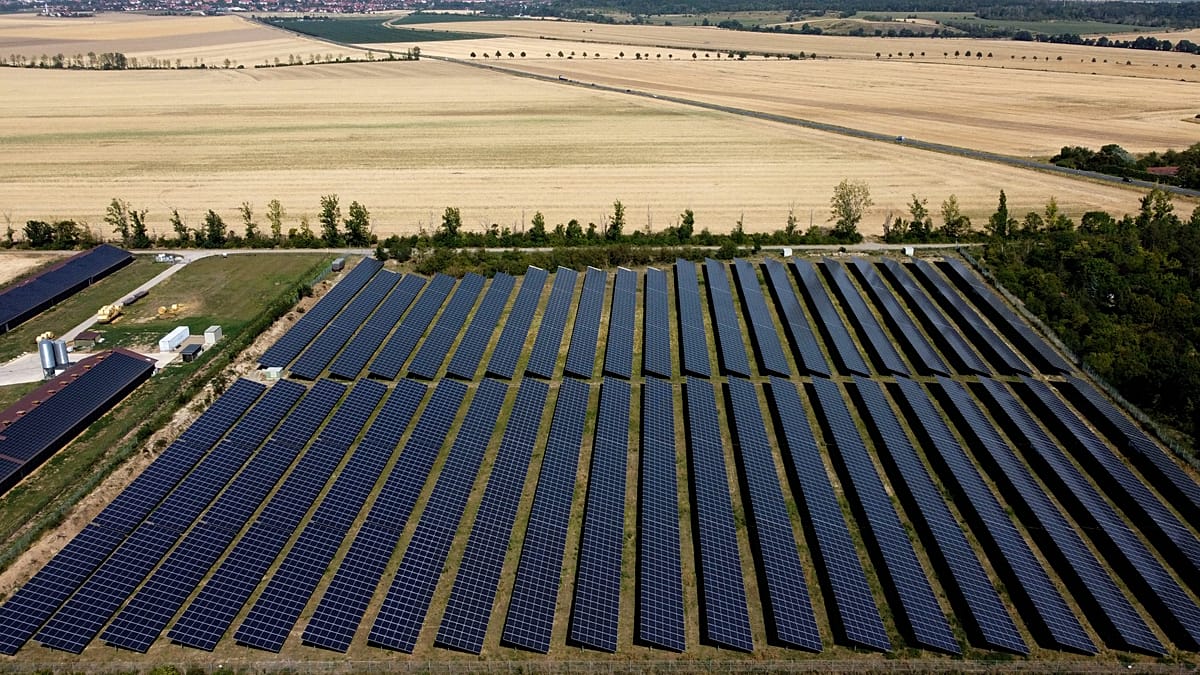
Inverters are compact but essential components in modern energy systems, often described as the 'brain' of electricity networks. They convert and regulate power flows from renewable sources like solar and wind, as well as from storage systems. As Europe accelerates its transition to renewables, the reliance on Chinese-made inverters—which dominate an estimated 80% of the global market—has raised alarms about potential vulnerabilities.
The EU official warned that, in a worst-case scenario, hostile states—specifically naming China, Iran, North Korea, and Russia—could exploit these dependencies to undermine European energy infrastructure, potentially triggering blackouts. The move follows a November 2024 letter from 30 MEPs with energy expertise, urging the Commission to bar 'risky' technology providers from EU-funded projects.
Economic Security, Not Industrial Policy
The Commission explicitly distinguishes this initiative from industrial policy. Companies from trusted partners such as Japan, South Korea, and Switzerland will remain eligible for EU funding. The EU also hopes the measure will encourage member states and international partners to adopt similar restrictions; Lithuania has already moved to limit high-risk energy technologies.
The decision builds on a policy framework first outlined in December 2025, when the Commission signalled it would use funding rules to reduce dependencies on suppliers deemed security risks. The new guidance applies across all EU funding instruments, including direct and indirect financing from the European Investment Bank and the European Bank for Reconstruction and Development.
Rather than introducing new legislation, the Commission will enforce restrictions through existing tools, such as project-level policy checks and provisions under the EU's financial regulation that allow security-based conditions on funding. All EU-funded projects must now comply with updated cybersecurity requirements.
A transitional period will run over the coming months for projects already at an advanced stage. By 1 November 2026, such projects will be assessed under the previous framework but may be required to adopt additional cybersecurity measures or exclude high-risk suppliers. A stricter phase-in begins in April 2027, when new contracts and agreements will fully incorporate the restrictions, though limited derogations may be granted on political or security grounds.
The Commission has set an ambitious implementation timeline. By 1 July 2026, all its services must review ongoing activities and propose how to integrate the new restrictions. A further assessment, due by 15 July, will evaluate whether alternative suppliers can meet demand and ensure sufficient production capacity.
Officials expressed confidence that the market can adjust. While Chinese manufacturers dominate, the Commission considers that sufficient alternative supply exists among producers in Japan, South Korea, Switzerland, and the United States. 'We have strong signals from industry that they would be able to ramp up capacity quite quickly,' the EU official said.
The expected impact on prices is limited. Inverters account for roughly 5% of the cost of large-scale solar installations, and switching to non-high-risk suppliers is estimated to increase total project costs by less than 2%.
The China Chamber of Commerce to the EU (CCCEU) rejected the EU's claims, stating that Chinese companies have long contributed to the bloc's energy transition 'through reliable, competitive, and widely deployed inverter and grid technologies.' A CCCEU spokesperson urged the EU to uphold 'technology neutrality and non-discrimination' and avoid introducing 'non-market barriers into green finance and infrastructure cooperation.' The spokesperson warned that framing inverters in geopolitical terms risks over-securitising normal commercial technologies, undermining fair competition, investor confidence, and the stable functioning of global supply chains.
The move reflects a broader shift in Brussels toward economic security, as seen in recent trade measures and critical minerals pacts. For more on the EU's evolving stance, see China Hawks Gain Influence in European Commission as EU Weighs Trade Measures and EU and US Sign Critical Minerals Pact to Counter China's Supply Dominance.