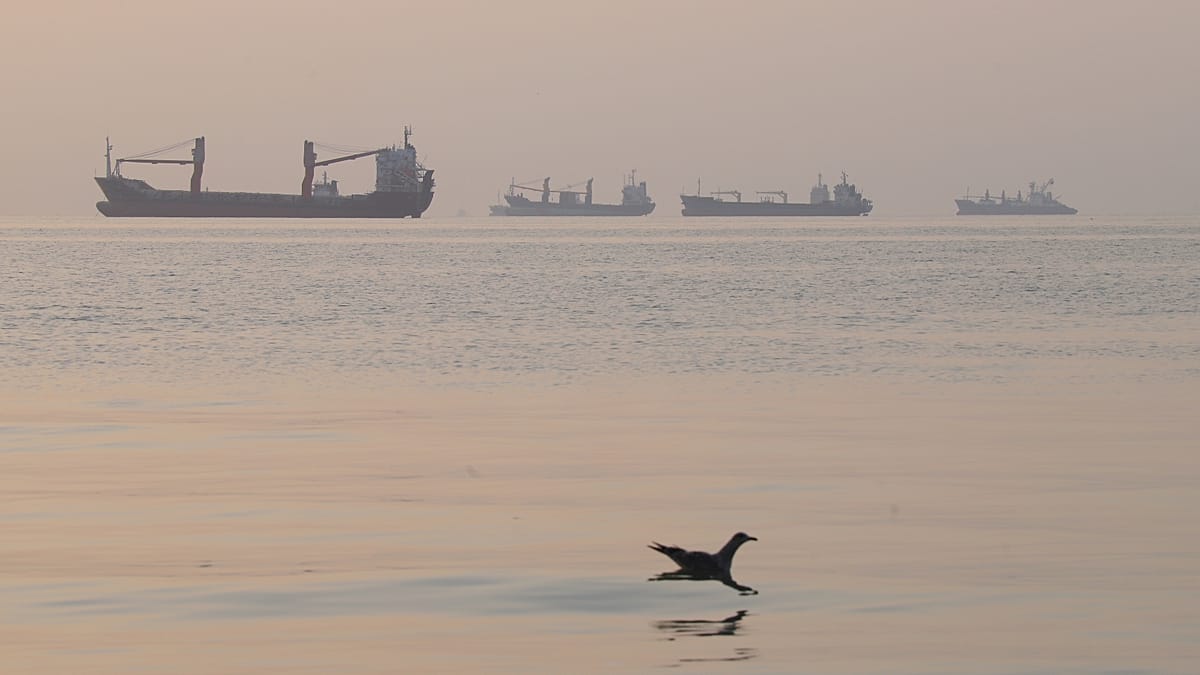
Iran's Islamic Revolutionary Guard Corps said on Friday that two oil tankers had caught fire and been stopped in the Strait of Hormuz, as Qatari mediators returned to Tehran for another round of talks aimed at ending the conflict between Iran and the United States.
According to Iranian state media, the Guard claimed the vessels had switched off their navigation systems and were attempting to use routes that Tehran considers unauthorized, with alleged support from the U.S. military. The tankers reportedly ignored repeated radio warnings before encountering trouble in what the Guard described as unsafe areas.
No details were provided about the identities of the vessels, their flags, the cause of the fires, or the condition of their crews.
Separate incidents muddy the picture
The reports come amid a series of maritime incidents in the strategic waterway. The United Kingdom Maritime Trade Operations (UKMTO) reported that a small boat approached an oil tanker on Thursday evening and attached two explosive devices to its hull above the waterline. The devices detonated, causing a fire in the engine room and temporarily disabling the vessel, which the Financial Times identified as the Louise 1. The incident occurred about 25 nautical miles northeast of Khasab, Oman. UKMTO said the fire was extinguished, all crew were safe, and no pollution was reported.
Oman's Maritime Security Center also reported that its Royal Navy evacuated 25 crew members from a Panama-flagged commercial vessel that caught fire off the Musandam coast. The center did not identify the vessel or those responsible.
These events follow claims by Iran's military on Thursday that three tankers had struck naval mines along the southern route of the strait, and that another tanker had caught fire in the eastern part. It remains unclear whether the two tankers mentioned in Friday's Guard statement are additional vessels or overlap with those reported earlier.
US Central Command pushes back
Adm. Brad Cooper, commander of U.S. Central Command, reiterated that the main shipping lanes in the Strait of Hormuz have been cleared of Iranian naval mines. He also claimed that Iran's navy had been destroyed and that Revolutionary Guard forces were no longer operating in the waterway. CENTCOM rejected a Guard claim that it had captured an American MQM-170 Outlaw drone in the western strait.
Iranian sources reported that an American unmanned surface vessel had been destroyed in the eastern strait, a claim the U.S. military had not confirmed or denied at the time of publication.
Diplomatic efforts continue
Despite the military tensions, diplomatic efforts are ongoing. CBS News, citing a source familiar with the negotiations, reported signs of progress and said Iran was expected to respond to a revised Qatari proposal by the end of the week. The initiative aims to prevent a resumption of large-scale U.S. strikes, a possibility President Donald Trump has repeatedly raised.
Axios reported that Qatari mediators were seeking common ground on issues including inspections of Iran's nuclear facilities and sanctions relief, but disagreements persist over the conditions for formal negotiations. The Associated Press, citing two diplomats, said Washington had warned regional allies about the possibility of renewed U.S. attacks and potential Iranian retaliation, though Trump had not made a final decision.
Speaking to a Kansas City radio station on Friday, Trump said the war with Iran would end "soon," without specifying whether through diplomacy or military action. He reiterated that Washington wants guarantees that Iran will never acquire a nuclear weapon.
The situation in the Strait of Hormuz remains volatile, with commercial shipping facing increasing risks. The waterway is crucial for global oil supplies, and any disruption has significant implications for European energy security and the broader international economy.