Iran's parliament speaker, Mohammad Bagher Ghalibaf, warned on Tuesday that any US strategic error would open "a new battlefield in the war," hours after a US Air Force jet reportedly struck an IRGC missile system on Qeshm Island. Speaking to parliament, Ghalibaf said Iran was at its highest level of defensive readiness and that the responsibility for preventing further escalation rested with Washington. "The ball is in America's court to prevent war," he said.
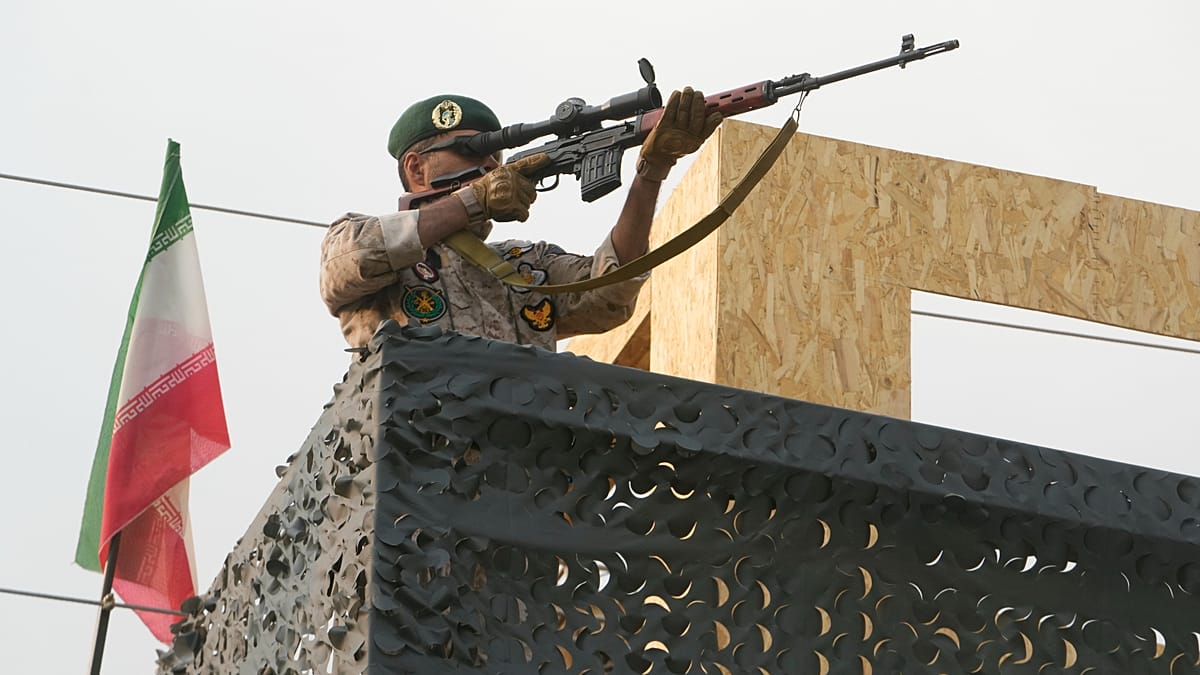
The remarks came after residents of Qeshm Island, Hengam, and Bandar Abbas reported successive explosions and tremors overnight, according to Iranian news agencies IRNA and Fars. US media outlets reported that a US Air Force jet had struck an IRGC surface-to-air missile launch system on the island after a missile had been fired from Qeshm at a US aircraft in the Strait of Hormuz. The operation was described as limited and aimed at protecting commercial shipping. CENTCOM issued no formal statement confirming or denying the accounts, and no Iranian military or government official formally confirmed a direct attack on the island.
Iran's response strategy
The IRGC said separately that its electronic warfare systems had downed two US MQM-170 reconnaissance drones south of Qeshm Island and destroyed a US MQ-9 drone east of the Strait of Hormuz. Ghalibaf said late Ayatollah Ali Khamenei, as commander-in-chief, had defined Iran's military strategy for confronting a possible attack. According to Ghalibaf, senior military commanders and Mojtaba Khamenei — the new supreme leader in direct control of the IRGC — met last week and reportedly decided on "a response without geographical limits" and Tehran's right to determine when any conflict ends.
Former foreign minister and parliamentarian Manouchehr Mottaki said on Sunday he interpreted that formulation to mean US military bases in European countries, including Britain, Italy, Portugal, and Germany, could be drawn into any conflict. "If our war is to break out, it will no longer be a regional war, it will be extraregional," he said. Tehran-based Hamshahri newspaper reported on Tuesday that Iran had updated its "target bank," examining a scenario in which US support bases and infrastructure in Europe would be targeted under the "response without geographical limits" strategy.
Foreign Minister Abbas Araghchi expressed support for Gulf state mediation in a post on X. "We have no hostility with the Gulf Cooperation Council countries, we value the positive role played by Qatar and Oman, and we continue dialogue with Saudi Arabia," he said.
The reported strike on Qeshm comes amid heightened tensions in the Strait of Hormuz, a critical chokepoint for global oil shipments. The US has been conducting patrols in the region to protect commercial shipping, while Iran has repeatedly threatened to disrupt traffic if its interests are threatened. The reported US strike has raised fears of a broader conflict that could draw in European nations, many of which host US military installations.
European leaders have been watching the situation closely, with the EU's foreign policy chief recently warning that Brussels is still scarred by Brexit and must maintain unity in the face of external crises. The potential for Iranian retaliation against European targets adds a new dimension to the crisis, as European countries host thousands of US troops and key military infrastructure.
The oil prices have dipped on hopes of diplomatic progress, but the Trump administration has kept the option of further strikes on the table. Meanwhile, Khamenei has warned of a global response if the US strikes again, underscoring the high stakes for Europe and the wider international community.
As the situation evolves, European governments are likely to intensify diplomatic efforts to de-escalate tensions, while also preparing contingency plans for potential fallout, including cyberattacks, disruption of shipping, or even direct attacks on European soil. The coming days will be critical in determining whether the reported strike on Qeshm marks a turning point toward a wider conflict or a limited exchange that can be contained through diplomacy.