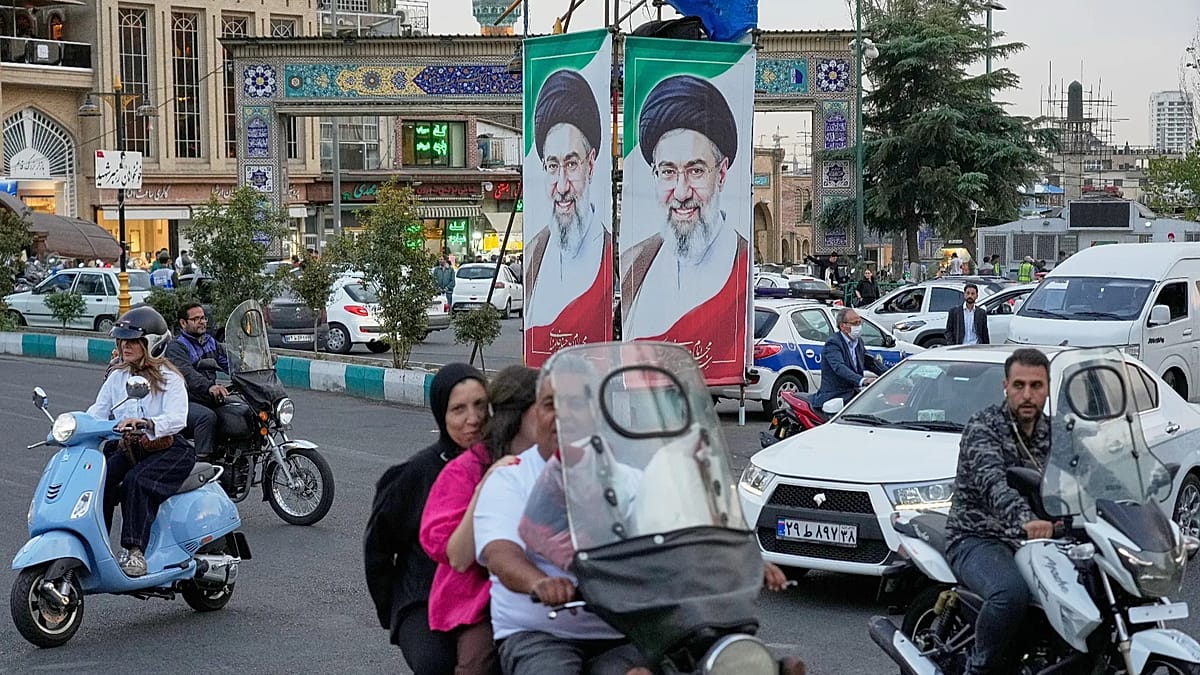
Iran's Supreme Leader Ayatollah Mojtaba Khamenei has issued a stark warning that any future US or Israeli aggression would be met with an "immediate, impactful, and geographically unrestricted response." The statement, reported by the official IRNA news agency, came during a meeting with Iran's top military commanders on Saturday, where he reportedly ordered preparations for potential new attacks.
The warning arrives as diplomatic efforts intensify to prevent a full-scale conflict that would have severe repercussions across the Middle East and beyond. US officials have hinted at the possibility of a short but intensive military campaign against Iran after next week's midterm elections, raising fears of a new war with global consequences.
Europe in the crosshairs?
The phrase "geographically unrestricted" is particularly significant for European capitals. It suggests that Iran could extend its retaliation to targets in Europe or the South Caucasus, not just US and Israeli assets in the region. This would directly implicate EU member states and partners, many of which host US military bases or are involved in regional security arrangements.
Khamenei, who has not appeared publicly since the outbreak of the Iran war in late February, also called for an updated list of potential US and Israeli targets, including "all kinds of physical and non-physical assets." He stressed that Iran would determine the duration of any new conflict, stating: "Should Iran's enemies resume military or terrorist attacks, it will be the Armed Forces of the Islamic Republic and the Iranian nation that will determine when and under what conditions those attacks will end."
In the same meeting, the commander of the Islamic Revolutionary Guard Corps (IRGC), Major General Ahmad Vahidi, along with the army commander and chief of staff, briefed the supreme leader on military readiness. State media reported that Iran's weapons production has increased "seven-fold" since the conflict began.
The Institute for the Study of War (ISW), a Washington-based think tank, assessed that Khamenei's threats are "likely part of an Iranian effort to deter the United States and Israel from striking Iran."
Signals of progress in mediated talks
Despite the bellicose rhetoric, Tehran has indicated tentative progress in negotiations mediated by Qatar. Foreign Minister Abbas Araghchi announced on Saturday that Iran could reopen the Strait of Hormuz within two days, a significant reduction from the previously stated seven-day timeline. He said Iranian diplomats were in Qatar for talks following a Qatari delegation's mediation in Tehran.
Araghchi's earlier proposal to reopen the strait within a week was rejected by Washington, which had demanded conditions including the lifting of the blockade on Iranian ports, the release of frozen assets, and waivers on oil sanctions. In an interview with Al Jazeera, Araghchi said Iran was not planning direct meetings with US officials but called recent American efforts toward "broader dialogue" a positive step. He added that a decision on direct versus indirect negotiations would be made "once Washington agrees to Iran's conditions."
Adding to the diplomatic signals, the head of Iran's Supreme National Security Council, Major General Mohsen Rezaei, said he had received a letter from US Vice President JD Vance proposing negotiations. Rezaei described the letter's tone as "completely changed" and a "very good sign." He also highlighted a modification to one of Iran's conditions: ships in a reopened Strait of Hormuz would travel on a route agreed upon by Iran and Oman, with "everyone passing through this waterway" doing so "under Iranian management."
Rezaei said Iran is now awaiting the latest US response. In a separate post on X, he warned that any attack would bring "devastating blows on the aggressor using new weapons."
The unfolding situation carries profound implications for European security, particularly given the EU's reliance on Gulf energy supplies and its diplomatic efforts to de-escalate tensions. The bloc has repeatedly called for restraint and a return to negotiations, but the threat of a geographically unrestricted response raises the stakes for all parties involved.