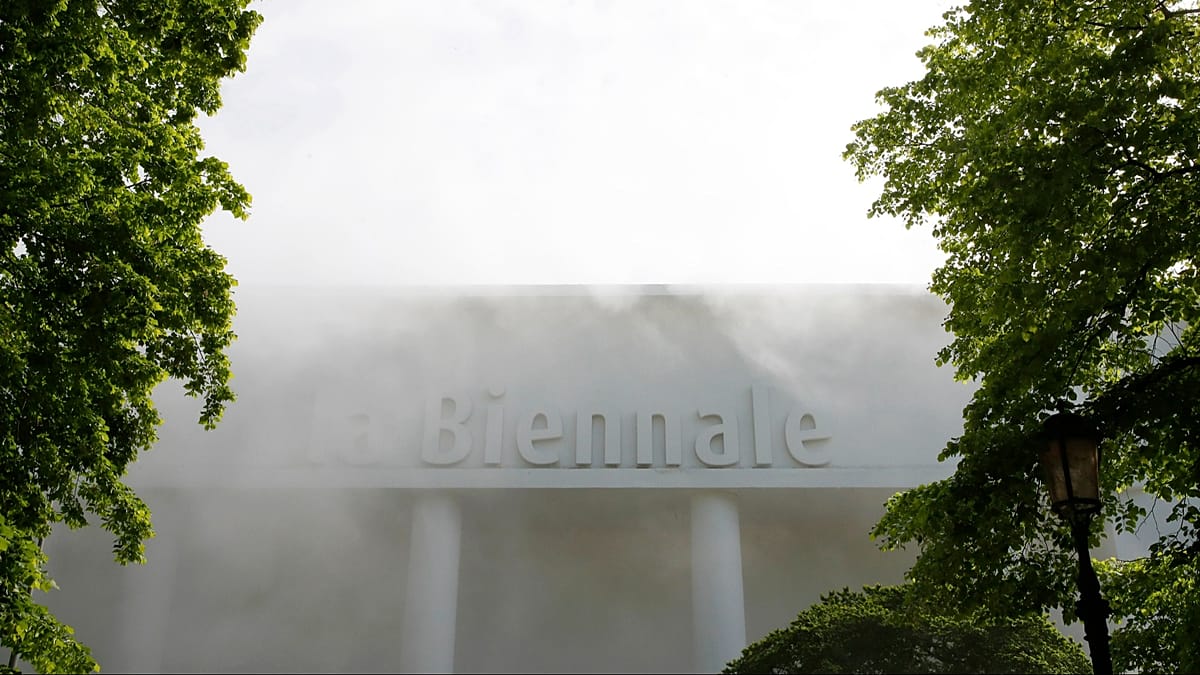
Iran has pulled out of the 2026 Venice Biennale, the prestigious international art exhibition, only days before its public opening on 9 May. The decision was announced in a brief statement on the Biennale's website, which confirmed that the Islamic Republic of Iran would not participate in the 61st International Art Exhibition, titled In Minor Keys and curated by Koyo Kouoh.
No official reason has been given for the withdrawal, but it comes against a backdrop of heightened instability in the Middle East. The United States and Israel have been engaged in military operations against Tehran, and while a fragile ceasefire has held for nearly a month, skirmishes and rhetorical threats remain a daily occurrence. International shipping continues to face disruptions in and around the Strait of Hormuz, a critical chokepoint for global oil supplies.
The Biennale's organisers have not commented further on Iran's exit, but the decision is widely seen as a reflection of the broader geopolitical strains affecting the region. The event, which runs until 22 November, has already been overshadowed by the untimely death of its curator, Koyo Kouoh, earlier this year.
Controversy Over Russian and Israeli Participation
This year's edition has also been rocked by controversy over the decision to invite Russia and Israel to participate. In response, the Biennale's jury resigned en masse last week, stating they would not consider entries from countries whose leaders are subject to international arrest warrants for crimes against humanity. The jury's departure has forced a significant change in the awards process.
Without a jury, the two main Golden Lion prizes—for best national pavilion and best artist—will now be decided by a public vote. The award ceremony has been postponed from May to November, a move that organisers hope will allow for broader engagement but has also drawn criticism for diluting the traditional curatorial process.
The inclusion of Russia and Israel has sparked debate across Europe's cultural sector. Many artists and institutions have called for boycotts, while others argue that art should remain separate from politics. The Biennale's leadership has defended its decision, citing the importance of dialogue and artistic exchange even in times of conflict.
For European audiences, the situation underscores the interconnectedness of culture and geopolitics. The Biennale, held in Venice, is one of the continent's most significant cultural events, drawing participants from dozens of countries. Its disruption reflects broader tensions that have also affected European financial markets, with oil prices remaining elevated due to the Strait of Hormuz standoff.
The IMF has warned that a prolonged conflict in the Middle East could push Europe into recession, highlighting the economic stakes beyond the cultural sphere. Meanwhile, the Biennale's organisers are pressing ahead with the exhibition, which will feature works from over 80 countries, albeit without Iran's contribution.
As the art world adjusts to these developments, the focus now shifts to how the public vote will shape the Golden Lion awards—and whether the Biennale can maintain its reputation as a platform for global artistic expression amid mounting political pressures.